

How to Deal in Poker Like a Pro: Essential Techniques and Tips
Welcome to the exciting world of poker! Whether you’re a novice looking to learn the ropes or an experienced player aiming to improve your game, mastering the art of dealing in poker is an essential skill. In this comprehensive guide, we’ll explore everything you need to know about dealing in poker, from the basics to advanced techniques that can give you an edge.
Understanding the Basics of Poker Dealing
Before we dive into the intricacies of dealing poker, it’s crucial to understand the fundamental aspects of the game. Poker is a card game that combines skill, strategy, and a dash of luck. The objective is to win chips or money by having the best hand at a showdown or convincing your opponents to fold.
The Poker Deck
A standard deck of 52 playing cards is used in poker. The deck is divided into four suits: hearts, diamonds, clubs, and spades. Each suit contains 13 ranks, with the Ace being the highest and the two being the lowest. Please familiarize yourself with the deck and its hierarchy before moving forward.
Poker Hand Rankings
Poker hands are ranked based on their strength, and knowing these rankings is crucial for dealing. The standard hand rankings, from highest to lowest, are as follows:
- Royal Flush: A, K, Q, J, 10, all of the same suit.
- Straight Flush: Five consecutive cards of the same suit.
- Four of a Kind: Four cards of the same rank.
- Full House: Three cards of one rank and two cards of another rank.
- Flush: Five cards of the same suit, not in sequential order.
- Straight: Five consecutive cards of different suits.
- Three of a Kind: Three cards of the same rank.
- Two Pair: Two cards of one rank and two cards of another rank.
- One Pair: Two cards of the same rank.
- High Card: The highest card in the hand when no other hand is made.
Poker Positions
In poker, the dealer position rotates clockwise after each hand. Understanding the different positions at the table, such as the small blind, big blind, and dealer button, is essential when dealing. These positions determine the betting order and can influence your strategy as a player.
How to Deal in Poker
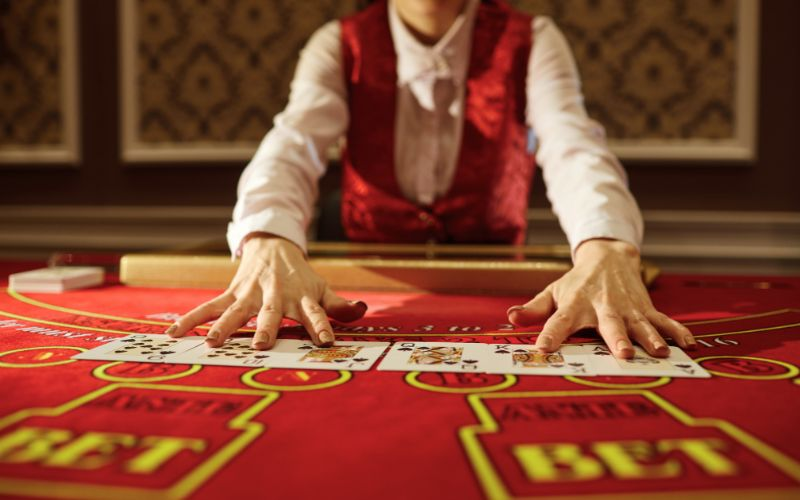
Now that you have a solid grasp of the basics, let’s delve into the steps to deal with poker effectively. Whether playing at home with friends or in a casino setting, these guidelines will help you become a proficient dealer.
Shuffle the Deck
Properly shuffling the deck is the first step in dealing with poker. It’s essential to thoroughly mix the cards to eliminate any possibility of cheating or card manipulation. You can use several shuffling techniques, such as the riffle or overhand shuffle. Practice your shuffling skills to maintain fairness and integrity in the game.
Deal the Hole Cards
In most poker variants, each player receives two private cards known as “hole cards.” The dealer distributes these cards individually, starting with the player to their left and moving clockwise around the table. Make sure to deliver the cards face down to maintain secrecy.
The Community Cards
In games like Texas Hold’em and Omaha, community cards are dealt face-up in the center of the table. These cards are shared by all players and are used in combination with their hole cards to form the best possible hand. The community cards are typically dealt in stages: the flop (three cards), the turn (one card), and the river (one card).
Manage Betting Rounds
As the dealer, it’s your responsibility to oversee the betting rounds. This includes ensuring that bets and raises are made in the correct order and that players have ample time to make their decisions. Familiarize yourself with the different betting structures, such as no-limit, pot-limit, and fixed-limit, as they can significantly impact the game’s dynamics.
Awarding the Pot
When a hand concludes, the dealer is responsible for determining the winning hand and awarding the pot to the player or players with the best hand. Be attentive to any possible ties or split pots, as these situations require careful consideration.
Advanced Poker Dealing Techniques
While the basics are essential, becoming a truly skilled poker dealer requires mastering some advanced techniques:
Chip Management
Maintaining an organized chip stack and accurately counting bets is crucial. Practice your chip-handling skills to ensure smooth gameplay and avoid disputes over pot sizes.
Reading Players
Experienced dealers develop the ability to read players’ body language and behavior, helping them spot potential cheating or collusion. Stay vigilant and maintain a professional demeanor at the table.
Speed and Efficiency
Efficiently managing the game’s pace is a hallmark of a skilled dealer. Slow or disorganized dealing can frustrate players, so practice your speed without sacrificing accuracy.
Conclusion
Mastering the art of poker dealing is a valuable skill that can enhance your poker experience, whether in friendly home games or professional casino settings. By understanding the basics, following proper procedures, and honing your advanced techniques, you can ensure fair play, a smoothly run game, and a more enjoyable poker journey for all involved. So, shuffle up and deal your way to success in the captivating poker world! Good luck!
FAQs
1. How do I become a certified poker dealer?
You can enroll in a dealer training program from reputable poker schools or casinos to become a certified poker dealer. These programs provide hands-on training and certification upon successful completion.
2. What are some common mistakes to avoid as a poker dealer?
Common mistakes to avoid include exposing hole cards accidentally, failing to manage the pot properly, and not enforcing betting rules consistently. It’s crucial to maintain professionalism and accuracy throughout the game.
3. Are there any specific rules for dealing in home poker games?
In-home poker games, rules can vary, but it’s essential to establish clear house rules before starting. Common rules to consider include the order of dealing, chip management, and how to handle disputes.
4. Can I deal poker professionally without playing the game?
Yes, you can pursue a career as a professional poker dealer without being an active player. Many dealers focus solely on dealing and do not participate in the games. However, a deep understanding of poker rules and strategies can benefit your career.
5. How do I handle difficult or unruly players as a poker dealer?
Dealing with difficult players is an essential skill for a poker dealer. Maintain a calm and professional demeanor, address disruptive behavior promptly, and, if necessary, involve the floor supervisor or casino management to ensure a fair and enjoyable game for all.


