

Can You Bluff in Texas Hold’em?
In Texas Hold’em, bluffing isn’t just about pretending to have a strong hand; it’s an art that requires precise timing and keen observation. You might wonder if bluffing is truly effective or if it’s merely a gamble. The truth is, when executed well, bluffing can turn the tables in your favor, even when your cards don’t. But how do you distinguish between a calculated bluff and a reckless move? And what should you look for to spot a bluff from others? Uncovering these aspects can elevate your game and keep your opponents guessing.
Key Takeaways
- Bluffing is a fundamental strategy in Texas. Hold’em to mislead opponents about your hand strength.
- Effective bluffing requires timing, position, and understanding of opponents’ tendencies and table image.
- Semi-bluffing with draws can apply pressure while maintaining opportunities for hand improvement.
- Strategic bet sizing and consistency between bluffs and value bets are critical for successful bluffing.
- Observing opponents’ actions and board textures helps determine optimal bluff timing and detect bluffs.
Understanding Bluffing Basics
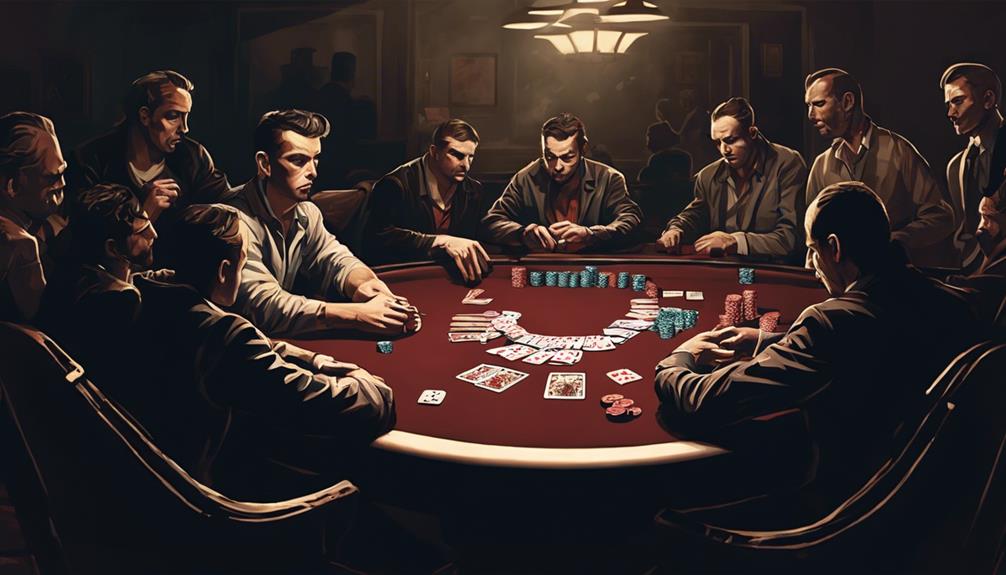
Mastering the art of bluffing in Texas Hold’em is vital to elevating your poker game. As a player, you need to understand that bluffing involves convincing your opponents that you have a good hand, even when you don’t. It’s all about making the right bet at the right time. A successful bluff requires more than just bravado; it demands a keen understanding of your opponent’s tendencies and the dynamics at the table.
In Texas Hold’em Poker, a well-executed bluffing strategy can be a game-changer. Timing is everything. Bluffing is often most effective in late positions, where you can observe the actions of others before making your move. Against tight players, who are more likely to fold unless they have a strong hand, bluffing can be particularly effective.
The size of your bet is essential, too. A bet that’s too small might invite your opponent to call, while a too-large bet could be suspicious.
Key Factors for Effective Bluffing
To bluff effectively in Texas Hold’em, start by analyzing your table image and your opponents’ tendencies.
Use strategic bet placement by considering your position and adjusting your bet sizing accordingly.
Recognizing when your opponents have connected with the board will guide your decision on whether to execute a bluff.
Image and Opponent Analysis
In the game of Texas Hold’em, your table image and opponents’ perceptions play a pivotal role in determining your bluffing strategy‘s success. Whether you project a tight or loose image influences how others perceive your bluffing attempts. A tight image suggests you play only strong hands, which can make your bluffs more credible, particularly against observant opponents. Conversely, a loose image might lead opponents to call your bluffs more often, expecting you to be bluffing.
When crafting your bluffing strategies, consider your position at the table—late positions, like the hijack, cutoff, or button, often present prime bluffing opportunities. Here, you can observe the table dynamics and opponents’ actions before committing to a bluff. Understanding these dynamics allows you to adjust your strategy according to how your opponents play, increasing your bluffing success.
Analyzing opponents’ tendencies is essential. Some players are more susceptible to bluffs, often folding under pressure, while others might call more frequently. By recognizing these tendencies, you can tailor your approach, making your bluffs more effective. Ultimately, your ability to read the table and adjust your image and strategies accordingly will determine your bluffing prowess.
Strategic Bet Placement
Building on your understanding of table dynamics and opponents’ perceptions, effective bluffing in Texas Hold’em also hinges on strategic bet placement. Proper bet sizing is key to executing a successful bluff. When you bet too much, you might scare off opponents, while betting too little can invite calls. Finding that sweet spot in your bet sizing is pivotal.
Your position at the table plays a significant role. Being in a late position allows you to observe your opponents’ actions and adjust your strategy accordingly. This advantage helps you decide when to bluff and how much to bet.
Additionally, your table image and how opponents perceive your playing style will influence your bluff’s success. If you have a tight image, your bluffs might be more believable, whereas a loose image might make opponents more suspicious.
Incorporating blockers into your strategy can also enhance your bluffing effectiveness. Blockers are cards in your hand that reduce the chances your opponents have strong holdings.
Mastering Different Bluffing Techniques

To master bluffing in Texas, Hold’em, focus on semi-bluffing withdraws, as these hands have the potential to improve and keep your opponents guessing.
Please pay attention to your bet sizing, as it’s critical for applying pressure and protecting your range effectively.
Semi-Bluffing With Draws
When you’re playing Texas Hold’em, mastering semi-bluffing with draws can greatly enhance your game. This technique involves betting with a hand that has the potential to improve on future streets, combining the immediate pressure on opponents with the chance of hitting a draw. It’s a strategic move that increases your hand’s potential and creates fold equity, making opponents more likely to fold. Unlike a total bluff, a semi-bluff gives you two ways to win: either your opponent’s fold or your hand improves to win at showdown.
Here’s a simple table to visualize the concept:
| Hand Type | Action | Outcome |
|---|---|---|
| Flush Draw | Semi-Bluff | Opponents fold or hit the flush |
| Straight Draw | Semi-Bluff | Opponents fold or complete the straight |
| Overcards | Semi-Bluff | Opponents fold or hit the top pair |
Effective Bet Sizing
Effective bet sizing is one of the most critical skills you can master in Texas Hold’em, as it directly influences your success in bluffing. When you’re bluffing enough, the right bet size can maximize fold equity and potential gains. One way to achieve this is through consistency in bet sizing between your bluffs and value bets. This keeps opponents on their toes, making it tougher for them to discern your true intentions.
Overbetting on the river can be a useful yet risky strategy. It might suggest strength, pushing opponents to fold, or it could pique curiosity, leading to costly calls. Use this tactic wisely to exploit opponent weaknesses.
Semi-bluffing, blending bluffing with drawing hands, allows you to pressure opponents while potentially improving your hand. By carefully choosing bet sizes in these situations, you can build the pot and prepare for a stronger finish.
Ultimately, effective bet sizing lets you control the narrative of the hand. It’s about creating situations where opponents are uncertain and more likely to fold. Master this technique, and you’ll find yourself bluffing more effectively, leading to increased success at the table.
Timing Your Bluffs
Timing your bluffs in Texas Hold’em is a skill that can make or break your game. Bluffing involves more than just boldness; it requires strategic timing to deceive opponents effectively. In Texas Hold’em, understanding the betting rounds and analyzing the board texture is essential for successful bluffing. It would be best if you considered the potential hands your opponents might hold and how the board cards might influence their decisions.
If the board texture is dry and unlikely to help most hands, it’s an excellent opportunity to bluff. On the other hand, a wet board with many possible draws may demand more caution.
It’s crucial to observe your opponents’ actions throughout the hand. Are they showing signs of strength or hesitation? This can guide you in choosing the right moment to bluff. Recognizing when your opponents are likely to fold allows you to win pots without the need for a strong hand.
Mastering the art of timing your bluffs will significantly enhance your overall poker skills. With practice, you’ll be able to identify the perfect moments to execute a bluff, increasing your profitability and making you a formidable player at the table.
Avoiding Common Bluffing Mistakes

In the world of Texas Hold’em, avoiding common bluffing mistakes is essential to maintaining your edge at the table. First and foremost, it’s crucial to bluff cautiously. One of the most common mistakes players make is over-bluffing. If you bluff too often, experienced players will catch on and call you down, eroding your chip stack quickly.
Please pay attention to tilting opponents, as they might call more frequently than usual. When a player is on tilt, they’re not thinking clearly, making them more likely to call your bluff. In these situations, it’s better to refrain from bluffing and let them make mistakes instead.
Adapting your bluffing strategy to the table dynamics and opponent tendencies is vital. Each table has its own rhythm, and understanding how your opponents play can give you a strategic advantage. If you notice an opponent folding too often, they might be more susceptible to a well-timed bluff.
Detecting Opponent’s Bluffs
Detecting an opponent’s bluff in Texas Hold’em can often tip the scales in your favor. To sharpen your skills at detecting bluffs, pay close attention to timing tells. Quick bets or noticeable hesitations might signal that your opponent is bluffing. Also, don’t overlook body language. Subtle cues like fidgeting or avoiding eye contact can reveal more than words ever could.
Another key strategy is analyzing bet sizing. If you notice unusually large or small bets, your opponent might be trying to mislead you. These bluffs often come into play when someone wants you to think they have a stronger or weaker hand than they actually do. Understanding the significance of such bet sizes is essential.
Keeping an eye on betting patterns from previous hands can also give you an edge. Is your opponent suddenly aggressive after playing cautiously? Such shifts could indicate a bluff. By tracking these tendencies, you can better predict when they’re attempting to deceive you.
Adapting Bluffing Strategies
Having honed your skills in detecting bluffs, it’s time to refine your own bluffing strategies in Texas Hold’em. Start by evaluating your table image. Are you perceived as conservative or assertive? Use this perception to your advantage. If opponents see you as conservative, they’ll likely fold to a strong bet, making your bluff more convincing.
Conversely, if you’re known for assertiveness, they’ll be more doubtful, requiring you to adjust strategies accordingly.
Understanding your opponents’ tendencies is essential for effective bluffing. Observe their reactions to previous bluffs and adapt your approach. Some players fold easily under pressure, while others are more resistant. Recognizing these tendencies allows you to control the action and decide when to bluff and how much to bet.
A well-timed, well-sized bet can compel opponents to fold their stronger hands.
Balancing risk and reward is the core of adapting bluffing strategies. Excessive risk without a clear reward can be disastrous. By carefully choosing your bluffing opportunities and sizing your bets, you increase your chances of success. Remember, the key is to outplay your opponents by keeping them guessing and never revealing your bluffing intentions.
Bluffing in Different Poker Scenarios
Bluffing in Texas Hold’em plays out in various situations, each calling for a tailored approach. You need to understand how to execute bluffs effectively whether you’re pre-flop, post-flop, or on the river. Each stage of the game offers unique opportunities to deceive your opponents and make them second-guess the strength of their hand.
Pre-flop bluffs might involve aggressive raises with a weaker hand, pushing opponents to fold before seeing the community cards. In these situations, maintaining a careful balance between bluffing and making value bets is vital.
As the game progresses to the post-flop stage, you can use the board texture to your advantage. If the community cards don’t support strong hands, a well-timed bluff might convince opponents you hold the best hand.
On the river, the final community card has been dealt, and the stakes are higher. Bluffing here requires a deep understanding of your opponent’s tendencies and calculating the odds that your hand can beat theirs. Mastering bluffing in these different poker scenarios will greatly impact your success. Remember, it’s not just about having the best hand but making others believe you do, even when you don’t.
Frequently Asked Questions
Can You Win in Poker by Bluffing?
Yes, you can win in poker by bluffing. Employ bluffing strategies, read opponents, and time your bluffs well. Consider bluff frequency and sizing for effective bluffs. Understand bluff detection to improve bluff success and increase profitability.
Is Poker a Game of Bluffing?
In poker, bluffing strategies are essential. You engage in psychological warfare, reading opponents and identifying bluffing tells. Balance your bluffing frequency to avoid mistakes. Bluffing success enhances your game, especially in tournaments, where strategic deception is key.
Should You Bluff Preflop?
Bluffing preflop involves weighing risk vs reward. Consider player psychology, table image, and hand selection. Position play and pot odds affect your decision. Analyze betting patterns and maintain a balanced bluff frequency to maximize your strategic advantage.
What Not to Do in Texas Hold’em?
Don’t disregard proper bet sizing, read opponents carefully, and understand position importance. Prioritize hand selection and maintain a strong table image. Manage your bankroll wisely, consider psychological factors, and avoid giving away timing tells in Texas Hold’em.
Conclusion
In Texas Hold’em, mastering the art of bluffing is essential to gaining an edge over your opponents. You need to understand the basics, choose the right moments, and apply various techniques to keep your rivals guessing. By avoiding common pitfalls and honing your ability to detect bluffs, you’ll enhance your strategic play. Remember, adapting your approach based on opponents’ tendencies and different scenarios will make your bluffing more effective, ultimately improving your overall poker success.


