

What does ‘bluffing’ mean in poker?
When you think about poker, bluffing often comes to mind as a key tactic, but do you truly understand what it entails? At its core, bluffing involves making others believe you have a stronger hand than you actually do. This isn’t just random guesswork; it’s a calculated move that requires skill and a keen understanding of your opponents’ behaviors. But what makes a bluff successful, and how can you tell when someone else is bluffing? These questions open up a fascinating world of strategy and psychology that could change how you approach the game.
Key Takeaways
- Bluffing in poker involves misleading opponents to win the pot despite having a weaker hand.
- Successful bluffing requires skill, timing, and psychological insight into opponents’ tendencies.
- Bluffing can be pure, with weak hands, or semi, combined with a drawing hand.
- Effective bluffing utilizes strategic bet sizing and hand ranges to manipulate opponents.
- Over-bluffing can become predictable, reducing a player’s credibility and effectiveness.
Understanding Bluffing in Poker

In poker, bluffing is a strategic maneuver where you bet or raise with a weak hand to mislead your opponents. As a player, your goal is to convince them to fold stronger hands, allowing you to win the pot without actually holding the best cards. Understanding bluffing in poker involves recognizing the mental and tactical elements that make it successful.
To become proficient at bluffing, you need to evaluate your opponents’ tendencies and the overall table dynamics. Are your opponents cautious or aggressive? Adjust your bluffing strategy accordingly. Bet sizing is also pivotal; a well-sized bet can make your bluff more believable, whereas an inconsistent bet might raise suspicion. You want to manipulate your opponents’ perceptions of your hand strength through calculated risks.
Moreover, successful bluffing requires skill, timing, and psychological insight. It would be best if you chose the right moments to execute your bluffs—moments when your opponents are most likely to doubt their strong hands.
In poker, bluffing isn’t just about deceit; it’s about shaping the game’s flow and creating strategic advantages. By mastering bluffing, you enhance your ability to control the table and seize opportunities that your opponents might overlook.
Types of Bluffing
While understanding the basics of bluffing, it’s important to recognize the different types that can be used strategically in poker. Bluffing demands a nuanced approach, and knowing when to utilize various kinds of bluffs can profoundly impact your game.
Two primary types of bluffs are pure bluffing and semi-bluffing. Pure bluffing involves betting or raising with a weaker hand, hoping to make your opponents fold. This is more risky but can be effective if your table image supports it.
On the other hand, semi-bluffing combines a bluff with a drawing hand that has the potential to improve, like flush draws. This kind of bluff provides you with two ways to win: either by your opponent’s folding or by hitting the draw. Remember, though, you should bluff less frequently with value hands, as this can lead to predictable play.
Bluffing in poker isn’t just about pulling the trigger randomly; it demands careful consideration of when and how you do it. Balancing your bluffing frequency is pivotal to prevent opponents from catching on. Understanding when to make a shift from a semi-bluff to a pure bluff, especially if the draw fails, can also keep your opponents guessing.
Factors Influencing Bluffing Success

When considering bluffing in poker, timing your bluff perfectly can make all the difference.
Pay attention to your opponents’ likelihood of calling, as a well-timed bluff against players prone to folding can be highly effective.
Optimal Bluff Timing
To master the art of bluffing in poker, understanding the best bluff timing is important. It would be best if you thought about several strategic factors to make sure your bluff is successful.
First, assess the number of opponents at the table. Fewer opponents increase the chances of successful bluffs because there’s less likelihood someone has a strong hand. Observing your opponents’ betting patterns can give insight into their habits and vulnerabilities. If you notice a player who frequently folds under pressure, it might be the perfect opportunity to bluff.
Scare cards on the board can also influence ideal timing. These cards can make your opponents doubt the strength of their hands, increasing their chances of folding. Timing your bluff when these cards appear can greatly enhance your success rate.
Pot odds are another important factor. If your opponents aren’t committed to the pot, they’re more likely to fold, improving your bluff’s effectiveness. Utilize strategic thoughts by weighing pot odds and your opponents’ susceptibilities. Bluffs are most successful when there’s a low probability of being called. By carefully analyzing these elements, you can execute your bluff at the right moment, maximizing the potential for a fold.
Opponent Call Probability
An opponent’s likelihood to call your bluff hinges on several key elements that you can strategically manipulate to your advantage. Understanding opponent vulnerabilities is essential in determining how successful your bluffing will be. If you notice indicators of weakness, like hesitation or inconsistency in their play, it might be the perfect moment to bluff.
Scare cards are another aspect to take into account. When a card that could complete a strong hand hits the board, it can make your opponent second-guess their own hand strength. This increases the probability they’ll fold rather than call.
Additionally, your betting patterns play a significant role. Consistent and convincing bets can make your bluff more believable, reducing the likelihood of being called.
Remember to factor in pot odds and opponent tendencies. If the pot odds suggest a favorable situation for your opponent to call, they’re more likely to do so. Meanwhile, understanding how your opponent typically reacts in certain situations will guide your decision. Are they prone to calling or folding under pressure? By analyzing these elements, you can effectively lower the probability of being called, enhancing your bluffing success.
Bluffing Strategies and Techniques
In poker, mastering bluffing strategies and techniques can elevate your game to new heights. To effectively bluff, you need to take into account factors like bet sizing and hand ranges. Bluffing strategies aren’t one-size-fits-all; you can employ a polarized range, which means betting on strong hands and bluffs while omitting medium-strength hands.
Alternatively, a merged range involves including medium-strength hands in your betting range, making your plays less predictable. Exploitative play, where you adjust your strategy based on opponents’ weaknesses, can sometimes be more profitable than sticking to balanced bluffing strategies.
When bluffing, varying your frequency based on the tendencies of your opponents is essential. Keeping an eye on their behavior allows you to adjust and improve your bluffing effectiveness. Semi-bluffing is another powerful technique that involves betting with drawing hands. This approach increases your fold equity since opponents might fold to your aggression, and it also boosts pot equity if you hit your draw.
Reading Opponents for Bluffing
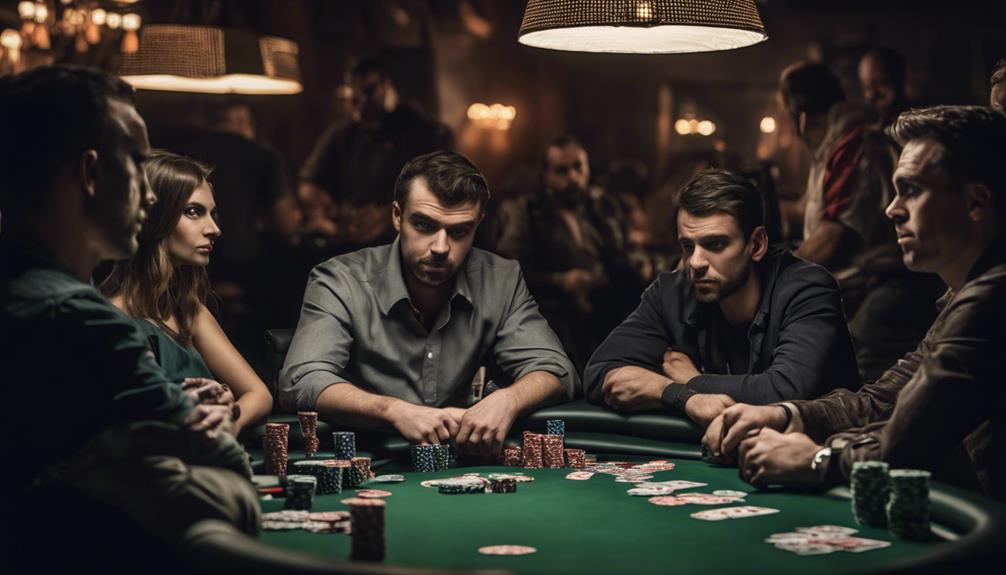
Spotting a bluff in poker can hinge on several key observations. Start by reading opponents for timing tells. If they bet quickly or hesitate too long before placing a bet, they might be bluffing. Their body language is another critical clue; watch for signs like fidgeting or avoiding eye contact, which can indicate discomfort and possibly a bluff.
Bet sizing is also an essential factor. An unusually large bet, especially if it’s out of character for your opponent, may be an attempt to pressure you into folding.
Remember, it’s not just about the current hand. Consider how they’ve played previous hands. If they’ve shown a tendency to bluff before, they’re likely to do it again in similar situations.
Note-taking can be your secret weapon. By keeping track of opponents’ bluffing patterns, you’ll make better decisions in future hands. Each player’s bluffing style is unique, and these notes can give you an edge over time.
Reading opponents effectively involves piecing together these subtle cues and forming a thorough picture. Trust your instincts and use these observations to call out their bluffs and improve your poker game.
Common Bluffing Mistakes
When you overuse bluffing, you risk losing credibility and chips, making opponents more likely to call your bluffs. Ignoring table dynamics can also sabotage your strategy, as failing to adjust to changing situations may lead to missed opportunities or costly mistakes. By paying attention to these common pitfalls, you can refine your bluffing technique and enhance your overall poker game.
Overuse of Bluffing
Bluffing too often at the poker table frequently leads to significant losses and damages your credibility. When you engage in over-bluffing, opponents quickly catch on, reducing your credibility and allowing them to exploit your strategy. This costly mistake not only drains your chip stack but also provides sharp players with opportunities to counteract your bluffs effectively.
Consider these key points to avoid over-bluffing:
- Over-bluffing: Habitual bluffs make you predictable, and seasoned players will exploit this behavior.
- Reduced credibility: When you’re caught bluffing repeatedly, opponents won’t take your bets seriously, diminishing your power at the table.
- Exploit strategy: Opponents can easily exploit your tendency to bluff by calling more often, knowing there’s a good chance you’re not holding a strong hand.
- Tilting opponents: Bluffing against players who are emotionally unstable or tilting can backfire, as they might call your bluffs more frequently, costing you chips.
- Revealing bluffs: Showing your bluffs unintentionally hands opponents valuable information, allowing them to adjust their strategies against you.
Bluff wisely by balancing aggression with restraint. Recognize when your bluffs are losing effectiveness, and adjust your play to maintain an element of surprise.
Ignoring Table Dynamics
While over-bluffing can be a pitfall, ignoring table dynamics is another common mistake that can derail your poker strategy. You might have the best hand, but if you fail to take into account the playing styles and tendencies of your opponents, your bluffing attempts could fall flat. Table dynamics are critical in shaping effective bluffing strategies. By understanding and adapting to these dynamics, you can avoid costly mistakes and increase your chances of success.
| Key Aspect | Description |
|---|---|
| Table Dynamics | Overall atmosphere and behavior patterns at the table. |
| Opponents’ Tendencies | Patterns and habits shown by other players. |
| Playing Styles | The general approach players take, whether aggressive or passive. |
| Bluffing Frequency | How often do you choose to bluff during the game? |
| Adapt Bluffing | Changing your bluffing strategy based on current conditions. |
Ignoring these elements leads to ineffective bluffing strategies. For instance, if you don’t adjust your bluffing frequency to fit the current table environment, your bluffs may become predictable and easily countered. By observing opponents’ tendencies and recalibrating your strategy, you can make more informed decisions and maximize the effectiveness of your bluffs. Always keep an eye on the table dynamics to maintain a competitive edge.
The Importance of Bluffing
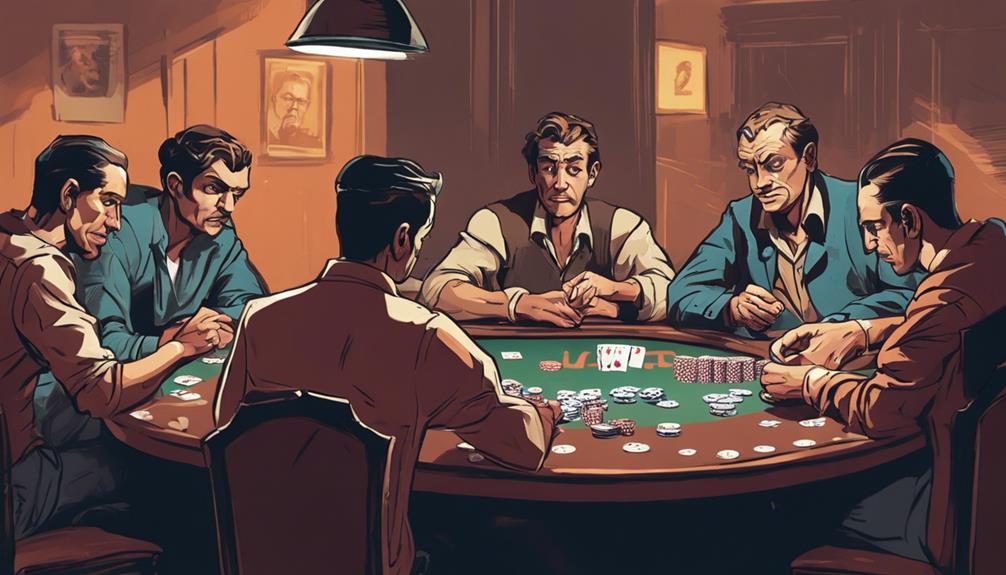
Though many strategies exist in poker, mastering the art of bluffing is undeniably essential. The significance of bluffing goes beyond mere deception; it’s a crucial tool for influencing game dynamics and misleading your opponents about your hand’s strength. A successful bluff can lead to significant pot wins and control the flow of the game. To bluff effectively, you need skill, experience, and psychological acumen, which helps you manipulate how your opponents perceive your playing style. This manipulation can open up more winning opportunities and keep your adversaries guessing.
Consider the following aspects of bluffing:
- Misleading Opponents: Convince them you’re holding a better hand than you actually are.
- Game Dynamics: Alter the pace and flow of the game, keeping it unpredictable.
- Psychological Edge: Gain insight into your opponents’ reactions and emotions.
- Risk and Reward: Balance the potential gains against the risks of getting caught.
- Emotional Control: Maintain composure to execute bluffs convincingly.
Bluffing also influences how cautious your opponents become, making them second-guess their strategies. By evoking emotional responses, you gain an edge, turning poker into a battle of wits where your ability to bluff can determine your success.
Frequently Asked Questions
Is Bluffing a Good Strategy in Poker?
Bluffing is a good strategy if you understand its effectiveness and psychology. You should consider bluffing frequency, risks, and tells. Employing various bluffing strategies and variations enhances your game. Balance these elements for successful bluffing and consistent wins.
How Do You Know if Someone Is Bluffing in Poker?
To know if someone’s bluffing, observe body language and facial expressions for nervousness. Analyze betting patterns and timing tells. Listen for verbal cues. Evaluate their table image and card strength for inconsistencies in their story.
What Is the Purpose of Bluffing?
You use bluffing as psychological warfare, misleading opponents and creating doubt. It builds your image and employs strategic deception to win pots. By reading players effectively, you manipulate the table dynamics, ensuring a tactical advantage over others.
What Is Bluffing in Poker Game Theory?
In poker game theory, you master bluffing psychology by balancing bluffing frequency and sizing within your bluffing range. Recognize bluffing tells, maintain bluffing balance, and understand bluffing equity to outsmart opponents and manipulate their decisions effectively.
Conclusion
In poker, mastering bluffing is essential to outsmart your opponents and win pots without the best hand. You’ve learned that successful bluffing involves timing, understanding your opponents, and employing the right strategies. Avoid common mistakes like bluffing too often or against the wrong players. Remember, effective bluffing can shift the game’s dynamics in your favor. So, trust your instincts, read the room, and use bluffing as a powerful tool in your poker arsenal.


