

Learn How to Deal Poker Like a Pro in 5 Easy Steps
Are you ready to sharpen your gaming skills and deal with poker like a seasoned pro? With just five easy steps, you’ll be shuffling, selling, and controlling the game like a true poker dealer in no time. This isn’t about magic tricks or luck; it’s about developing that eye for detail and mastering the art of smooth execution that sets professional dealers apart. So buckle up, and let’s dive into the world of professional poker dealing – where concentration meets technique, and mastery is just a deck shuffle away!
To deal with a poker game, start by shuffling the deck and ensuring all 52 cards are present. Then, cut the cards, mix again, and deal one card at a time clockwise to each player. The game proceeds through multiple betting rounds, each preceded by selling community cards and followed by players discarding cards or revealing their hands until one player wins the pot. For detailed instructions on dealing with different poker variations, check out our comprehensive guide on our website.
Understanding Poker Dealing Fundamentals
Before diving into the specific techniques of poker dealing, it’s important to grasp the fundamentals of this integral role at the poker table. As a dealer, you ensure fair gameplay and create an enjoyable experience for all players involved.
First and foremost, you must familiarize yourself with the rules and mechanics of the poker variant being played. Whether it’s Texas Hold’em, Omaha, or any other variation, understanding the hierarchy of hands, the betting structure, and when it’s time to reveal community cards is crucial. Each game has its unique nuances that differentiate them from one another.
Let’s take Texas Hold’em as an example. In this popular variant, each player is dealt two private cards (hole cards) face down, followed by rounds of betting and the gradual revelation of five community cards – three on the flop, one on the turn, and one on the river. The objective is to make the best possible hand using a combination of both hole and community cards.
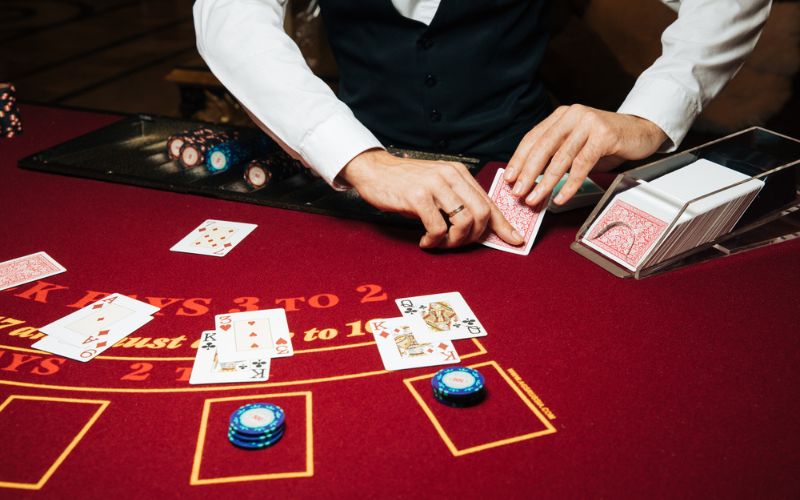
To execute your role effectively as a dealer, you’ll need to learn proper chip-handling techniques and understand how to manage player bankrolls.
Chip control is essential for maintaining orderliness and accuracy during transactions at the poker table. Please familiarize yourself with different chip denominations and their corresponding values. This knowledge will allow you to efficiently count and distribute chips when players buy in or make bets.
For instance, chips may come in various colors in casinos or larger-scale tournaments, denoting different monetary values. Keeping track of these values will help ensure accurate payouts and avoid player confusion during exchanges.
Additionally, understanding bankroll management is crucial for maintaining fairness and avoiding player conflicts.
Bankroll management involves overseeing each player’s stack of chips throughout the game. It’s important to maintain accuracy in tracking each player has amount in play, especially during betting rounds and when determining winners at showdown.
Imagine a player unintentionally pushing fewer chips into the pot than intended. As a vigilant dealer, you are responsible for identifying and rectifying this mistake to prevent discrepancies or arguments from arising.
By staying attentive and observant throughout the game, you ensure that all transactions are conducted smoothly, chips are handled accurately, and players’ bankrolls are managed fairly.
Now that we’ve explored the fundamentals of poker dealing let’s move on to the next critical aspect: shuffling techniques and card distribution.
Shuffling Techniques & Card Distribution
One of the essential skills for a poker dealer is mastering various shuffling techniques. A proper shuffle introduces an element of chance and ensures that the cards are randomly distributed, crucial for maintaining integrity in the game.
There are numerous shuffling techniques; however, let’s focus on two commonly used methods: washing the deck and riffling the cards.
The first technique, “washing the deck,” involves mixing up the cards thoroughly to achieve randomness. To do this, spread the cards face down across the table surface using both hands. Gently mix them around using a circular motion, ensuring that all cards come into contact with each other. This technique effectively blends the cards without revealing their faces or order.
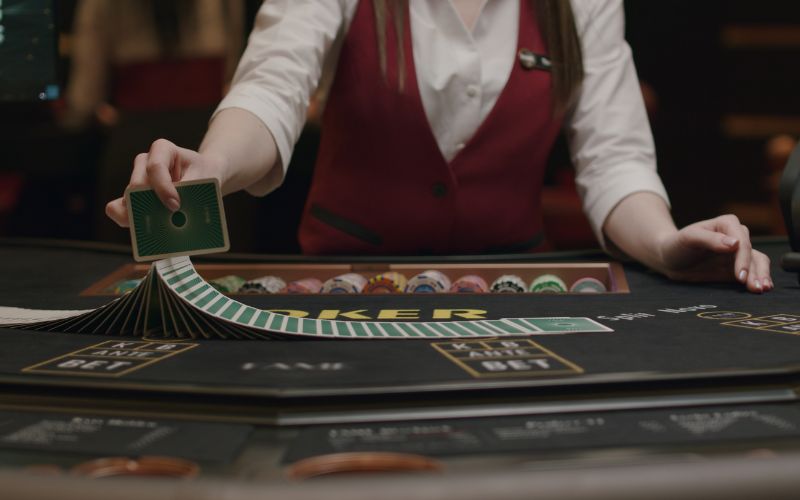
The second technique is called “riffling.” Hold half of the deck in one hand and use your thumb to release a portion while applying light pressure on the top half with your other hand’s thumb. Repeat this process with both halves until you feel comfortable with it. Riffling creates an alternating interlock between two halves, providing a thorough shuffle while retaining some of the deck’s original order.
Now that we’ve covered shuffling techniques let’s focus on card distribution.
When dealing with the cards, there are two primary styles: European and American. In European-style dealing, face-down, you slide the top card off the deck onto the table surface. In American-style marketing, you use your thumb to slide the full card toward your pitching hand before distributing it with a wrist flick.
Regardless of your style, remember to maintain consistency in your dealing motion and ensure that the cards are distributed firmly and smoothly. This ensures fairness and avoids any suspicions of manipulation or favoritism.
Chip Control & Bankroll Management
Mastering chip control and bankroll management is paramount when dealing with poker like a pro. Your ability to handle chips effectively and manage your bankroll will streamline the game and significantly impact your overall success.
Chip control refers to how you handle and distribute chips during the game. This skill requires finesse and precision, as it allows for smooth gameplay while ensuring accuracy in bets and pot calculations. Proper chip control involves neatly stacking and organizing chips in front of players, making it easier to track each player’s chances and make accurate payouts at the end of each hand.
Imagine a scenario where a dealer fumbles with the chips, confusing the players. The game flow could be disrupted, leading to misunderstandings or potential disputes. On the other hand, a dealer with excellent chip control effortlessly handles chips, providing a professional atmosphere that enhances the gaming experience.

Furthermore, maintaining proper bankroll management is crucial both for yourself as a dealer and for the players at the table. Bankroll management ensures that players have enough funds to sustain their gameplay, avoiding situations where they cannot continue due to insufficient funds.
Let’s consider an example of a player who fails to manage their bankroll effectively. They consistently overspend and risk more money than they can afford on each hand. Eventually, they deplete their entire bankroll, prematurely forcing them out of the game. In contrast, a player who exercises proper bankroll management limits how much they are willing to wager, ensuring they can play for extended periods without taking unnecessary risks.
Understanding and respecting chip control and bankroll management benefits the players and adds professionalism and credibility to your role as a poker dealer. It shows that you value fairness, integrity, and efficiency in the game.
- According to the Bureau of Labor Statistics, as of 2019, there were about 96,500 employed gaming services workers in the United States, including poker dealers.
- Research conducted in 2020 revealed that professional poker dealers make an average of $30 per hour with tips included.
- The American Gaming Association reports that poker is one of the most popular card games played at casinos, with approximately 6% of adult Americans visiting a casino specifically to play poker in a given year.
The Role of the Dealer in Texas Hold’em.
Now that we have covered the importance of chip control and bankroll management let’s explore the essential role of the dealer in a game of Texas Hold’em. As the dealer, you hold a position of authority and are responsible for maintaining order, managing the pot, and overseeing side pots.
One of your primary responsibilities as a dealer is managing the pot. This involves keeping track of bets made by each player, ensuring accurate calculations, and announcing the pool size after each betting round. By carefully monitoring the pot, you help eliminate confusion and maintain transparency throughout the game.
Imagine a situation where players are unsure how much has been wagered in the pot. It could lead to arguments and disputes, ultimately disrupting the game’s flow. However, with an attentive dealer who diligently manages the bank, such conflicts can be avoided, allowing the game to continue smoothly.

In addition to managing the pot, another crucial duty falls on your shoulders – overseeing side pots. In situations where players go all-in with varying chip stacks, side pots may be created to ensure fair distribution of winnings based on each player’s remaining chips.
As a dealer, your understanding of side pots is key. This knowledge allows you to accurately determine which players are eligible for which pots and distribute payouts accordingly.
The role of a poker dealer extends beyond mere card distribution. Chip control and bankroll management enable smooth gameplay while upholding fairness. Mastering these skills will cement your reputation as a professional dealer.
Now that we’ve explored chip control, bankroll management, pot management, and side pots, it’s time to delve deeper into other crucial aspects of being a proficient poker dealer.
Managing the Pot & Overseeing Side Pots
As a poker dealer, one crucial responsibility is managing the pot and overseeing side pots effectively. This ensures fairness and accuracy in distributing winnings among players. Let’s dive into the key aspects of managing the bank and handling side pots.
When managing the pot, your primary task is to keep track of bets, raises, and contributions made by each player during each betting round. It involves verifying that all players have placed their required bets and keeping a tally of the total amount in the pot. This requires keen attention to detail and excellent math skills since you’ll need to calculate pot totals quickly and accurately.
Imagine a scenario where multiple players are involved in a hand, some with larger stacks of chips than others. As betting ensues, certain players may go all-in or run out of chips. In such cases, side pots come into play.
Side pots are created when a player goes all-in, but other players still have chips. These additional pots allow those players with more chips to continue betting without risking their entire stack against all-in opponents. Managing side pots ensures that each remaining player has an equal chance to win based on their available bet amounts.
Now that we understand the basics of managing the pot and overseeing side pots let’s explore strategies for efficient poker dealing.
Strategies for Efficient Poker Dealing

Efficiency is key in poker dealing, as it helps maintain the game’s pace and ensures a smooth experience for all players involved. Here are some strategies that can help you deal with poker like a pro:
- Master Shuffling Techniques: Shuffling the deck properly is essential in creating randomness and integrity in the game. Practice various shuffling techniques like washing the deck, riffling, and cutting to ensure fair distribution of cards.
- Develop Keen Observation Skills: Pay attention to the action at the table, watch for betting patterns, and ensure players follow the rules. Being observant helps prevent mistakes and potential rule violations.
- Maintain a Pleasant Demeanor: As a dealer, you are the face of the game. Keep a friendly and professional attitude towards all players, making the experience enjoyable for everyone involved.
- Practice Speed and Accuracy: Work on dealing cards quickly while maintaining accuracy. This skill is crucial in keeping up with the game’s fast pace, especially during intense betting rounds.
- Stay Organized: Keep your workstation tidy and organized, ensuring that you have all necessary supplies readily available. This includes chips, decks of cards, and any additional equipment required for specific poker variations.
By implementing these strategies, you can enhance your overall efficiency as a poker dealer, making the game more enjoyable for yourself and the players.
For instance, imagine dealing at a crowded table with multiple side pots in play. By staying organized and managing the bank effectively, you can accurately track bets and payouts, minimizing confusion and ensuring fairness.
Dealing with Player Reduction & Leaves
In the dynamic world of poker, it is not uncommon for players to come and go during a game. As a poker dealer, you must be prepared to handle situations when player reduction or leaves occur. These moments can impact the game’s flow and require prompt action to maintain fairness and smooth gameplay.
When a player leaves the table, it is important to take note of their position in the betting order. This information will determine how the remaining active players adjust their positions accordingly. The vacant seat will typically be skipped over for the remainder of the current hand. Once a new hand begins, the role of the missing player will be filled by another player joining or returning to the table.
For example, imagine you are dealing Texas Hold’em with nine players. The player in seat five leaves after losing a significant amount of chips. In this case, players in hearts 6 through 9 would skip their turns until the button (dealer position) reaches seat 5. The next hand would begin with only eight players until someone occupies seat 5.
| Player Seat | Action |
| 1 | Fold |
| 2 | Call |
| 3 | Raise |
| 4 (missing) | – |
| 5 | – |
| 6 | – |
| 7 | Bet |
| 8 | Fold |
| 9 | Call |
Maintaining accurate record-keeping is crucial during these moments of player reduction or leaves. Clear communication with the remaining players and casino management ensures that all parties are informed about any changes in seating order and can prevent misunderstandings or disputes from arising.
- As a poker dealer, it’s essential to be prepared for situations when players leave or reduce the number of players during gameplay. When players go, note their betting position and adjust the game accordingly; the vacant seat will be skipped over until a new hand begins with another player filling the position. Clear communication with remaining players and casino management is crucial in maintaining accurate record-keeping and preventing misunderstandings or disputes.
Perfecting Your Poker Dealing Skills
Becoming a skilled poker dealer requires more than just knowledge of the rules. It is an art form that demands precision, efficiency, and exceptional multitasking abilities. To deal with poker like a pro, let’s explore key areas where you can focus on perfecting your skills.
Think of yourself as a conductor leading an orchestra; every movement is deliberate and precise, ensuring all elements come together harmoniously.
First and foremost, practice makes perfect. Set up mock games with friends or colleagues to simulate real gameplay scenarios. The more you deal, the better you’ll become at managing the various aspects of the game, such as shuffling, dealing cards swiftly and accurately, managing the pot, and overseeing side pots.
Additionally, pay close attention to your body language and demeanor. Maintain a calm and composed presence at all times, as it sets the tone for the players at the table. A confident dealer creates a positive atmosphere and instills trust in the game’s fairness.
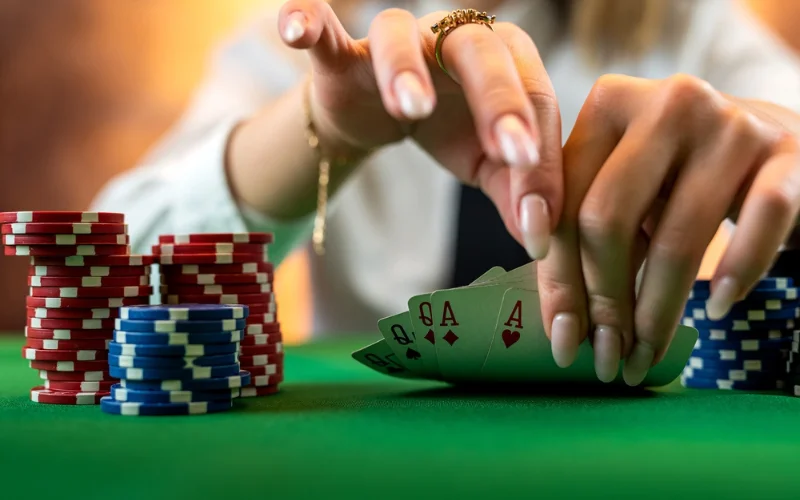
For instance, avoid showing frustration or favoritism towards any player during the game. Treat all players equally and respectfully to cultivate a professional environment.
Developing strong communication skills is another essential aspect of poker dealing. Engage with players by providing clear instructions, answering questions promptly, and resolving conflicts efficiently. Effective communication ensures that everyone at the table understands the rules and procedures and avoids misunderstandings.
Lastly, continuously improve by staying updated on industry best practices and techniques. Seek resources such as books or online tutorials to expand your knowledge base and refine your skills.
You will gradually become a true professional with dedication and persistence in refining your poker dealing skills. Remember, practice builds confidence, and confidence breeds success.


