

How to Play Poker Without Chips: A Step-by-Step Guide
Have you ever been itching for a poker game but realized you don’t have any chips? Or perhaps you’re looking for a way to play that doesn’t involve the potential loss of real money? Then this guide is perfect for you. We’ll walk you through playing poker without chips yet retaining all the intensity and strategy that make the game so beloved. Whether you’re an experienced card shark searching for a new challenge or a novice aiming to learn the ropes without financial pressure, our step-by-step guide will equip you with all the knowledge to play poker chip-free. Read on and revolutionize the way you enjoy this classic game.
Some alternatives to traditional poker chips when playing poker include using spare change, creating makeshift scraps from board games or office supplies, and even using dried foods like beans or legumes as stand-ins. Assigning value to these substitutes before beginning the game and keeping track of the tally throughout gameplay is important.
Rules of No-Chips Poker
In the absence of traditional poker chips, playing poker without chips requires some adjustments to the rules. While the core principles remain intact, certain modifications are necessary to ensure smooth gameplay and accurate tracking of bets. Let’s explore the essential rules for playing no-chips poker.
Firstly, it’s important to establish an agreed-upon substitute for chips that will represent the players’ respective bets and pot contributions. This can be anything from play money, colored paper or cards, or even unique items like buttons or pebbles. Each player should have a consistent supply of their chosen substitute throughout the game.
Next, assign a specific value or denomination to each substitute item. For example, using play money, you can designate $1 bills as low-value bets and $100 bills as high-value bets. Making this distinction helps maintain clarity during betting rounds.
Players should announce their intended chance before placing their substitute item into the pot when placing bets. This verbal declaration ensures transparency and prevents any confusion among players about the intended amount they wish to wager.

Another crucial aspect is keeping track of each player’s bet amounts throughout the game. A dedicated dealer or one of the players should maintain a written record of the current pot size and each player’s chances. This documentation helps avoid disputes and lets everyone stay informed about their position in the game.
Lastly, during showdowns where players reveal their hands to determine the winner, it’s important to accurately calculate pot distributions based on each participant’s bet contributions. The person responsible for record-keeping should carefully assess each player’s share according to their betting history.
Remember that these modified rules replicate the essence of using poker chips while playing without them. Adhering to these guidelines ensures fairness and transparency throughout the game, making for an enjoyable experience for all participants.
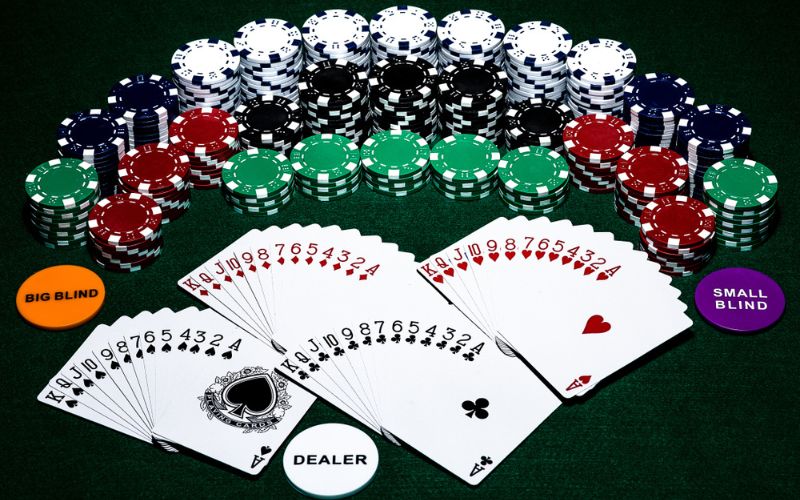
Creating a clean and organized playing environment is essential when setting up a poker game without chips. While the absence of physical chips may present some challenges, proper table arrangement can help overcome these hurdles and ensure a smooth gameplay experience.
Start by designating a specific area as the “pot” or centralized location for placing bets. This can be a small bowl, plate, or container suitable for holding substitute items representing players’ bets. Make sure it is easily accessible to all players and visible to avoid any confusion during betting rounds.
To further enhance clarity and eliminate potential misunderstandings, consider providing each player with their own designated area on the table. This can be marked using tape or small notecards with their names written on them. Having individual spaces helps keep players’ substitute items organized and minimizes the risk of mix-ups.
Additionally, if you use substitute items like play money, consider organizing them in stacks or piles for each player. This makes it easier for participants to navigate their bets without mixing up different denominations or values.
Furthermore, having a dedicated dealer or rotating dealer position adds structure to the game, ensuring fair distribution of cards and facilitating smooth gameplay. The dealer’s role extends beyond card dealing – they can also serve as the record-keeper mentioned earlier, keeping track of pot contributions and individual bets.
Lastly, consider establishing clear rules and guidelines before starting the game. Determine factors such as blind amounts (if applicable), minimum and maximum bet limits, and any special restrictions unique to your no-chips poker game. Communicating these rules to all participants ensures everyone is on the same page and promotes overall fairness during gameplay.
You can set up a functional and enjoyable no-chips poker table by carefully arranging the playing area and establishing clear guidelines. With everyone aware of their surroundings and armed with the necessary information, players can focus on strategizing their moves rather than getting caught up in logistical issues.
- According to a study published in the Journal of Gambling Studies in 2021, approximately 45% of people play poker at home, with many not using traditional poker chips.
- In a survey conducted by Newzoo in 2023, it was found that nearly 30% of poker players had used substitutes like coins, board game pieces, or office supplies when they didn’t have chips available.
- A study by Casino.org in 2023 revealed that an estimated 80% of casual poker players could manage games successfully without traditional poker chips, utilizing alternatives instead.
Substituting Chips in Poker
When playing poker without chips, several creative alternatives can be substitutes. While poker chips are the traditional choice, these alternatives can be just as effective in keeping track of bets and maintaining the excitement of the game.
One option is to use play money from board games such as Monopoly or Payday. These board games often have denominations printed on the money, making assigning different values for betting purposes easy. Distribute the play money to each player and use it as regular poker chips.
Another alternative is repurposing items from other board games, such as makeshift poker chips. Scrabble tiles, for example, can be assigned monetary values and used instead of traditional poker chips. Similarly, game pieces from Othello, Connect 4, Backgammon, or Checkers can serve as unique and colorful substitutes.
If you don’t have any board games, household items can also be used as poker chips. For instance, small dried food items like beans or corn can be utilized. However, it’s important to avoid messy food items that may leave residue on the playing surface. These dried food items can be easily counted and stacked like poker chips, providing a fun and tactile experience.
Now let’s look at how to use household items as poker chips in more detail.
Using Household Items as Poker Chips
Office supplies you likely have lying around your home can come in handy when substituting poker chips. Items like paper clips, rubber bands, post-it notes, or spare change can be used as makeshift poker chips. You can assign different values to each item based on size or material.
Another option is to get creative by using colored popsicle sticks. These sticks can be used as they are or with denominations written on them. They can be easily stacked and counted, visually representing each player’s bets.
Consider it turning your game into an arts and crafts project, where you customize your poker chips using everyday items in your home.
If you’re feeling particularly resourceful, items commonly found in garages like nuts, bolts, nails, washers, fasteners, or electrical terminals can be unique and unconventional substitutes for poker chips. Thoroughly clean them before use to avoid dirt or grease transferring to the playing surface.
While these alternatives may not replicate the exact feel of traditional poker chips, they can add a fun and unique element to your game. Some players argue that using alternative items, such as poker chips, adds a sense of creativity and spontaneity to the game, making it more enjoyable and memorable. Others may prefer the weight and feel of poker chips to enhance their playing experience.
However, it’s important to note that whichever alternative you choose, the main goal is to find a method that allows for easy tracking of bets and maintains fairness among all players. As long as everyone understands the assigned values and communicates clearly throughout the game, these substitute options can provide a satisfactory gaming experience.
Now that we’ve explored different options for substituting poker chips and using household items creatively let’s move on to another crucial aspect: blinds and ants.
- Office supplies and household items such as paper clips, rubber bands, post-it notes, spare change, or nuts and bolts can be used as makeshift poker chips for a fun and unique gaming experience. Using colored popsicle sticks with denominations written on them is another option. However, it’s important to ensure easy tracking of bets and maintain fairness among all players by assigning values to these items and clear communication throughout the game. If everyone understands the given values, these substitute options can provide a satisfactory gaming experience.
Blinds and Antes
When playing poker without chips, it’s essential to establish a system for blinds and ants. These forced bets ensure that each hand has some value at stake, keeping the game exciting and competitive.
In a traditional poker game with chips, the blinds and antes are set before each hand begins, with players placing their bets using scraps of different denominations. However, you must devise an alternative method for determining the blinds and antes in a no-chips poker game.
There are various approaches you can take when it comes to blinds and ants in a no-chips poker game. One option is assigning a specific value to each round of blinds and antes using play money from board games or other small items representing currency. For example, you could use Monopoly money and designate certain bills or coins as the blinds and antes for each hand.

Let’s say you’re playing Texas Hold’em without chips, and the agreed-upon blind structure is $1 small blind and $2 big blind. You could use Monopoly money and designate a $1 bill as the small blind and a $2 bill as the big blind for each hand. Similarly, if there’s an ante involved, you could assign a specific play money value to it.
Alternatively, if you don’t have play money, you can use different objects around the house to represent blinds and ants. For instance, you could use colored paper clips, where each color represents an additional value, or even post-it notes with values written on them.
Establishing clear rules regarding blinds and ants is important before starting the game. Ensure all players understand how much they must contribute for each round of blinds and antes. This will help maintain fairness throughout the game and avoid confusion or disputes.
Now that we have covered how to handle blinds and ants in a no-chips poker game let’s move on to the next important aspect: betting rounds.
Betting Rounds
In poker, betting rounds are where the action heats up. It’s during these rounds that players have the opportunity to make strategic decisions, bluff, and potentially win the pot. When playing without chips, it becomes crucial to have a reliable method for keeping track of bets and managing the progression of the betting rounds.
You can use several alternatives to physical chips to effectively handle betting rounds in a no-chips poker game. One option is to assign a specific value to each type of bet and keep track of the amounts using pen and paper or a digital device. For example, you could give a value of $10 to a check, $20 to a call, and so on.
Let’s say you’re playing a hand of five-card draw poker without chips. The first player decides to place a $10 bet. As the next player, you must match that bet with another $10 if you call. This process continues throughout the remaining betting rounds, with each player contributing the appropriate amount based on their desired actions.
Another alternative is to use small objects like coins or buttons as placeholders for bets. Each player can place their object in front of them to represent their bet amount.
Establishing clear rules regarding bet values before starting the game is important, ensuring that all players understand how much they need to contribute for each type of action. By doing so, you can maintain fairness and consistency throughout the game.
Now that we’ve discussed blinds, antes, and betting rounds in a no-chips poker game, let’s explore anding strategies tailored to this unique setting.
Winning Strategies in No-Chips Poker
Playing a poker game might initially seem challenging without traditional poker chips. However, with some creativity and adaptability, you can still enjoy the thrill of the game. While there might not be physical currency at stake, the essence of poker remains intact – strategizing, reading opponents, and making calculated decisions. Let’s explore some winning strategies in no-chips poker that can help you come out on top.
One key no-chips poker strategy is carefully managing your “bankroll.” Just because you don’t have physical chips doesn’t mean you should bet recklessly or without thought. Instead, assign a specific value to each makeshift substitute you use as currency. This could be play money from board games or even nuts and bolts from your garage. By mentally assigning value to these substitutes, you can still make calculated bets based on the strength of your hand and your assessment of the other players’ moves.
Another strategy to consider is maintaining a strong poker face. Even though there might not be any real money on the line, keeping your emotions in check and not revealing too much about the strength or weakness of your hand can give you an advantage over your opponents. By mastering the art of bluffing and reading your opponents’ tells, you can still manipulate the game and increase your chances of winning.

For example, imagine you are playing a game of no-chips poker with friends using paper clips as currency substitutes. Your friend across the table suddenly starts fidgeting and avoiding eye contact when they have a good hand. Recognizing this tell, you can confidently raise their bet and force them to make riskier decisions.
Furthermore, adaptability is crucial in no-chips poker. Since the absence of chips requires additional creativity in keeping track of bets and pot sizes, flexibility is essential for smooth gameplay. Whether using pen and paper or assigning values to various substitutes, staying organized and keeping a mental note of the game’s current state will help you make informed decisions.
Now that we’ve discussed some winning strategies in no-chips poker, let’s dive into an essential game component that remains unchanged regardless of the absence of chips – understanding card value and hands.
Understanding Card Value and Hands
Whether you’re playing with traditional chips or substitutes, understanding card value and different hands is crucial for success. The hierarchy of card ranks remains the same, ensuring consistency in gameplay.
At the basic level, a standard deck of 52 cards consists of four suits: hearts, diamonds, clubs, and spades. Each case contains thirteen ranks from ace to ten, followed by the face cards – jack, queen, and king. Authorities can be high or low, depending on the poker variant.
The ranking of hands also follows a consistent pattern in all poker variations. The highest-ranking hand is the royal flush, consisting of an ace, king, queen, jack, and ten of the same suit. This is followed by a straight flush (five consecutive cards of the same suit), four of a kind (four cards with the same rank), full house (three cards of one rank and two cards of another level), flush (five cards of the same suit), straight (five consecutive cards regardless of their claims), three of a kind (three cards with the same rank), two pair (two sets of cards with the same level), one pair (two cards with the same level), and finally, high card (when none of your cards match any other hand).
Understanding these different hands and their rankings allows you to assess your hand’s strength relative to others at the table. You can make informed decisions on whether to bet, call, or fold by recognizing which hands are more favorable than others in probability and rarity.
For instance, if you have a pair of jacks and the community cards on the table show another two jacks along with other unrelated cards, you’d have a four-of-a-kind. This incredibly strong hand gives you a high probability of winning the game.
As you experience playing poker without chips, understanding card value and hands become second nature. It enables you to assess your odds accurately, strategize your betting patterns effectively, and ultimately increase your chances of emerging victorious.


