

Texas Holdem Dealing Tips: Mastering Rules And Strategies
Picture yourself as the life of every poker party, guiding the game masterfully, dealing cards as if you were born to do it. As you delve into today’s article, we’ll help you achieve just that, transforming novices into knowledgeable Texas Holdem dealers. We’re diving deep into the essential rules and strategies that can make or break a Texas Holdem poker game. Whether you’re a beginner seeking clarity or an experienced player aiming to enhance your home games, read on for tips that will turn you from student to maestro in no time!
When dealing with Texas Holdem, first determine the dealer by having each player draw a card with the highest value, becoming the dealer. The dealer then distributes two face-down cards, the hole cards, to each player. Betting rounds follow each round of community card distribution, consisting of three in the flop, one in the turn, and one in the river. Further details on properly dealing with Texas Holdem can be found on our website.
Texas Holdem Dealing Rules

Texas Hold ’em is a popular poker variation that’s easy to understand once you get the hang of it. The game has two types of blinds, small and big, and each player receives two hole cards from the dealer. Five community cards are then dealt on the table for everyone to use. As such, proper dealing is critical in ensuring fair gameplay.
Role of a Dealer
In Texas Hold’em, the dealer’s role rotates clockwise after each game, with the person who dealt the last hand passing the “dealer” token to the left. The dealer can be identified by referring to this token. Their primary duty is to manage all bets made during a game while ensuring gameplay occurs smoothly. A common practice among dealers is to announce betting status clearly; for example, they may say, “The bet’s still at $10,” before allowing players to take their turn.
An experienced dealer will always ensure that all 52 primary suit cards are present by fanning out the deck on the table before starting gameplay. This can help prevent cheating or foul play during the game.
Players follow strict rules when interacting with a dealer; for instance, they cannot touch or view the cards without permission. Furthermore, dealers must shuffle the cards appropriately between rounds using table riffle or overhand shuffling techniques. Repeat this process at least twice before dealing starts to ensure adequate randomness.
Now that we have detailed what a dealer does in Texas Hold’em, let’s explore how they conduct proper dealing.
- According to a survey done by Poker Players Research in 2020, Texas Hold ’em is still the most popular form of poker, accounting for approximately 55% of all online poker activity.
- A Harvard University’s Global Poker Strategic Thinking Society study found that understanding how to deal with and play Texas Hold ’em greatly improves strategic thinking skills. Statistically, players who were dealers first performed better in the long run.
- Based on data from the World Series of Poker (WSOP), as of 2022, Texas Hold ’em tournaments have generated over $3.19 billion in prize money, highlighting the importance of correctly dealing and understanding game mechanics for success in high-stakes settings.
In Texas Hold’em, the dealer’s role is essential in managing bets and ensuring smooth gameplay. They rotate clockwise after each game, with the person who dealt the last hand passing the “dealer” token to the left. The dealer’s primary duty is to manage all bets made during a game and announce betting status clearly.
To conduct proper dealing, an experienced dealer will always ensure that all 52 primary suit cards are present by fanning out the deck on the table before starting gameplay. This helps prevent cheating or foul play. Players must follow strict rules when interacting with a dealer, such as not touching or viewing the cards without permission.
Dealers must also shuffle the cards appropriately between rounds using table riffle or overhand shuffling. This ensures adequate randomness in card distribution. Repeating this shuffling process at least twice before dealing starts is recommended.
Understanding a dealer’s responsibilities and proper techniques in Texas Hold’em is crucial for fair and enjoyable gameplay.
Proper Dealing Process
The dealer in Texas Hold’em assumes the role of a moderator and is responsible for dealing out all the cards, managing bets & rounds, and determining the winner of each hand. It’s a critical position since payouts are made based on proper card distribution. To ensure that everything runs smoothly from the very beginning, here’s a breakdown of the ideal poker dealing process:
Before doing anything else, ensure all 52 primary cards are present by laying them flat on the table and fanning them out. Make sure to remove Jokers if present.
Positive rapport is vital between the players and the dealer. So take the time to introduce yourself and dish out small talk to make everyone feel comfortable.
Determining who starts by dealing one card to each player is essential. The individual with the highest ranked card (Aces being high or low) opens as the dealer.
Advanced Strategies in Texas Hold’em
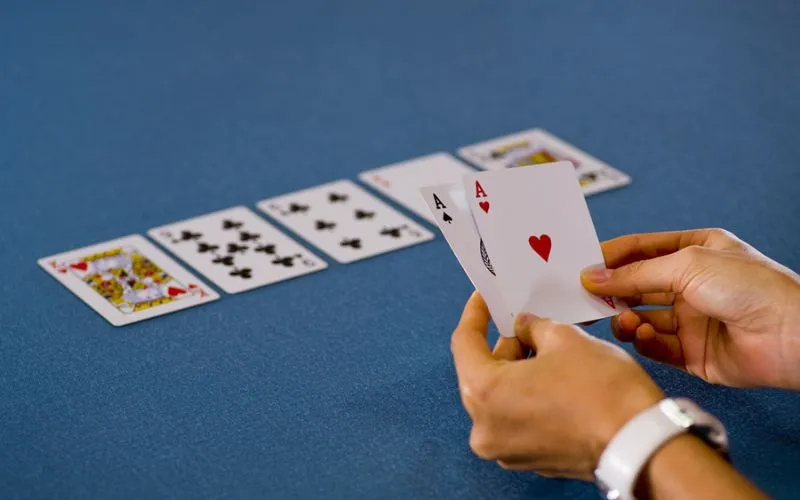
After learning the basic rules of Texas Hold ’em, incorporating more advanced strategies can significantly improve gameplay outcomes. Here are some approaches to try when you’re looking to take your game up a notch:
When it comes to betting, study your opponents’ actions during previous rounds before committing any chips; these observations could reveal their betting patterns or “tells”. Always consider how much loose change each player has left so that you can put pressure on those who have fewer chips.
It’s important to play aggressively in Texas Hold ’em – this doesn’t necessarily mean playing every hand, but making strategic movements when backed up by solid hands can lead to good prospects.
Watch out for opponents’ stacks – if someone is about to be knocked out, they may go “all-in” with poor hands to stay alive in the game. This move is known as “tilt play,” it can offer an opportunity for big wins if you have the right cards.
Consider playing poker like playing soccer – stick to your game plan but stay versatile and don’t hesitate or wait too long, or the game will expose its faults.
It’s also essential to become familiar with different variations of Texas Hold ’em, including Limit Hold ’em (CE) and Pot-Limit Hold ’em (PLE). These variations have specific betting structures and can affect how hands are played.
Think of these as different pitches in baseball – similar games but played differently in slight ways.
These advanced strategies require practice and patience before incorporating them into your gameplay. But remember: these strategies aren’t foolproof and won’t always lead to success; it’s crucial to continue learning from each gaming experience.
Identifying Key Hands
As a dealer, knowing the key hands in Texas Hold’em can make all the difference in dealing. The strongest hand is the Royal Flush, consisting of ten, Jack, Queen, King and Ace of the same suit; Straight Flush and Four of a Kind follow this. The next set comprises Full House, Flush, and Straight. Three of a Kind, Two Pair and One Pair follow, with High Card being the least valuable.
When dealing with active players who understand these fundamentals, you must handle each card well enough to prevent skimming or exposing them to other players. Ensure that when revealing cards on the table, you do it gradually and securely without revealing any more than necessary.
Anticipating Opponent’s Moves

It isn’t enough to go through the motions of shuffling and dealing; great dealers must also have exceptional gaming skills. One critical aspect of this skill set is anticipating their opponent’s moves.
Think of it like playing chess: predicting what an opponent might do before they make their move can mean the difference between winning or losing. In Texas Hold’em, novice players usually follow certain patterns when placing bets based on the kind of cards they hold. Dealers who master this pattern-recognition process can raise their wins significantly.
For instance, if an opponent re-raises without hesitation after being re-raised on a pre-flop bet, it probably indicates they have an excellent hand and are confident about winning – reading such patterns takes practice but can save you significant losses.
In contrast, players with marginal hands may flat call or place smaller bets to prolong the game in hopes of getting lucky with subsequent community cards. Adjust your strategy accordingly once you’ve observed such tendencies from your opponents.
Remember that every opponent is unique, and you must avoid making assumptions if you’re not confident about their playing style. Take your time reading your opponents carefully before making any risky moves.
Reading Opponents through Betting Habits
In Texas Hold’em, reading your opponents or trying to discern their strategies and betting habits is an essential skill that separates good players from great ones. While experience can help identify certain patterns, we recommend keeping a few things in mind while studying your opponents:
Firstly, observe the amounts players bet on different streets and how they react to board cards that appear. Good players often utilize the pot size to calculate their bets effectively.
Another habit to watch out for is the frequency at which your opponent checks or bets. This can also indicate if they possess a hand with better value than you.
Also, take notice of sudden changes in betting patterns. Players will often change their style if they have hit a good hand; it’s essential to be aware before making rash decisions.
Remember – betting patterns are not always reliable indicators of your opponent’s skills or hand strength, but understanding these patterns is still beneficial to one’s gameplay strategy.
Winning Strategies for Texas Hold’em
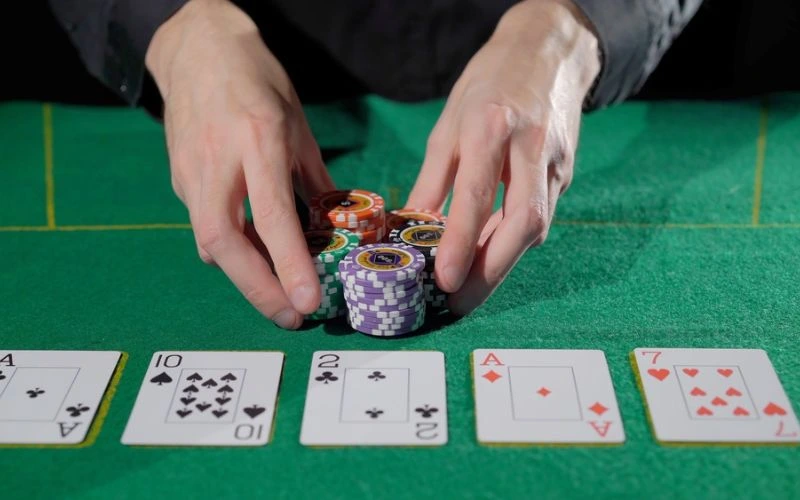
Often considered the king of all poker games, Texas Hold’em requires specific strategies and techniques that increase your chances of winning big. We’ve listed some effective strategies below:
- Play aggressively: Playing passively may lead to short-term comfort but doesn’t pay off in the long run. Aggressive play helps maintain control over the pot size and puts pressure on others to make tough calls.
- Adopt a tight pre-flop strategy: Tight ranges enable you to reduce variance and gain more control over committed money pots.
- Positional advantage is crucial: The later your position in the round (late position), the more information you have about opponents’ hands.
- Learn How to Bluff Effectively: Bluffing can be a potent tool with optimal frequencies when used correctly.
- Learn when to fold hands: Knowing when can be as crucial as knowing when to play one. Don’t hold onto weak hands for too long.
- Be aware of your stack size: Being alert about stack sizes will help identify the best times to push or pull back from a hand.
- Observe your opponents: Keep track of what moves they make and how they react in various situations. This habit can be useful when you repeatedly compete against the same players.
- Practice Good Bankroll Management Strategy: Bankroll management involves learning how to manage money effectively to avoid losing more than one can afford.
These are some critical strategies to apply during Texas’ Holdem gameplay but remember that mastery requires time, discipline, patience, and persistence.


