
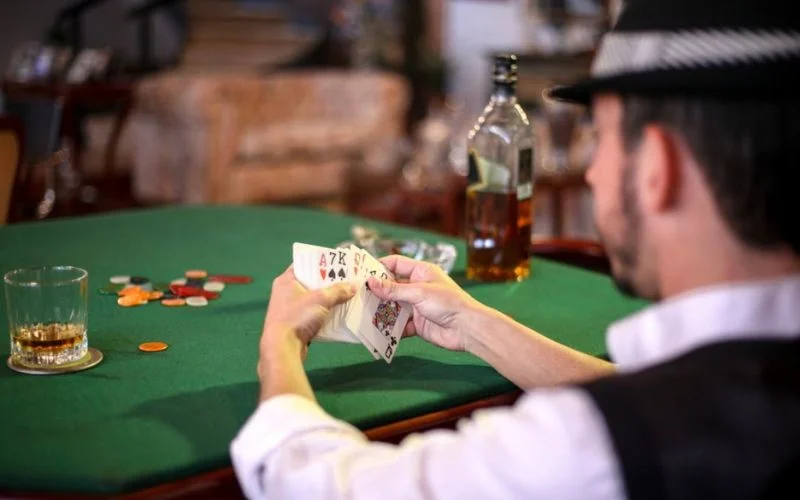
The Art of Paying Attention to Your Opponent Stack Size
In poker, paying attention to your opponents’ stack sizes can differentiate between a successful play and a costly mistake. Recently, I was engaged in a high-stakes poker game, where a particular hand illustrated the importance of this fundamental aspect of the game. This article will dissect that incident while emphasizing the significance of sizing up your competition.
Table of Contents
ToggleThe High-Stakes Game

I found myself in a $1,000 maximum buy-in, $2-$5 no-limit poker game, fully aware of the critical role that stack sizes play in decision-making. At one point, a new player joined the table, sitting two seats to my right, and bought in for $1,000, just like the rest of us. Little did he know that his lack of attention to his opponent’s stack size would soon lead to a costly blunder.
The Crucial Hand
On the other hand, he played the new player who faced a pivotal decision. When the turn card was dealt, he checked, and his lone opponent, seated immediately to his left, made a modest bet. In a hasty and ill-considered move, the new player declared, “All-in,” believing he was risking no more than around $250. To his shock, his opponent promptly called and revealed that he had approximately $1,300 in chips.
The new player was visibly rattled. He complained that he had not seen his opponent’s stack of hundred-dollar chips, assuming he only had a few stacks of red ($5 chips). His opponent argued that the black chips were visible, unobstructed, and not concealed. Now, the new player faces a dilemma – call for the remaining amount or fold. After a prolonged struggle, he reluctantly called, only to lose to his opponent’s nut flush on the turn.
The Fallout
Frustrated and disheartened, the new player couldn’t relinquish his grievance. He turned to the dealer, demanding to know why he wasn’t informed about his opponent’s stack size. The dealer calmly responded, “You never asked me. I’m not typically responsible for tracking each player’s stack, but I’m always happy to provide that information when requested.” A floor supervisor was summoned to resolve the escalating tension, and they upheld the dealer’s explanation. With the argument deflated, the losing player bought in for another thousand dollars.
Throughout this incident, I remained silent, as it was evident that the dealer and floor supervisor had the situation under control. The real lesson here is that the new player neglected to perform a fundamental task in poker – assessing his opponents’ stack sizes before making a critical decision.
The Importance of Stack Size

Poker is a unique sport where there is no warm-up period. Unlike other athletic endeavors, poker players don’t receive practice hands upon sitting down; they immediately commit real money to the game. This lack of a warm-up makes it imperative to size up your opponents.
Learning from the Mistake
He might have made a more informed decision if the new player asked his opponent about their stack size before moving. He could have tailored his bet by factoring in stack size and his hand’s strength. This might have saved him a substantial portion of his chips.
It’s worth noting that, with more experience at the table, the new player may have handled the situation differently. He could have taken the time to assess his opponents, their playing styles, and their chip counts. In poker, patience and observation are often rewarded.
The Value of Early Observation

In poker, the early stages of a game are invaluable for gathering information and sizing up your competition. Paying close attention to your opponents‘ tendencies and stack sizes can give you a strategic advantage. Here are some key takeaways from this incident:
Gather Information Early
From the moment you sit down at a poker table, make it a habit to assess your opponents. Take note of their stack sizes, playing styles, and discernible patterns. This early observation can help you make more informed decisions later in the game.
Stack Size Matters
A player’s stack size directly affects their betting capabilities and decision-making. Knowing the approximate chip counts of your opponents can guide you in determining the appropriate bet size and whether to engage in a hand or fold. It’s a critical factor to consider when strategizing in poker.
Adapt to Your Opponents
Poker is a dynamic game where your strategy should adapt to your opponents. You can adjust your play accordingly by understanding their tendencies and having an idea of their chip counts. This flexibility can lead to more profitable outcomes over the long run.
Communication Is Key
In poker, communication is not limited to verbal exchanges. Subtle cues, like chip stacking and placement, can convey valuable information. When in doubt, don’t hesitate to ask the dealer or a floor supervisor for an opponent’s stack size – it’s a common practice and can prevent misunderstandings.
Patience Pays Off
The incident described earlier underscores the importance of patience in poker. Rushing into decisions without assessing the situation thoroughly can be detrimental. Take time, evaluate your options, and make calculated moves, especially in high-stakes games.
Continuous Learning
Poker is a game of skill and strategy; even seasoned players continue to learn and improve. Reflecting on your own experiences and the experiences of others can lead to valuable insights. The more you understand the game’s intricacies, the better equipped you’ll be to make profitable decisions.
Conclusion
In conclusion, the incident at the poker table serves as a reminder of the critical role that paying attention to your opponents’ stack sizes plays in the game. It’s a fundamental aspect of poker strategy that can significantly impact your success. By consistently gathering information, adapting to your opponents, and practicing patience, you can increase your chances of making profitable decisions and thriving in poker. So, the next time you sit at a poker table, remember to pay attention to your opponent’s stack sizes – it might be the key to your success.
FAQs
Why is it essential to pay attention to opponents’ stack sizes in poker?
Paying attention to opponents’ stack sizes in poker is crucial because it directly influences your decision-making process. Knowing your opponents’ chip counts lets you make informed bets, raises, or folds. It helps you gauge the strength of your hand relative to your opponents and decide whether to engage in a hand or avoid unnecessary risk. Neglecting stack sizes can lead to costly mistakes and missed opportunities in the game.
How can I determine an opponent’s stack size without asking?
While it’s best to ask the dealer or a floor supervisor for an opponent’s exact stack size, you can make educated estimations by observing the number and denomination of their chips in front of them. High-value chips (e.g., $100 chips) are typically more visible, while lower denomination chips may be stacked beneath. Keep an eye on any recent bets made by your opponents, as this can also give you clues about their stack sizes.


