

How Many Cards Are in Short Deck Poker?
You’re curious about Short Deck Poker and its intriguing twist on the traditional game. Instead of the usual 52 cards, this version only uses 36, but what’s the reason behind this change, and how does it affect your strategy? By removing all 2s, 3s, 4s, and 5s, the dynamics shift dramatically, altering hand rankings and probabilities. Have you ever wondered how an ace’s role transforms in this setup or why certain hands become more potent? These questions are just the beginning. There’s more to uncover about how these adjustments impact your approach and the game’s rising popularity.
Key Takeaways
- Short Deck Poker uses a deck consisting of 36 cards.
- Cards 2 through 5 are removed from the standard 52-card deck.
- The deck includes cards from 6 to Ace across all suits.
- The reduced deck alters hand probabilities and gameplay dynamics.
- Short Deck is a variant gaining popularity due to its fast-paced action.
Understanding Short Deck Poker
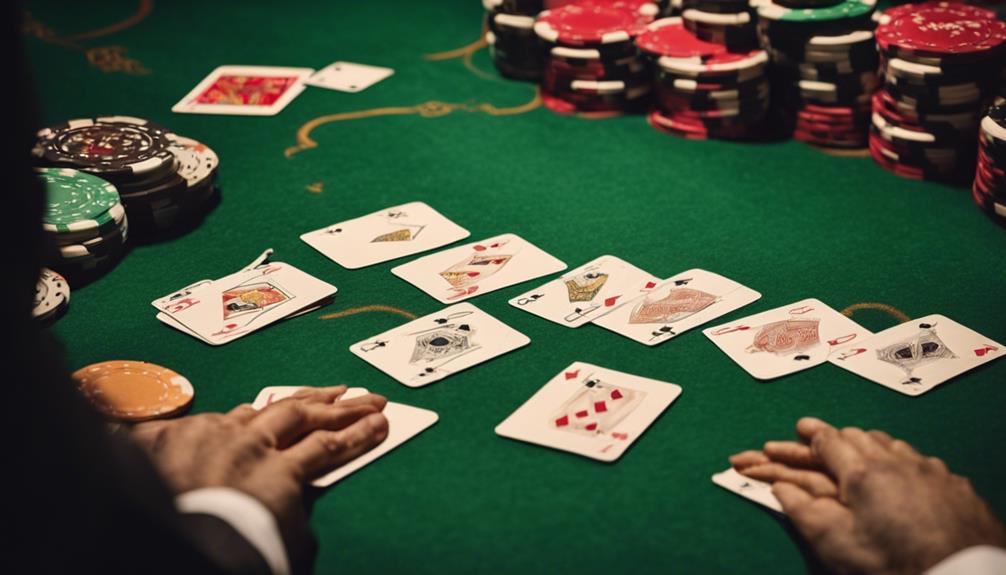
In recent years, Short Deck Poker has gained popularity as an essential variant of traditional poker. This version captivates players by using a 36-card deck, where the 2s, 3s, 4s, and 5s are removed, creating a unique deck structure. When you play Short Deck Poker, you receive two hole cards, just like in traditional Texas Hold’em, and combine them with five community cards to form the best possible hand. However, the modified deck influences hand rankings and probabilities, making the game both challenging and exciting.
In Short Deck Poker, hand rankings differ slightly due to the absence of lower cards. For instance, a flush is ranked higher than a full house, unlike in traditional Texas Hold’em. Another intriguing aspect is the flexibility of aces, which can be used as high or low when forming straights. This adds a layer of strategy and unpredictability to your gameplay.
Understanding these differences is essential when shifting from traditional Texas Hold’em to Short Deck Poker. The modified deck and changed probabilities demand adaptability and a fresh approach to strategy. By embracing these nuances, you can enhance your skills and enjoy the dynamic nature of Short Deck Poker.
Deck Composition
As you shift your focus to the mechanics of Short Deck Poker, understanding its unique deck composition becomes essential. Unlike traditional poker, Short Deck Poker uses a 36-card deck by removing all the 2s, 3s, 4s, and 5s. This change in deck composition greatly impacts the game, affecting hand rankings and altering probabilities. With these lower cards gone, the dynamics and strategies you employ will differ from those in traditional poker.
In Short Deck Poker, you still receive two hole cards and use them with five community cards. However, the smaller deck size means that certain hands become more common, leading to intense gameplay. For instance, because there are fewer cards, straights and flushes might appear more frequently, and hand rankings change accordingly. Adapting to this requires a shift in your strategic approach.
The removal of the 2s, 3s, 4s, and 5s means you must think differently about potential hands and outcomes. The smaller deck size not only increases the pace of the game but also heightens the excitement, as every card dealt can dramatically shift the balance. Embrace this fast-paced environment as you master the nuances of Short Deck Poker.
Card Removal Impact

When you play Short Deck Poker, the removal of the 2s through 5s dramatically shifts the deck composition, altering the probabilities and odds you’re used to in traditional poker. You’ll need to adjust your strategies as certain hands become less frequent, with flushes becoming significantly rarer. Understanding these changes is essential to gaining an edge and making informed decisions at the table.
Deck Composition Changes
The allure of Short Deck Poker lies in its altered deck composition, which fundamentally shifts the game’s dynamics. By utilizing a 36-card deck, you remove all 2s, 3s, 4s, and 5s, creating a unique poker experience. This change impacts hand probabilities and rankings significantly, forcing you to rethink traditional strategies.
Flushes become more challenging to achieve, adding a layer of complexity to your gameplay decisions. Aces, in particular, gain special importance as they can be used both high or low to complete straights, offering you more flexibility and strategic options.
Consider these key effects of the 36-card deck:
- Flushes: With fewer cards, flushes are rarer, altering their typical value in hand rankings.
- Aces: Their dual role, high or low, makes them versatile assets in your hand.
- Hand Probabilities: The removal of low cards changes the likelihood of certain hands, requiring you to adjust your tactics.
- Fast-Paced Gameplay: The reduced deck leads to a quicker, more dynamic game, keeping you on your toes.
Embracing the unique deck composition of Short Deck Poker means engaging in a fast-paced game where traditional poker strategies don’t always apply. Adaptability and awareness become your best allies.
Strategic Hand Adjustments
Understanding how the 36-card deck affects your strategy is key to mastering Short Deck Poker. With 2s, 3s, 4s, and 5s removed, you’re dealing with altered probabilities that demand strategic adjustments. The card removal impacts hand probabilities, meaning the frequency with which certain hands occur has changed.
It would be best if you adapted your hand strategies by considering these shifts when selecting your starting hands. For instance, high cards gain more value, while flushes become harder to achieve.
Your starting hand selection should account for these nuanced changes. Strong pairs and suited connectors become more attractive, as they can lead to stronger post-flop scenarios. It would be best if you also rethought your post-flop strategies, as the altered deck composition affects hand rankings.
A straight now beats a flush due to the increased difficulty of forming a flush in the 36-card deck.
Probability and Odds Shift
In Short Deck Poker, the removal of cards 2 through 5 reshapes the landscape of probabilities and odds. With only a 36-card deck, the odds of forming certain hands change dramatically. This card removal impacts winning probabilities and hand rankings, requiring you to rethink your strategies. Understanding these modifications in the rules is essential for adapting effectively.
Consider the following shifts in probabilities:
- Flushes beat full houses: With fewer cards, flushes become more common, altering traditional hand rankings.
- Straight odds increase: The absence of low cards means straights are easier to achieve, changing how often you pursue them.
- Sets and trips are stronger: The likelihood of hitting trips increases, making them a more formidable hand.
- High cards gain importance: With fewer low cards, high card value becomes more significant in determining winning hands.
To excel in Short Deck Poker, you must adjust your strategies. Recognize the increased value of certain hands and adapt your play style accordingly. The modifications to the deck mean that familiar tactics mightn’t apply. Mastering these new probabilities and odds will give you a competitive edge, allowing you to navigate this altered poker landscape successfully.
Hand Ranking Adjustments
In Short Deck Poker, you’ll notice that flushes often outrank full houses, a significant shift from traditional poker.
Similarly, straights can be more valuable than three-of-a-kind, also known as trips. Understanding these adjustments is key to mastering your strategy and making informed decisions during the game.
Flush Beats Full House
Poker enthusiasts often find that Short Deck Poker offers an invigorating twist on traditional poker rules, especially when it comes to hand rankings. In this exciting game, understanding that a flush beats a full house is essential. This unique adjustment in hand rankings requires a strategic approach to decision-making.
Unlike in traditional poker, where a full house ranks higher, Short Deck Poker’s altered hierarchy changes the dynamics of how you play your cards.
Here’s what you need to remember about this distinctive rule adjustment:
- Flush beats full house: Prioritize flush draws over full house possibilities when considering your hand strength.
- Unique strategy: Adjust your gameplay to focus more on flush opportunities, impacting betting and bluffing tactics.
- Critical decision-making: Be aware of this ranking change to make informed decisions during critical moments in the game.
- Hand rankings shift: Familiarize yourself with how these changes affect overall hand value assessments.
Straights Versus Trips
While adjusting to the unique hand rankings in Short Deck Poker, you’ll also encounter another intriguing change: the ranking of straights versus trips. In some variations of Short Deck Poker, straights are ranked higher than three-of-a-kind. This ranking change directly impacts your hand values and the strategic decisions you make during gameplay. When straights are valued more, it alters the dynamic of the game, requiring you to adapt your approach and rethink the strength of your hands.
Understanding this shift in hand rankings is essential for optimizing your gameplay. If you’re holding a straight, you can confidently proceed, knowing it holds more power than a three-of-a-kind.
Conversely, if you’re playing with trips, you need to be cautious, as they don’t carry the same weight as in traditional poker. This unique twist demands that you stay alert and adjust your strategies accordingly.
Adapting to these changes can lead to more successful plays and give you an edge over opponents who mightn’t pay attention to these nuances. By embracing the ranking change, you can make informed, strategic decisions that capitalize on the altered hand values in Short Deck Poker.
Aces in Short Deck
Aces in Short Deck Poker offer a distinct versatility that can greatly influence your game strategy. Unlike traditional Hold’em, where Aces are mostly high cards, Short Deck Poker allows them to be both high and low. This dual role is especially exciting when forming straights.
In a Short Deck, Aces can complete a low straight like A-6-7-8-9, setting the stage for unique hand possibilities that break away from conventional poker norms. The impact on hand rankings and gameplay dynamics can’t be understated. Aces transform the game, adding layers of complexity and excitement to your strategic approach.
To better understand their significance, consider these points:
- Flexible Role: Aces can be the highest card or the lowest, depending on your needs.
- Unique Straights: They create new straight combinations, expanding your potential winning hands.
- Strategic Value: Their ability to shift positions offers strategic advantages over opponents.
- Dynamic Gameplay: The presence of Aces introduces dynamic changes to the overall game flow.
Mastering the use of Aces in Short Deck Poker is essential. Knowing when to leverage their high or low value can maximize your winning potential and optimize your hand strategies, giving you a competitive edge.
Strategic Variations
How does the modified deck in Short Deck Poker reshape your strategy? With a 36-card deck, the absence of 2s, 3s, 4s, and 5s introduces strategic variations that traditional poker doesn’t offer. The modified pack dynamics mean you need to rethink your gameplay tactics. Lower card removal changes hand probabilities, so understanding these shifts is essential to maximizing your winning opportunities and tackling gameplay challenges.
Aces gain unique value in this version of poker, acting as high or low in straights. This adds a layer of complexity to your strategic considerations. The reduced card pool demands you adjust your approach, considering strategic implications for each hand you play. Knowing these dynamics can give you an edge.
Here’s a quick breakdown:
| Aspect | Impact |
|---|---|
| 36-card deck | Alters hand probabilities |
| Aces’ unique value | Adds complexity to straight |
| Reduced card pool | Demands strategic adjustments |
| Modified pack dynamics | Changes gameplay tactics |
| Strategic implications | Essential for winning opportunities |
Popularity and Growth

Short Deck Poker is capturing the attention of players worldwide, with its roots tracing back to high-stakes games in Macau. This dynamic variant, also known as Six Plus Hold’em, uses a 36-card deck, removing 2s, 3s, 4s, and 5s. The result? A fast-paced, action-packed experience that’s quickly gaining popularity across Europe and the USA. You’re not just playing another version of poker; you’re engaging in a game that demands unique gameplay strategies and rewards bold moves.
Why is Short Deck Poker becoming a favorite among professional players and enthusiasts alike?
- Unique Dynamics: The 36-card deck changes the frequency of strong hands, making flushes more common and altering hand rankings.
- Exciting Gameplay: The removal of 16 cards speeds up the game, ensuring more action and thrilling moments.
- Strategic Depth: Players must adapt traditional strategies to this compelling variant, offering a fresh challenge for seasoned pros.
- Growing Global Appeal: As its popularity rises, more tournaments and cash games are incorporating Short Deck, attracting a diverse player base.
Whether you’re a seasoned pro or a curious enthusiast, Short Deck Poker offers an irresistible blend of excitement and strategic depth.
Frequently Asked Questions
How Many Cards Are in a Short Deck?
In short deck variations, a deck’s got 36 cards, creating differences in short deck play versus full decks. Understanding short deck hand rankings and betting strategies is essential. This format’s popularity influences both tournaments and common misconceptions.
What Is a Short Deck of Cards?
In exploring what a short deck of cards is, you’ll find different variations emphasize its unique rules. Strategy tips hinge on altered card rankings. Short deck tournaments showcase how this format’s pros and cons differ from regular poker.
How Many Cards in a Deck of Poker?
You’re likely asking about poker deck composition. Typically, there are 52 cards. Knowing this aids in card counting, hand ranking, and probability analysis. Adjust your betting strategies and rule variations for both online platforms and live game etiquette.
How Do You Play Poker in Short?
You play Short Deck Poker by mastering its strategy and rules. Focus on strong starting hands and understand hand rankings. Adapt your bluffing and adjust to variations. Use tips to improve odds and prepare for showdowns.
Conclusion
In Short Deck Poker, you’ll play with a 36-card deck, which spices up the game by removing 2s, 3s, 4s, and 5s. This change impacts strategy and hand rankings, making it essential to adjust your approach. Aces become more versatile, playing both high and low roles. Embrace these strategic variations to enhance your gameplay. As the game gains popularity, understanding these nuances will give you an edge, making every hand an exciting challenge.


