

Bluffing Your Way to Victory: Techniques and Insights
Let’s talk about bluffing. It’s the one part of poker strategy that even non-poker players think they understand. Bluffing is an act of deception – meant to make your weak hand look stronger than it is – to get your opponent to fold.
What makes a bluff successful? You have to know how to pick your spots. There are six general matters you need to consider when deciding whether or not to bluff: your opponents, your image, the betting history of the hand, your position, the strength of your hand, and the size of the bet. Let me address them each in turn.
Your Opponents
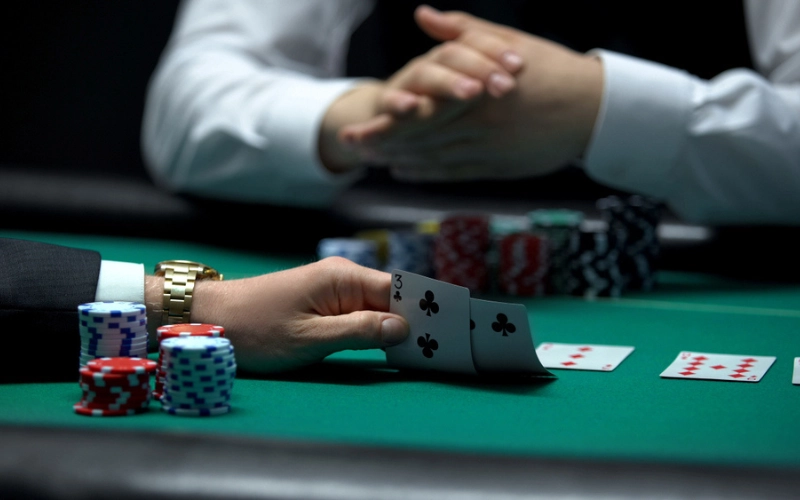
Ultimately, your opponents determine whether a bluff will be successful. If you bet and he folds – your bluff works, and you win the hand. If you bet and he calls, your bluff fails.
So how can you control what your opponent does? You bet your hand; he bets his. What can you do to affect his behavior?
There are many types of poker players, and you must pick the right opponents to bluff against. Ideally, you want to have only one opponent to bluff against. While sometimes your bluff will work against an entire lineup, you usually want it to be head-to-head. Similarly, you want to avoid bad targets for your bluff. You don’t want to bluff a guy who is so bad that he doesn’t think about your bet when he decides to call or fold? You don’t want to try to bluff a guy too loose to lay down his hand to your bet – even if he thinks you have him beat. After all, if he’s too bad to think about what your bet means – then he’s too dumb to lay down his hand no matter what you do. So don’t bluff a guy who calls too much. As the saying goes, it’s easier to bluff a good than a bad player.
Along those lines, your opponent’s recent history must also be considered. Some players get hammered so badly in a session that they tilt and become fatalistic. They’ll give away the rest of their stack with any draw. They don’t make good targets of your bluff – even if normally they’re a good player. Conversely, if a guy has just won a large pot and is stacking his chips – or if he’s getting ready to leave or is close to even — he’s probably thinking more about preserving his stack – and may make a great target for a bluff – even if he’s not normally too swift. So at that point, he’d make a good bluffing target.
Your Image
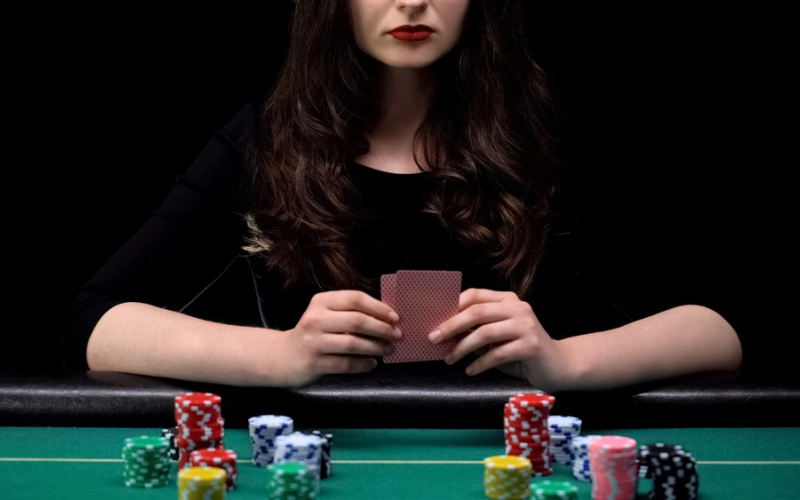
Your table image plays a large part in whether your bluff will be successful. You need to be aware of what it is to exploit it. If you’re seen as a tight player, your bets will more likely be believed to represent strength. Your bluffs will be more likely to succeed. On the other hand, if you’re perceived as a wildman – who throws his chips around like a drunken sailor (or even better – if you are perceived as a drunken sailor) – your bluffs will almost surely fail – since you’re likely to be called. Take your image to others into consideration and make your bluffs accordingly.
Betting History of the Hand
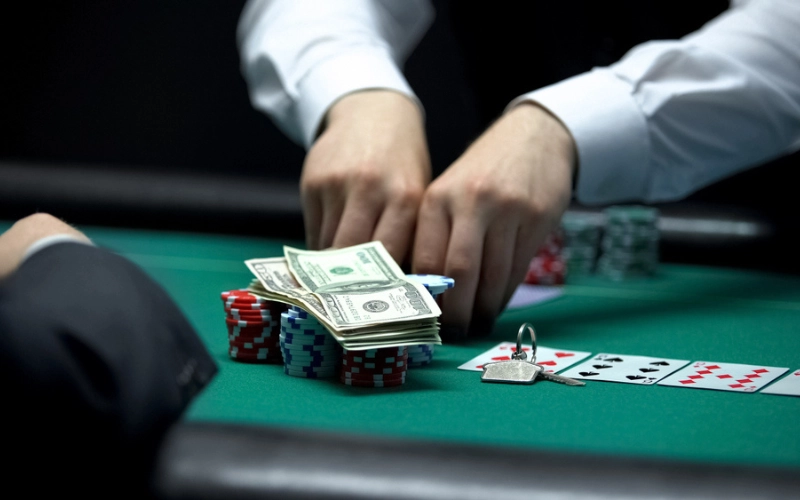
Bets are not viewed in a vacuum. They are part of a narrative. To succeed against perceptive opponents, your chance must fit into that narrative to be believed. Your good opponent is not likely to think that your bet on the river means you hit your flush if your betting up until that point didn’t indicate that you were on a flush draw.
Conversely, here’s an example of your bluff following a believable “I made the flush on the river” narrative. In a relatively tight $2-5 game, your early position opponent with a deep stack raised pre-flop to $20. You, also with a deep pile, called with. The flop came. Your opponent bets $35, and you call. The turn was the  – making the board. Your opponent bets $50, and you call. The river was the. Your opponent checked. You bet $100. That story is of a flush draw turning into a flush when the river card hits. Your pre-river action made it look like you hit color on the river.
Strength of Your Hand
Pure bluffs – when a hand has no chance of success unless your opponent folds – are less likely to win you money than cliffs combined with hands with the possibility of improving as the writing develops. These are generally known as “semi-bluffs.” I think of them as bluffs with a backup plan – a way to win even if they don’t win outright as a bluff.
Here’s an example of a semi-bluff. It’s the flop. You have. The flop is. You bet.
On the one hand, you have nothing. If your opponent folds, you win. It would be a successful bluff if that happened. But even if he calls, you can hit a ten or a heart on the turn or river and win that way.
As you can see, a bluff with a backup plan, known as a semi-bluff, is better than just a pure bluff. So consider that when pondering whether or not to bluff.
Your Position
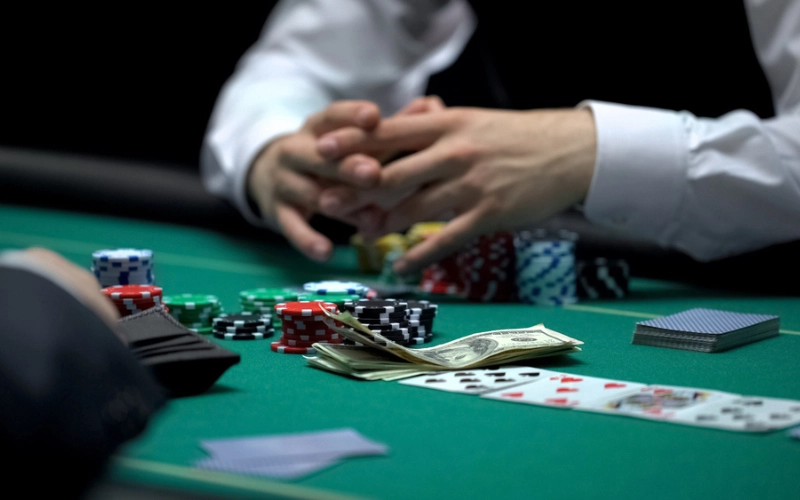
Your position relative to the remaining player or players in the hand is an important consideration. Generally, you want to see how your opponent reacts to the board before you bluff – making the late position more advantageous than the early position when bluffing. If he checks, you can often presume him to be weak and bet. If you have to bet or check first, you won’t see his reaction to the board.
In poker, however, few things are always true. Sometimes, it may be better to bluff from an early position. If, for example, you are against a rather sophisticated opponent, who understands that bluffing is generally more likely from late work, you may be more likely to fool him into folding a superior hand by betting in an early appointment.
Bet Size
No limit; thinking about your bet size when you are bluffing is important. Ideally, you will bet the least amount necessary to get your opponent to fold. But what is that amount?
It may seem that the more you bet, the more likely your opponent will fold. As a practical matter, this is rarely true, however. It’s better to think about thresholds beyond which opponents will not call. And you want to get as close to the point as you can.
Here are some examples. The pot is $100. The flop has missed you. Your opponent has checked, indicating weakness. As a rule of thumb, knowing nothing else, a bet of 50% of the pot will generally be enough to get an opponent to fold if he hasn’t hit his hand and isn’t on a draw. There’s generally no need to bet more than $50 to push your opponent off his hand. Realize, of course, that every case is different. If you have reason to suspect that your opponent is on some draw, a larger bet, perhaps one the size of the pot, may be necessary to get him to fold. If you know your opponent to be especially tight, an even smaller bet might be sufficient – perhaps as little as $25. Similarly, if your opponent is a calling station, no matter how large you bet, you may not induce him to fold – meaning you shouldn’t attempt a bluff at any price.
Here’s another example. It’s the river. The pot is $300. You’ve read your opponent for a flush draw. The river is not suited, so no flush is possible—your opponent checks. If you’ve read your opponent correctly, there’s no way he will call a bet of any size.
On the other hand, you have nothing, so you can’t risk checking it down. You can safely bet as little as 25% of the pot and expect a fold. Why risk more, in case he has deceived you with a monster? If he comes over the top, you can lay down your bluff without losing over $75 on the ridge.
Conclusion
There’s a time and place to succeed with bluffing, which is a complicated matter. Yet novice players often fall into the trap of bluffing far too much. It would be best to consider all the factors in this lesson before attempting to pull off a bluff.
If you’re new to poker and are just starting, then it’s best to avoid the temptation to bluff. By studying the lessons here on Pokerology, you’ll learn much more about bluffing and many other successful poker strategies. When you combine this knowledge with valuable playing experience, Bluffing will become second nature.


