

How to Read Opponents in Poker
You’re sitting at the poker table, and the key to mastering the game lies in understanding your opponents. It’s not just about your cards; it’s about interpreting the subtle signals others send. Consider the importance of analyzing their pre-flop actions and post-flop decisions—these provide valuable insights into their playing style and potential hand strength. But what about the more subtle cues, like bet sizing and physical tells? There’s an art to deciphering these signals. Could these hidden indicators be the secret to making more informed decisions and gaining an edge over your opponents?
Key Takeaways
- Analyze opponents’ bet sizing and patterns to gauge hand strength and strategy.
- Observe timing, like delays or quick bets, to assess opponents’ confidence levels.
- Use poker stats such as VPIP and PFR to understand opponents’ playing tendencies.
- Identify physical tells, including chip movements and eye contact, for insights into opponents’ hands.
- Assess opponents’ ranges by considering their preflop actions and post-flop play.
Understanding Opponents’ Ranges
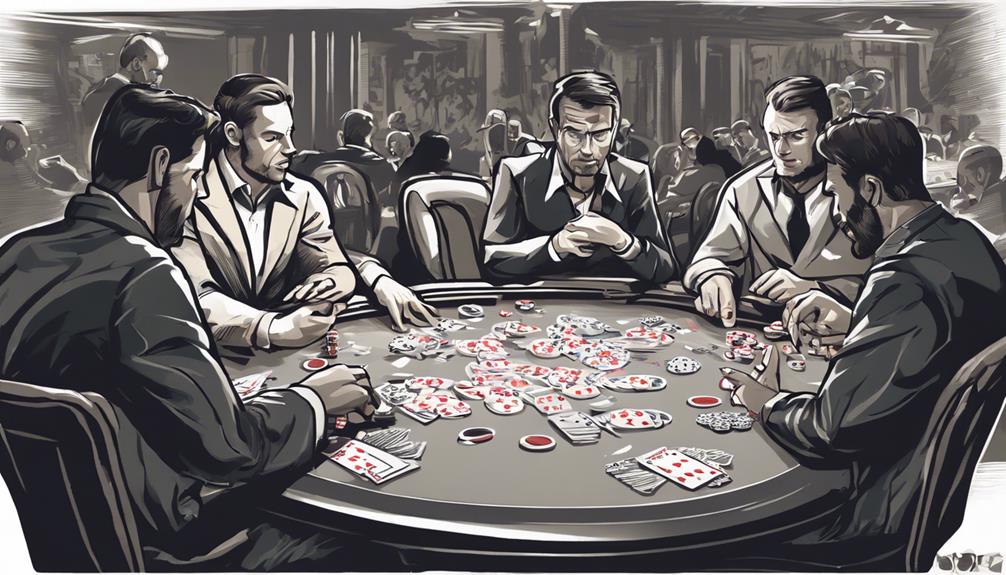
In the art of poker, mastering the skill of reading opponents’ ranges is indispensable. You’re constantly analyzing your opponent’s range, which starts with gauging their possible hand ranges from their preflop actions. This initial assessment is vital, as it sets the stage for how you’ll approach the rest of the hand.
Once the flop hits, you narrow down these ranges further by observing post-flop play. Paying attention to your opponent’s betting patterns, playing style, and any physical tells they might inadvertently give away can provide essential insights.
To accurately define an opponent’s range, consider their position at the table and their tendencies. A player who consistently raises from an early position likely has a tighter range than someone who frequently bets from the button. In addition, poker stats such as VPIP (Voluntarily Put Money In Pot) and PFR (Preflop Raise) can offer a statistical perspective to complement your observations.
Bet sizing is another pivotal clue; a large bet often signifies strength, whereas a smaller one might indicate a drawing hand. By continuously narrowing down your opponent’s range through these methods, you equip yourself with the knowledge needed to make informed and strategic decisions.
Utilizing Additional Information
When playing poker, every bit of additional information can be a game-changer. You can glean insights into your opponents’ potential hand ranges by analyzing bet sizing patterns and poker stats. Consistently large bets might indicate strength, while smaller, tentative bets could suggest weakness. Observing physical tells like chip movements or eye contact can provide additional clues about their hands. Quick, confident chip movements may signal a strong hand, whereas hesitant actions could imply uncertainty.
Table dynamics and player interactions also play a pivotal role. Noticing how players react to each other and adapting their strategies can help you understand their playing styles. For instance, a player who frequently engages in table talk might be trying to distract or gather information, while a silent, focused player might be plotting a strategic move.
Evaluate your opponents’ positions and adjust their potential hand ranges based on what you observe throughout the hand. Are they aggressive in early positions or more cautious? By combining these observations with solid knowledge of playing styles, you can make more informed decisions. Remember, the more information you gather, the better you can refine your strategy and outplay your opponents.
Identifying Physical Tells

To truly gain an edge in poker, pay close attention to the subtle yet revealing physical tells of your opponents. These cells can provide critical insights into their hand strength.
One common sign of strength is a hesitation before betting; it might indicate they’re considering how to maximize their winnings. However, be cautious, as some players might fake hesitation to mask a weak hand.
Notice physical actions like playing with chips or a lack of eye contact. Playing with chips can signal anxiety or excitement while avoiding eye contact might suggest discomfort or bluffing. Both are key physical tells that, when combined with other observations, can illuminate an opponent’s intentions.
Verbal tells are equally important. Listen carefully to their tone of voice. A steady, calm tone might reflect confidence and strength, whereas a shaky or overly enthusiastic tone could indicate a bluff or weakness.
Analyzing Bet Sizing and Patterns
When you start analyzing bet sizing and patterns, you’ll notice that identifying bet size trends can provide insights into an opponent’s hand strength. Spotting inconsistent betting patterns can also alert you to potential bluffs or changes in strategy. By connecting these observations to specific actions or board textures, you can infer your opponent’s likely strategy and make more informed decisions.
Identifying Bet Size Trends
Every poker player knows that analyzing bet sizes is essential for reading opponents effectively. By examining the bet sizes your opponents use, you can gain insights into their hand strength and intentions. Consistent betting patterns often reveal a lot about an opponent’s hand range and overall strategy.
For instance, smaller bets might indicate a weaker holding or an attempt to draw you into a pot, while larger bets could suggest a stronger hand. Understanding these patterns helps refine your decision-making process, allowing you to make more informed choices during the game.
Look for sudden shifts in your opponents’ bet sizes, as these can signal changes in their strategy or hand strength. If a player who typically bets small suddenly makes a large bet, it might mean they’ve hit a strong hand or are trying to bluff you out of the pot. Connecting their bet sizes to their overall strategy gives you a better grasp of their potential holdings.
Pay attention to how they adjust their bet sizes in different scenarios, as this can offer valuable clues about their intentions and help you strategize effectively against them.
Spotting Inconsistent Betting Patterns
Building on the importance of identifying bet size trends, spotting inconsistent betting patterns can further enhance your ability to read opponents. Analyzing your opponents’ bet sizing can give you insights into their hand strength. Typically, larger bets suggest stronger hands. However, when you notice inconsistent patterns, such as abrupt changes in bet sizes, it might indicate uncertainty or even deception. These variations can reveal a lot about an opponent’s intentions and overall strategy.
To effectively read your opponents, pay attention to how they adjust their bet sizes throughout the game. If a player suddenly increases their bet size without any apparent reason, it could be a bluff, or they might be trying to mask a weak hand.
Conversely, a player who consistently bets small and suddenly places a large bet could be indicating a strong hand. By connecting these patterns to possible hand strengths, you can make more informed decisions.
Inferring Strategy From Bets
Over time, mastering the art of inferring strategy from bets can greatly enhance your poker game. You can gain insights into your opponents’ strategies and hand strength by focusing on bet sizing and patterns. Here’s how:
- Bet Sizing and Hand Strength: Typically, larger bet amounts indicate a stronger player’s hand. Keep an eye on how consistently an opponent makes sizable bets when they’ve strong hands. This pattern can reveal their comfort with their hand strength.
- Patterns and Game Plan: Recognizing patterns in bet sizing helps decode an opponent’s game plan. Consistent small bets might imply a cautious approach or a weak hand, while sudden increases could signal a shift in tactics or a stronger hand. Analyze these changes to predict their next moves.
- Adjustments and Informed Decisions: Understanding your opponents’ bet sizing and patterns allows you to make informed decisions and necessary adjustments during the game. If you notice an opponent suddenly altering their bet amounts, consider if it’s a bluff or a genuine shift in hand strength.
Recognizing Timing Tells

When you’re at the poker table, paying attention to the speed of your opponents’ decision-making can offer important insights. Delays might indicate uncertainty or even a bluff, while quick bets often project strength. By recognizing these timings, you can better assess your opponents’ confidence levels and adjust your strategy accordingly.
Speed of Decision-Making
In the world of poker, the speed of decision-making offers a wealth of information through timing, which can be essential in reading opponents. You can gain valuable insights by paying attention to how quickly or slowly your opponents make decisions.
Quick decisions often suggest a strong hand or advanced planning, as players confidently execute their strategy without hesitation. On the other hand, delayed actions might indicate strategic thinking, suggesting that the player is contemplating a complex move based on their opponents’ hand strength.
To effectively utilize timing tells, consider the following:
- Quick Decisions: These can reveal confidence and possibly strong hands. If a player bets or raises quickly, they might have a premium hand and want to press their advantage.
- Delayed Actions: While delays can sometimes indicate uncertainty or weakness, they might also reflect a strategic pause to analyze the situation more thoroughly.
- Consistent Patterns: Observe if an opponent consistently makes quick decisions or delays. This pattern can offer informative timing and hand strength insights, enhancing your ability to read opponents.
Delays Indicating Uncertainty
Spotting delays in your opponents’ decision-making is essential for recognizing timing in poker. Delays often indicate uncertainty or that they’re facing a tough decision. If you notice longer than usual pauses before they bet, it might signal weakness or a possible bluff attempt. Understanding these cues allows you to gain an edge at the table.
Here’s a quick reference table to help you interpret these timing tells:
| Delay Type | Possible Indication |
|---|---|
| Longer pause | Weakness or bluff attempt |
| Quick decision | Strong hand |
| Delayed quick move | Well-thought-out strategy |
| Inconsistent timing | Uncertainty |
| Consistent delays | Tough decision |
When you see an opponent make a quick decision after a delay, it could suggest they have a strong hand or have made a well-thought-out move. Recognizing these patterns in their decision-making speeds can help you narrow down their possible hand ranges. Paying attention to these timings allows you to anticipate your opponent’s moves better and adjust your strategy accordingly. Use these delays as valuable information to enhance your game and increase your chances of winning the bet.
Quick Bets and Bluffs
While timing delays can reveal uncertainty, rapid bets offer another layer of insight into your opponents’ strategies. In poker, the speed of your opponent’s actions can be just as revealing as the actions themselves. Quick bets often indicate a strong hand, as players with a solid hand might use speed to project confidence and intimidate.
Conversely, sudden bluffs might suggest weakness or deception, as opponents attempt to steal pots by betting quickly, especially when they’re out of turn.
Recognizing timing is pivotal for interpreting your opponents’ confidence levels and hand strength. Here’s how you can use timing to your advantage:
- Quick Bets Signal Strength: When an opponent bets swiftly, they might be confident about their hand. This often implies they have a strong hand and want to scare off potential challengers.
- Sudden Bluffs Expose Weakness: If a player makes a rapid, aggressive bet, consider the possibility of a bluff. This may indicate that they’re trying to mask a weak hand.
- Evaluate Timing Tells: Observe both rapid bets and hesitations. Their timing can provide valuable insights into their strategy and hand strength.
Enhancing Hand-Reading Skills
Understanding your opponents’ preflop actions is pivotal to accurately estimating their hand ranges and enhancing your hand-reading skills. Whether you’re playing live or online poker, analyzing factors like position and stack sizes helps you refine your understanding of their potential holdings. By observing betting patterns, you can narrow down your opponents’ range and predict whether they hold a strong hand or a draw. Using poker tells, along with tools like tracking software and player profiling, enriches your hand-reading capabilities.
To effectively assess opponents’ range, consider:
| Factor | Consideration |
|---|---|
| Position | Early, middle, or late position play |
| Stack Sizes | Deep, medium, or short stacks |
| Betting Patterns | Aggressive, passive, or balanced play |
As you progress through the hand, practice narrowing down these ranges street by street. Incorporate equity calculations and pot odds to make informed decisions. The more you practice, the better you’ll become at identifying when an opponent’s actions suggest a strong hand or a draw. Continuously improving your hand-reading skills ensures you’re ready to adapt and make strategic plays. Remember, mastering this skill takes time and dedication, but it’s vital for gaining an edge at the poker table.
Frequently Asked Questions
How Do You Know What Your Opponent Has in Poker?
You know your opponent’s hand by observing their hand gestures, bet sizing, timing tells, and body language. Please pay attention to verbal cues, eye contact, chip handling, breathing patterns, and table talk to piece together their potential hand.
How to Read Poker Faces?
To read poker faces, analyze microexpressions and observe eye contact cues. Interpret body language and recognize voice tone changes. Detect bluffing signals through hand movements and facial muscle twitching. Use behavioral patterns for deception detection techniques.
How to Spot Someone’s Tell in Poker?
Spotting someone’s tell involves observing body language, betting patterns, and eye contact. Watch facial expressions, verbal cues, hand movements, and table demeanor. Notice aggression levels and timing tells. These clues can reveal your opponent’s true intentions.
How Do You Read Outs in Poker?
When you read out in poker, start by calculating outs and understanding probabilities. Analyze patterns, recognize betting and player tendencies, and consider table dynamics. Observe body language, utilize position advantage, and adjust your strategy accordingly for success.
Conclusion
To master reading opponents in poker, focus on analyzing their ranges and using additional data like VPIP and PFR to your advantage. Pay attention to physical tells such as chip movements and eye contact, and carefully observe bet sizing and patterns. Timing also provides essential insights into your opponents’ strategies. By integrating these elements, you’ll sharpen your hand-reading skills, allowing you to make more informed decisions and gain a winning edge at the poker table.


