

Mastering the Poker Straddle: When to Use It for Maximum Impact
Imagine you’re at the poker table, considering whether to make a straddle bet. It’s a move that could shift the entire game’s dynamics, but do you know when it’s the right time to pull the trigger? By opting to straddle, you can increase the pot size and put pressure on your opponents, yet there’s always the looming risk of losing more than you bargained for. It’s a strategy that defies traditional poker wisdom, so what makes it enticing for seasoned players? Let’s explore how this bold move could potentially change your approach to the game.
Key Takeaways
- Poker straddling increases pot sizes and betting action, adding excitement to the game.
- Straddle bets offer positional advantages, forcing players to rethink their strategies.
- Types of straddles include Under-the-Gun, Button, Mississippi, and uncapped, each with unique dynamics.
- Straddling can enhance profitability at loose passive tables by creating larger pots.
- Use straddles strategically, considering table dynamics and opponents’ tendencies for optimal results.
Understanding the Poker Straddle
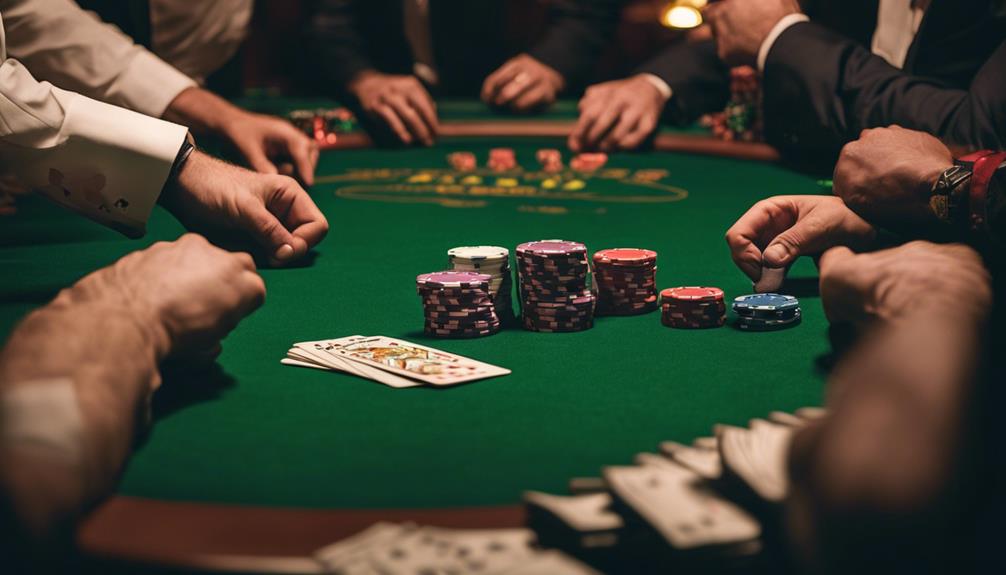
Why should you consider using a poker straddle? In Texas Hold’em, the straddle can be a game-changer, especially if you’re an aggressive player looking to shake up the table dynamics. By placing a voluntary blind bet, typically double the big blind, you take the initiative to increase the pot size right from the start. This preflop move not only amplifies the betting action but can also grant you a positional advantage by allowing you to act last before the flop.
Straddling is a strategic choice that can turn the game in your favor by forcing other players to reconsider their moves. If you’re in a position where you feel confident, this tactic can make others play more cautiously, often leading to larger pots. Understanding when and how to use a straddle effectively can set you apart from more conservative players who might shy away from such aggressive play.
However, it’s important to recognize the risks involved. Straddling can be akin to pure gambling, and it’s not for everyone. But in the right hands, with the right timing, it can be a powerful tool to dominate the table and control the game flow.
Types of Straddles
In the world of poker, straddles come in various forms, each offering distinct advantages and challenges. The Under-the-Gun (UTG) Straddle is the most traditional, where the first player to act pre-flop places a third blind bet. This move can stir the preflop action, forcing others at the table to reconsider their strategies. However, the UTG straddle doesn’t provide any positional advantage since you’re still the first to act.
The Button Straddle, on the other hand, is initiated by the player on the dealer button. This type of straddle not only increases the pot size early but also grants you a coveted positional advantage throughout the hand, allowing you to react to other players’ moves.
Then there’s the Mississippi Straddle, which breaks traditional rules by allowing any player at the table to straddle, regardless of their position. This can create unpredictable poker dynamics, keeping all players on their toes.
Uncapped straddles have varying rules and can depend on specific games or poker rooms. They allow straddles to exceed the usual limits, adding another layer of complexity to your strategy. Each type of straddle offers unique opportunities to shake up the game and test your poker prowess.
Rules for Straddle Bets

Straddle bets, a strategic poker maneuver, typically double the big blind and must be made before the deal in some poker games. Understanding the rules for straddle bets can give you a player advantage. When you place a straddle, you’re fundamentally buying the right to act last before the flop, which can be a significant advantage. However, it’s essential to be familiar with the different types of straddles and their specific rules.
Here’s a quick breakdown of the key rules:
- Under-the-Gun Straddle: This is the most common type, where the player immediately to the left of the big blind places the straddle.
- Button Straddles: Typically, this is allowed in home games, letting the player on the button straddle, affecting the order of play.
- Double the Big Blind: The standard straddle amount is double the big blind, though some games might allow different amounts.
- Escalate Pot Sizes: Straddling can quickly escalate pot sizes, making the game more aggressive and dynamic.
Straddling is risky but advantageous for experienced players. By understanding these rules, you’re better positioned to capitalize on the opportunities straddling presents while managing the associated risks.
Pros and Cons of Straddling
Straddling in poker presents both opportunities and challenges that can significantly impact your game. One of the pros is that it can enhance profitability at loose passive tables. By raising the stakes, you might stimulate more action and potentially win larger pots. However, this approach has its drawbacks, especially in most No Limit Hold’em scenarios. Straddling often goes against sound poker strategy because you’re blind betting with an unknown hand. This can result in poor decision-making and a decrease in your expected value (EV).
When you straddle, you might aim to generate more action, but it can also lead to a more conservative table atmosphere. Players might fold marginal hands more frequently, reducing the desired action. Furthermore, the heightened financial risk linked to straddling can be harmful, especially if you’re not comfortable adjusting your strategy accordingly.
Navigating the altered table dynamics is vital. While straddling might’ve its place in specific situations, especially in loose games, it’s crucial to assess the potential risks and rewards carefully.
Understanding when and where to employ a straddle can make all the difference in maintaining profitability and strategic advantage.
Strategic Considerations

While the pros and cons of straddling highlight its potential risks and benefits, understanding strategic factors offers deeper insights into its effective use. When you decide to use a straddle in poker, you’re not just upping the stakes—you’re opening a door to exploit opponents and create pressure in the hand. To do this effectively, you need to take into account several essential factors.
- Table Dynamics: Observe how players interact. Some tables are passive, while others are aggressive. Adjust your strategy accordingly.
- Player Positions: Your position at the table relative to others can greatly impact the effectiveness of a straddle.
- Game Flow: Pay attention to the tempo of the game. Recognizing when the game is tight or loose can inform your decision to straddle.
- Player Ranges: Understanding your opponents’ likely hand ranges helps in choosing the right moment to manipulate pot sizes.
Impact on Game Dynamics
How does a straddle impact the ebb and flow of a poker game? Straddling can alter game dynamics, bringing both excitement and complexity to the table. For poker players, it introduces a layer of unpredictability that can lead to intense gameplay. When a straddle is in play, pot sizes can escalate rapidly, pushing players to reconsider their poker strategy. The sudden increase in action often tempts players to adjust their playing ranges, potentially tightening up as they fold more marginal hands.
Straddle Effect | Impact on Game Dynamics | Player Reaction
Increased Pot Sizes | Rises quickly | Leads to larger bets
Adjusted Playing Ranges | More constrained dynamics | More folds of marginal hands
Unsettled Players | Influences decision-making | Challenges less experienced players
In a live cash game, the presence of a straddle can unsettle those not accustomed to such high-stakes environments, affecting their decision-making processes. Players might shift their focus from raising to calling or even three-betting, altering the usual flow of gameplay. This change in approach can create a tense atmosphere where every decision carries more weight. Embracing the chaos of a straddle requires adaptability and a keen understanding of poker dynamics.
Player Perspectives

The allure of straddling in poker often hinges on the player’s disposition towards risk and excitement. If you’re an aggressive player, you might relish the increased action that a straddle bet brings. It gives you the opportunity to play with more chips in the pot and take advantage of passive opponents.
However, if you’re conservative, the unpredictability of being last to act in the preflop betting round might make you wary. The straddle bet can disrupt your overall strategy and lead to increased financial risk.
Understanding different player perspectives can be enlightening:
- Aggressive players: Enjoy the thrill of increased stakes and potential for big wins.
- Conservative players Prefer calculated risks and might shy away from luck-based outcomes.
- Strategic players: Weigh the pros and cons, considering the impact on their poker game strategy.
- Casual players: Sometimes straddle for fun, not focusing on long-term profitability.
In a poker game, choosing to straddle means you’re temporarily the big blind and first to act after the flop. Some players thrive in these situations, while others find their hand value diminished. Balancing these perspectives helps you decide if straddling aligns with your poker play style.
When to Straddle
In order to determine when to straddle, consider the dynamics of your current table and your own playing style. If you’re seated at loose passive tables where opponents call preflop liberally, a straddle can be beneficial. It capitalizes on opponents’ tendencies, making it easier to extract value from weaker hands.
On the other hand, if you’re in an action-filled game where everyone is straddling, joining in can keep you competitive and part of the game’s flow.
When facing a tight table with nitty players, introducing a straddle might be a strategic move. It can disrupt their comfort zone and encourage them to loosen up, breaking their conservative patterns. This approach can create more dynamic play and potentially more profitable opportunities.
However, in No Limit Hold’em, straddling should be used sparingly. It’s not always the best choice for every player or situation. If straddling doesn’t align with your playing style or the current table dynamics, it might be better to avoid it. Relying too heavily on a straddling strategy can backfire, so assess each game carefully and decide if it fits your strategy, ensuring it enhances rather than hinders your play.
Expert Tips and Insights

Straddling can be a powerful tool in your poker arsenal, but using it effectively requires insight and strategy. Understanding the nuances of different straddles like UTG, Mississippi, and button straddles is pivotal for making strategic decisions. Each type can alter table dynamics, and knowing when to implement them can help you exploit opponents’ tendencies. While straddling is inherently risky, it can provide a positional advantage and a psychological edge over your opponents.
To maximize your success in poker games, keep these expert tips in mind:
- Study Opponents: Pay attention to players’ reactions and adapt your strategy accordingly. A well-timed straddle can disrupt their plans.
- Assess Table Dynamics: Consider how the game’s flow is unfolding. Straddling can shake it up and create opportunities.
- Weigh Risks and Rewards: Every straddle is a gamble. Evaluate if the potential gain outweighs the inherent risks.
- Leverage Positional Advantage: Use straddling to act last, giving you the upper hand in decision-making.
Adapting your strategy to the conditions of the game is essential for maximizing your success. Straddling offers a blend of risk and reward, but with the right approach, it can be a game-changer.
Frequently Asked Questions
What Is a Straddle in Poker?
You decide to use a straddle strategy, doubling the big blinds with a voluntary bet. Consider straddle position, sizing, and frequency. Weigh straddle advantages and disadvantages, adjusting for psychology and etiquette to maximize game dynamics.
Is It Profitable to Straddle in Poker?
When you evaluate straddle strategy, consider straddle pros like increased action versus straddle cons such as higher straddle risk and variance. Straddle psychology can entice, but straddle position and table dynamics impact straddle profit and straddle bankroll sustainability.
How Does Straddle Work?
When you place a straddle, you double the big blind, altering the straddle position and strategy. Consider straddle etiquette, sizing, and frequency. Weigh straddle advantages and disadvantages, understand variations, and use psychology for smart decision-making.
How Do You Play Against Straddle Poker?
When facing a straddle, adjust preflop by analyzing ranges and risk. Use position advantage for exploitative play, employ counter straddling tactics, and bluff strategically. Manage your bankroll wisely, consider equity calculations, and leverage psychology insights effectively.
Conclusion
In poker, mastering the straddle can give you a strategic edge, but it’s essential to weigh the pros and cons. Use it to manipulate pot sizes and alter game dynamics, catching opponents off guard. Remember, though, that it increases risk and can lead to significant losses if not used wisely. Always consider your position, opponents’ tendencies, and the overall table atmosphere. With practice and insight, you’ll know when a straddle is the right move for you.


