
An In-Depth Glossary of Poker Terms Every Player Should Know
What is very interesting to me as a lifelong poker player is the number of poker-related words and sayings that have worked their way into mainstream conversation in the business world and elsewhere. A few obvious examples that shouldn’t require explanation would include: hold your cards close to your chest, I’ll call that bluff, I’d rather be lucky than good, and he’s got a real poker face.
While you may already be aware of many poker-related words and sayings, there are sure to be many that, as a beginner to Poker, you probably won’t know. Over the years, Poker has accumulated several unique words and phrases that regular players use as their language and can be incomprehensible to the uninitiated. Here is an example of a seasoned poker player describing a hand to a friend:
“I had pocket rockets and the flop comes Ace, two rags, rainbow giving me top set. Can you believe that donkey, Harry, goes runner, runner and cracks my set with his 23-to-1 shot flush draw? It’s just like him; he’s such a calling station”.
You might not need this lesson if you completely understand this description. However, if it seems like a different language, then fear not; by the end of this lesson, you will understand what it all means. In this lesson, we’ll explain what some of those colorful expressions mean and a list of terms that any poker player aspiring to become conversant in the game needs to know.
Glossary of Poker Terms
Let’s start with a list of poker terms you need to know. After this all-important glossary, we’ll return to the above “poker speak” example, as it is the conversation you will hear from other, more experienced players.
All-in
When a player puts all his chips into the pot, he is said to be all-in. That player does not participate in any more bets above his all-in amount. A side pot is created for the other players. The all-in player is eligible for the main pool only. A bold commitment, going all or nothing, where fortunes are made, or hearts start pounding.
Ante
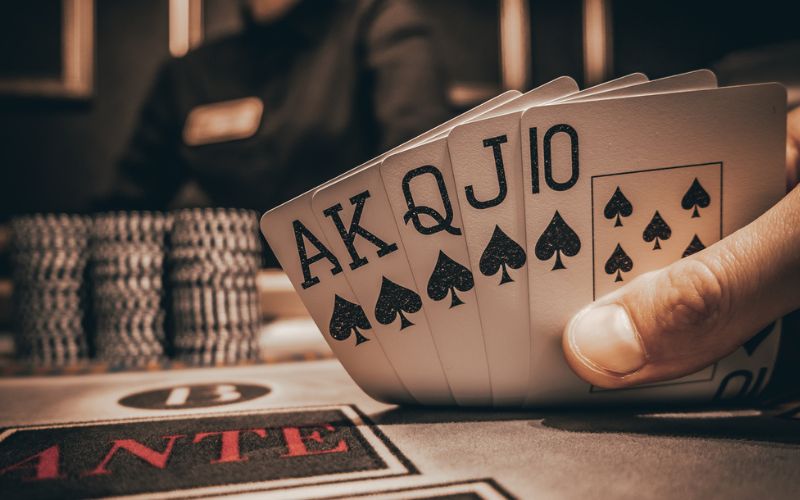
A small forced bet that all players must post before the deal. An ante is used in stud poker versus posting blinds, as in hold‘em. Antes are also common in tournaments, in addition to the blinds at later levels—the initial bet, placed by all players, setting the stage for the poker showdown’s layers.
Back Door
A hand-made back door requires the turn and river cards to make the hand. An example would be holding three flushes after the flop and needing two more of the same suit to complete your color. This is also called runner/runner.
Bad Beat
A good hand that is “cracked” or beaten by a better indicator usually was way behind but hit a lucky draw. Every poker player has more than one bad beat story to tell! A painful occurrence when a strong hand falls victim to a fortunate event.
Big Slick
This is the nickname for the two-card-holding Ace-King. This dynamic duo is highly regarded for its potential to dominate the poker table. With its strong starting position, Big Slick is often played aggressively, aiming to intimidate opponents and seize control of the pot.
Blinds
The mandatory bets are made by the first two players to the left of the dealer button. They are called small and big blinds. The small blind is usually half the size of the big blind and is posted by the player to the left of the dealer button, while the big blind is published by the player two seats to the left of the dealer button.
Bluff
Making a bet without the best hand in the hope that your opponent(s) will fold and you will win the pot. A strategic maneuver in poker where a player makes a bold and deceptive move, aiming to mislead opponents into believing they have a stronger hand than they do. Bluffing requires a delicate balance of timing, observation, and psychology.
Calling Station
A player who calls too often is a calling station. The term is derogatory mainly because these players call without the correct pot odds; they usually hit long-shot winning hands, which frustrates other players. Reaching stations are characterized by their passive playing style, preferring to see as many hands as possible rather than engaging in aggressive actions.
Cards Speak
The best hand is determined by each player turning their cards face up with no declaration. The values of the cards speak for themselves. In a ‘cards speak’ situation, the outcome of the hand is solely based on the cards shown at the showdown, disregarding any verbal claims or misstatements made during the writing.
Check Raise
To check when it is your turn to bet and then, after someone else bets, to raise that player’s bet. The check-raise is a powerful move used to extract more value from strong hands or to bluff opponents into folding weaker hands. It can create confusion and force opponents to reevaluate their hand strength, making it a valuable tool in a skilled player’s arsenal.
Donkey
An opponent who plays poorly and seems to be throwing his money away. This is the current term for a pigeon, a sucker, or a fish. Donkeys are typically characterized by their loose and unpredictable playing style, often resulting in erratic betting patterns and inconsistent strategies.
Double Belly Buster
This is a hand with two inside straight draws. For example, 79TJK can become straight with an eight or a queen. This draw has the same number of outs (8 winning cards) as an open-ended straight draw, except the double belly buster is much more deceptive.
Drawing Dead
It is a draw such that you will lose no matter what card you get. For example, You have four spades with the King, while your opponent holds a pair of Aces and four spades, including the Ace of Spades. You hope to draw a spade on the river to make a king-high flush. If the spade comes, you will lose to an Ace-high color, and since your opponent already has a pair of Aces, you cannot win. You are said to be drawing dead.
Fish
See donkey – a player who plays the game poorly. Fish are often inexperienced or recreational players who make predictable moves and fall into common traps. Playing against a fish can be advantageous as they tend to make costly mistakes and are more prone to being bluffed or manipulated.
Flop
After the first betting round, three community board cards are dealt, called the flop. These cards are revealed after the initial betting round, allowing players to evaluate their hand strength and make informed decisions. The flop plays a crucial role in shaping the outcome of a hand, as it can greatly improve or diminish the potential of a player’s starting hand.
Gutshot
An inside straight draw with only four outs. Drawing to a QJ98 would require one of the four tens to make a straight. A term used to describe a straight draw in poker where a player is missing a card in the middle of a sequence to complete their straight.
Heads-up
Playing against a single opponent. Its intensity and strategic depth characterize heads-up play, as the dynamics and decision-making drastically change when the number of players is reduced. With a narrower range of starting hands and the increased importance of position, heads-up play often involves more aggressive betting and bluffing tactics.
Implied Odds
This extension of pot odds represents the ratio of the total amount you expect to win if you complete your hand to the amount you need to call to continue. While pot odds are an exact calculation, implied odds take some guesswork and knowledge of your opponent’s tendencies.
Inside Straight Draw
Also known as a ‘gutshot’ or ‘belly buster,’ an inside straight draw refers to a hand that requires a specific card in the middle of a sequence to complete a straight. For example, holding 6-7-9-10 would necessitate drawing an 8. Inside straight draws are considered less favorable than open-ended consecutive draws due to their lower probability of completion.
Isolate
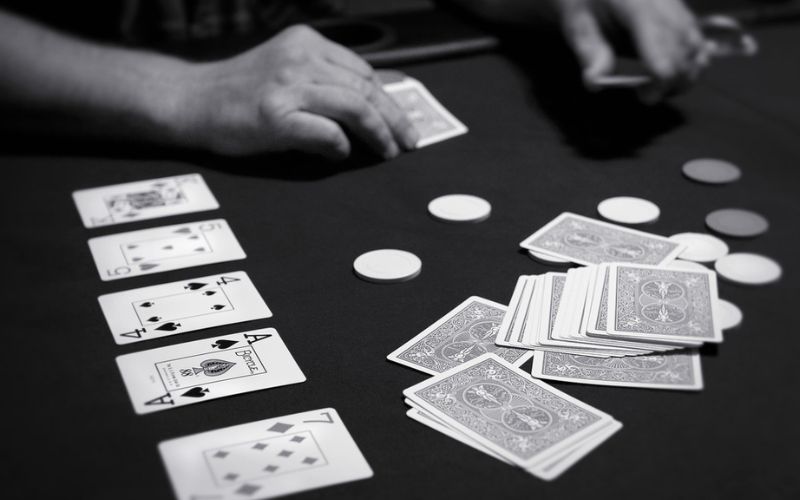
To make a raise to force others to fold in hopes of being able to play heads-up against a single opponent is to isolate him. By isolating an opponent, a player reduces the number of active players in the hand, increasing their chances of winning. Isolation plays are commonly employed against weaker or more predictable opponents, allowing skilled players to exploit their advantages by creating a heads-up scenario or gaining the positional advantage.”
Limp
To just flat call the amount of the big blind is to limp into a hand. A passive poker action where a player merely calls the minimum bet instead of raising it. Players may crawl to see more affordable flops or disguise their hands’ strength. However, limping is generally considered a weak play as it allows opponents to see the loss cheaply and potentially outdraw the limper.
Monster
A very strong hand that is almost certainly the winner. A monster hand is virtually unbeatable, given the context of the game and the community cards on the board. Examples of monster hands include four-of-a-kind (quads), a straight flush, or a royal flush.
Muck
Folding your hand is to muck it. The pile of dead cards is called the muck. Players muck their hands when they choose to fold or when their hand loses at a showdown. The mucked cards are no longer in play and remain hidden from other players, ensuring fairness and preventing accidental exposure.
Nuts
Based on the board, it’s the best available hand. An unbeatable hand is often called “the Brazils” and “a lock.” Having the ‘nuts’ means holding the unbeatable hand at that time. Skilled players aim to identify and secure the nuts to maximize their chances of winning the pot.
Out
An out is a card that improves your hand, usually to winning status. If you hold the and there are two hearts on the flop, you have nine outs to the nut flush – the remaining nine hearts in the deck. For example, if a player holds two hearts and two hearts are already on the board, any heart drawn as the next card would be an ‘out’ to complete a flush.
Pocket Rockets
A pair of Aces in your hand in hold’em. Pocket rockets are highly coveted due to their strength and the statistical advantage over other starting hands. Holding pocket rockets sets the stage for potential domination in writing, and skilled players aim to maximize the value of this premium hand through strategic betting and aggressive play.
Pot Odds
The ratio of money in the pot to the amount it will cost to call the current bet. If the bank holds $100 and costs you $20 to reach, it lays you 5-to-1 odds. Pot odds help players determine whether a call is profitable in the long run based on the likelihood of improving their hand or winning the pot.
Quads
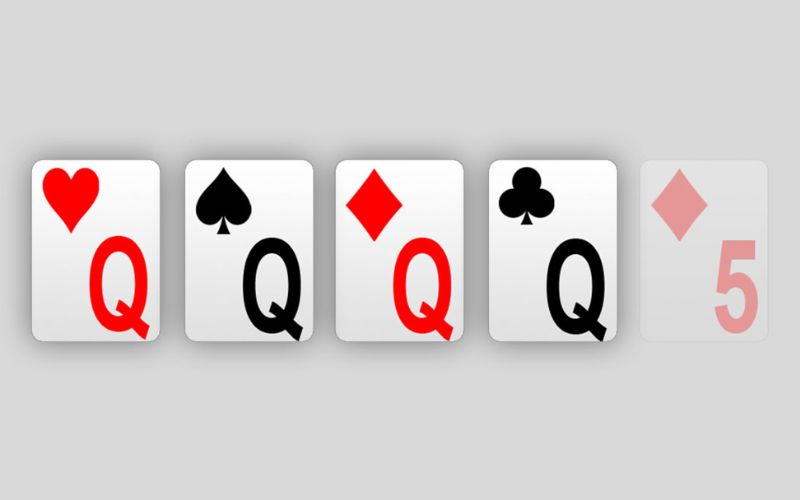
The nickname for four of a kind – e.g., “he had quad Kings.” For instance, having four kings (K) would be considered quads. Quads are an extremely powerful hand that is difficult to beat and can lead to significant winnings. Skilled players know how to extract the maximum value from quads, strategically betting and raising to build the pot while inducing opponents to make costly mistakes.
Rags
Refers to a worthless card. Rags are normally small board cards in hold’em. Rags are low-ranking and unrelated cards that provide no meaningful connection or combination. Skilled players avoid investing too heavily in hands containing rags, as they are unlikely to contribute to a winning outcome.
Rainbow
Three or four board cards of different suits. A flop containing three other cases is said to be a rainbow. If the turn is a card of the fourth suit, a flush will not be possible. A rainbow board typically has three claims, providing no flush possibilities on the flop.
River
The fifth and final community board card dealt in hold’em. The river card is revealed after the betting round on the turn and completes the board of community cards. It is the last opportunity for players to make their best hand. Skilled players carefully assess the river card and consider its implications for their hand strength and potential winning combinations.
Runner-Runner
A hand made with both the turn and the river cards. Two running cards are runner-runners. If, on the flop, you have a three flush and both the turn and river are of the same suit, making you a color, you’ve gone runner-runner. Runner-runner draws are challenging to achieve, and relying on them as a primary strategy is considered risky and unlikely.
Sandbag
Hiding the strength of your hand by slowly playing it early on to make more money later in writing. It’s a deceptive ploy to increase profit. Sandbagging is often employed to induce opponents to bet more or to set a trap for an unsuspecting opponent.
Set
When holding a pocket pair, having one of that same rank hit the board creates a set. For instance, if a player holds pocket 7s and the community cards include a 7, they would have a set of 7s. Sets are powerful hands with great potential to win pots, and skilled players know how to extract maximum value from their sets by strategically betting and raising.
String Bet
This is an illegal move when a player does not orally declare his intention to raise but puts out chips to call and then reaches back to his stack to get more chips for a raise. String betting typically occurs when players do not declare their intended bet size clearly and incrementally add more chips to the pot.
Tilt
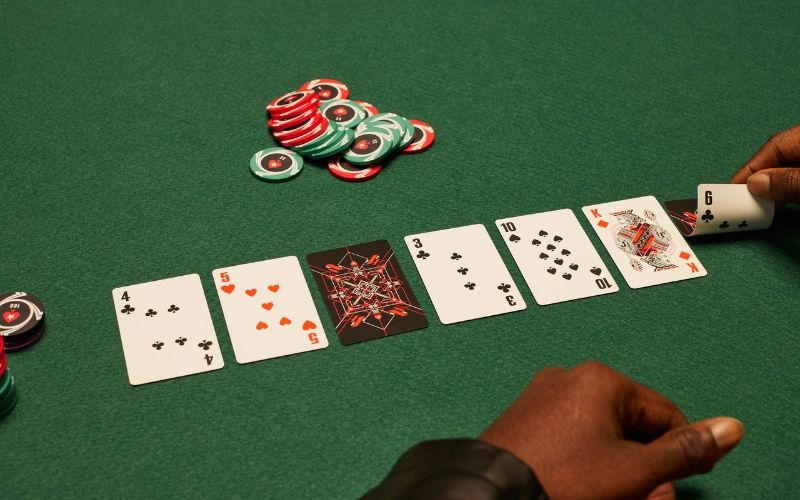
A player who has lost his discipline and is playing too loosely and aggressively in a desperate attempt to win a pot is said to be on an angle. This is normally caused by a series of bad beats that have frustrated the victim. Tilt often occurs after a significant loss or a series of unfavorable hands, leading to impulsive, irrational, and reckless plays.
Trips
Differentiated from a set, trips occur when two of the same rank are on the board, and you hold another of them in your hand. It differs from a group because only one person can hold the three cards in a group, while two people can have the same trips when two are on the board.
Turn
The fourth community board card dealt between the flop and the river. The turn card follows the flop and precedes the river. It provides an additional opportunity for players to improve their hands and influences the game’s dynamics. Skilled players carefully analyze the turn card and its implications for their hand strength, betting strategies, and potential winning combinations.
Under the Gun
The first player to the left of the button who must act first is said to be under the gun. Being under the gun is considered a disadvantage, as the player has little information about opponents’ actions and must act with limited knowledge.
Wheel
The smallest possible straight consists of Ace-2-3-4-5. It is also called a bicycle wheel or just a bike—a nickname for the best possible low hand in split-pot games like Omaha Hi-Lo and Seven-Card Stud Hi-Lo. The wheel consists of A-2-3-4-5, where the Ace plays as both the high and low cards. Achieving the wheel is highly desirable in these games, as it allows a player to potentially win both the high and low halves of the pot.
Poker Speak
Now that you’ve read through the glossary covering various poker definitions, do you understand what that poker player told his friend at the beginning of this lesson? Just in case you missed something, we’ll translate his statement. We’ll repeat the information as written, with the unique poker words/phrases in bold, and then we’ll solve.
I had pocket rockets and the flop comes Ace, two rags, rainbow giving me top set. Can you believe that donkey, Harry, goes runner, runner and cracks my set with his 23-to-1 shot flush draw? It’s just like him; he’s such a calling station.
Translation
I had two Aces in the hole and the three cards the dealer dealt come Ace, two small cards with three different suits giving me the best/highest three of a kind. Can you believe that unskilled, bad player, Harry, he hit two of his needed suit in a row, one on the turn and the other on the river and beats my three of a kind with his long shot flush draw? It’s just like him, he’s a weak player who calls way too much and sometimes gets lucky.
See how much more concise poker speak is? If you’re getting into the game and have not been using Poker Speak – trust me, you will be. In fact, by the end of these lessons, I’ll bet you’ll be speaking Poker fluently.


