

What is a Rake in Poker? A Guide to Understanding Rake in Poker
Ever thought you’re playing poker on a winning streak yet leaving the table with less than expected? You may be a victim of an unseen power lurking in every poker game – the “Rake.” Familiarizing oneself with this pivotal concept could decide whether you dominate or donate in the grand poker arena. In this guide, we’ll delve into what a rake in poker truly is, how it directly impacts your winnings – often more than you realize – and strategies to counteract its subtle yet significant influence. So buckle up! We’re about to show you the hidden world underneath every poker table’s green velvet.
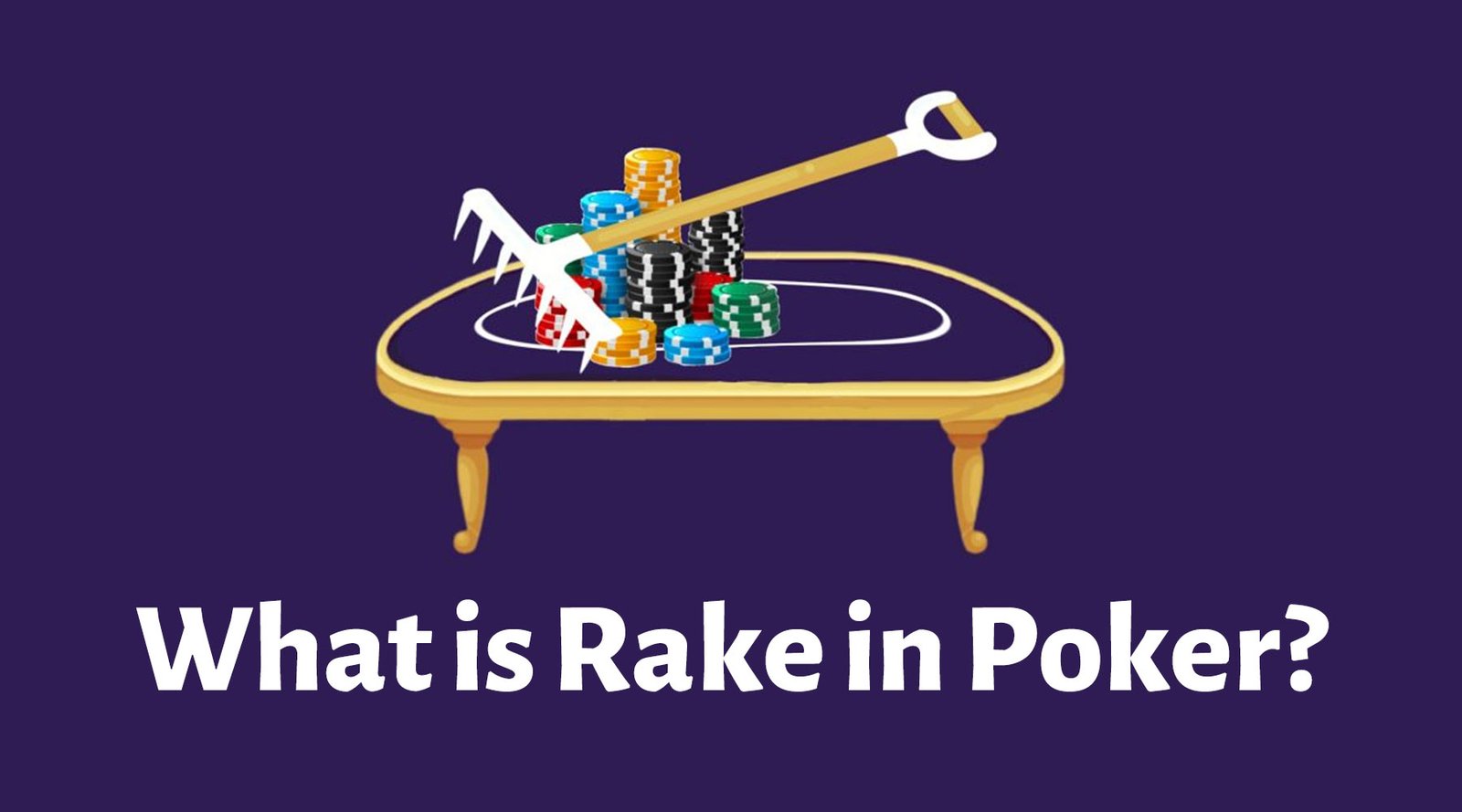
Rake is a commission fee taken by the cardroom operator from each pot in a poker game. It’s how casinos make money from poker, as they typically do not play against the players. The amount of rake varies, but it is generally a small percentage of each pot. Additionally, there are different ways to collect rake, such as percentage rake from each bank and time collection fees. Understanding rake is essential for any serious poker player to make informed decisions about where and how they play.
Understanding Poker Rake

In poker, “rake” refers to a commission fee charged by the cardroom or casino operator for hosting the game. It serves as the primary mechanism for generating revenue for these establishments, as they do not participate in the actual gameplay against the players. Instead, they take a predetermined percentage from each pot played during cash games or an additional fee in tournament buy-ins.
The rake concept may seem straightforward initially, but understanding its implications is crucial for any player seeking to maximize profitability. When a hand reaches the flop (the point where three community cards are revealed), the rake is typically taken from the total pot. The percentage can vary depending on the cardroom or online poker site, ranging from 2.5% to 10%.
The rake is generally collected during cash games based on a sliding scale proportional to the pot size. This means larger pots will have a higher rake percentage, while smaller banks will have a lower rate. For example, a cardroom might have a structure where they collect 5% of every pool played with a maximum cap of $5.
Let’s say you’re playing a cash game, and there’s currently $100 in the pot. If the cardroom’s rake policy is 5%, then $5 would be taken from that pot as a rake. However, if it were a smaller pot with only $20, only $1 would be taken as a rake.
The amount of rake collected can significantly impact your overall profitability as a poker player. Higher rake percentages mean more winnings are diverted to cover these operating costs. Therefore, assessing whether the potential rewards outweigh the expenses incurred through rake becomes important.
It’s worth noting that different types of poker games may have variations in how rake is collected. For instance, some cardrooms employ a “no flop, no drop” policy for community card poker games without a flop. This means that no rake will be taken from the pot if the hand is decided before any community cards are revealed.
Understanding the nuances of poker rake and how it affects your gameplay is crucial for making informed decisions at the table. By keeping track of the amount of rake you’re contributing and strategizing accordingly, you can strive to optimize your profitability in the long run.
Rake Calculation Methodology

Now that we’ve understood poker rake let’s delve deeper into how cardrooms and casinos calculate it. The calculation methodology employed can vary depending on the establishment and the game played.
One common method used to calculate rake is based on the percentage of each pot played. As mentioned earlier, this percentage can differ from one cardroom to another but typically falls within the 2.5% to 10% range. The advantage of this approach is that players are only charged when pots are won, ensuring a fair distribution of costs.
Another mechanism used to collect rake is known as time collection fees. In certain cardrooms or online poker sites, players must pay a fixed price per hour they spend at the table. This method ensures revenue generation regardless of whether significant pots are being played.
Additionally, a method called “dead drop” exists where a predetermined fixed fee is collected directly from each player before any cards are dealt. This fee may vary based on factors such as stakes and game type. Dead drops typically benefit higher-stakes games, providing a consistent revenue stream for the cardroom.
For instance, in a “$5/$10 No-Limit Texas Hold’em” cash game with a $1 dead drop, every player seated at the table would need to contribute $1 towards the rake as soon as they sit down, regardless of whether they win or lose that hand.
While the specific calculation methodology may differ, the goal for cardrooms and casinos remains consistent – to cover their operating costs and generate revenue. As a player, understanding these different methodologies helps you determine which games or establishments offer more favorable rake structures that align with your profitability goals.
Various Types of Poker Rakes

In poker, the rake serves as the primary revenue source for the house or casino. It is a commission fee taken from each pot in a cash game or as part of the buy-in cost in a poker tournament. Poker rakes can take on different forms depending on the type of game being played. Let’s explore some of the various kinds of poker rakes that are commonly used:
Time Collection
Another method used to collect rake in poker is through time collection fees. Players are charged a fixed price for every set amount spent at the table. This fee may be collected either per hour or per half-hour.
Dead Drop
A dead drop method may be used in some cardrooms, particularly in higher-stakes games. Here, instead of collecting a percentage or time-based fee, a fixed amount of money is collected from the dealer button position before any cards are dealt. This method ensures that every player at the table pays an equal amount regardless of pot size.
Tournament Fees
The rake is typically included in the tournament entry fee in poker tournaments. A certain percentage of each player’s buy-in goes towards covering the operating costs and generating revenue for the tournament organizer or casino.
Subscription Fees and Rake-Free Options
Alternatively, alternative methods such as subscription fees and rake-free options may also exist in online poker. Some platforms offer subscription-based models where players pay a monthly fee to access premium features without rake deductions. Additionally, certain sites may eliminate rake as a marketing strategy to attract players.
It’s important to note that the specific rake structure may vary depending on the casino or online poker platform. Understanding the different types of poker rakes allows players to know how much they contribute to the house and make informed decisions about their overall strategy.
Impact of Rake on Player Strategy

The rake significantly impacts player strategy in poker, influencing various aspects of gameplay and decision-making. When playing in games with high rake percentages, it becomes crucial for players to adjust their strategy accordingly to account for the increased costs of participation.
One area where the impact of the rake is most noticeable is in the big blind defending ranges. In high-raked games, defending a wider range from the big blind can lead to higher costs and reduced profitability. Consequently, players often need to tighten their defending content, focusing on stronger hands with better playability that are more likely to yield a positive expected value (EV) despite the rake.
3-betting is another spot that requires adjustments in high-raked games. With each additional bet made, more money is taken out as rake. As a result, players may choose to 3-bet less frequently, focusing on hands that have good playability or strong value rather than merely trying to generate fold equity.
The position also plays a vital role in navigating the impact of rake on player strategy. Being out of work disadvantages players since they have less control over pot size and face higher post-flop decisions. Therefore, players should take extra caution when playing out of position in high-raked games, considering both pot odds and equity realization before making decisions.
Additionally, player skill influences how effectively individuals can navigate the impact of rake on their strategies. Highly skilled players are better equipped to adapt and adjust based on game dynamics changes caused by varying rakes.
Considering all these factors, it’s evident that understanding and accounting for the impact of rake is crucial for success in poker. By carefully evaluating the rake structure and adjusting their strategies accordingly, players can maximize their profitability and mitigate the effects of the rake on their overall results.
Popular Methods for Rake Collection
When it comes to collecting the rake in poker games, cardrooms employ several popular methods. Each method has its unique approach and implications. Let’s explore two of the most commonly used methods: Percentage Rake and Dead Drop.
Percentage Rake
The percentage rake is the most prevalent method of rake collection in poker games. It involves taking a certain percentage from each pot played in cash games. Typically ranging from 2.5% to 10% of the total pool, this percentage represents the commission the cardroom charges for hosting and facilitating the game.
For example, let’s say you’re playing in a cash game with a $100 pot, and the cardroom has a 5% rake policy. In this case, the cardroom would collect $5 (5% of $100) as a rake before distributing the remainder of the pot to the winner(s). The higher the stakes and pot size, the more significant the amount of rake collected.
Imagine being involved in a high-stakes poker game where pots regularly exceed thousands of dollars. With a 10% rake policy, a single hand could generate hundreds of dollars in rake. This can impact your overall profitability as a player, as higher-raked games require adjustments to maintain a positive expected value (EV).
Understanding how the percentage rake affects your gameplay and potential profits is crucial. Considering factors such as game selection, bankroll management, and adjusting your strategy is important.
When playing in high-raked games, making strategic decisions that optimize your chances of being profitable becomes essential. This may involve tightening your starting hand selection and being more selective with your bet sizing and frequencies.
Some players argue that high-raked games force them to play a tighter poker style, reducing the potential for creative and aggressive play that could be profitable in low-raked games. On the other hand, others believe that the higher stakes and increased competition in high-raked games may still offer opportunities for skilled players to thrive.
Think of the percentage rake as a toll booth on a highway. The more traffic passing through, the more revenue collected. Similarly, a higher amount of rake is generated in poker games with larger pots and higher stakes.
Now that we have explored the concept of percentage rake and its implications let’s move on to discussing another popular method of rake collection: Dead Drop.
- According to the American Gaming Association, in 2019, nearly 44.2 million adults admitted to enjoying poker, which correlates with the revenue generated through rakes.
- As per industry estimates, most casinos take a rake ranging from 2.5% to 10%, with online platforms generally having lower rates and thus attracting more players.
- An analysis published in the Journal of Gambling Studies found that approximately half of all poker players do not have a complete understanding of how a rake works, alluding to its complex implementation across different types of games.
Dead Drop
One of the methods commonly used by cardrooms to collect rake in poker is the dead drop. The dead drop involves a fixed fee collected from each pot, regardless of size. This means the same predetermined amount will be taken as a rake, whether you’re playing a small-stakes or high-stakes game.
Regarding dead drop, the percentage of the collected pot can vary depending on the cardroom or casino you’re playing at. For example, a cardroom might have a $5 dead drop where $5 is taken from every pot, while another might have a $10 dead drop. Although this method may appear straightforward compared to other rake collection methods, players must know each establishment’s specific rules and percentages.
It’s worth noting that some cardrooms choose to utilize the dead drop method, specifically in community card poker games without a flop, known as “no flop, no drop.” In these games, if there is no flop (such as in Texas Hold’em), the cardroom does not collect any rake from that particular hand. This variation helps alleviate the extra costs of running those games without affecting the players’ experience.
Time Collection Fees
Another method employed by cardrooms to collect rake is through time collection fees. Instead of taking a percentage of the pot after each hand, the cardroom charges players an hourly rate for participating in cash games. With time collection fees, players typically pay a set amount per hour they spend at the table.
For example, if the time collection fee is $10 per hour and you play for three hours, you would owe $30. This fee structure allows players to participate in hands without worrying about their contributions being subject to the pot size.
Time collection fees can be advantageous for players who prefer to play longer sessions, as the amount of rake they contribute remains consistent regardless of the size of the pots won or lost. However, it’s essential to assess whether this fee structure aligns with your playing style and budget before committing to a specific cardroom or casino.
Remember that time collection fees are typically not utilized in tournament settings, where the rake is often factored into the buy-in cost instead.
Understanding the various methods used to collect rake in poker, such as dead drop and time collection fees, can provide insights into how poker rooms generate revenue while offering players an enjoyable gaming experience. However, another interesting concept related to poker rake is Rakeback, which encourages player loyalty and provides additional benefits.
Rakeback: Inspiring Player Loyalty

Rakeback is a player reward method to inspire loyalty among poker players. It serves as an incentive for players to continue playing on online poker sites or with specific affiliates. Instead of the entire rake being collected by the poker room, a portion is returned to the player as an ongoing bonus or cashback. This creates a mutually beneficial relationship where players are motivated to play more, and the poker rooms retain loyal customers.
Rakeback can take various forms depending on the online poker site or affiliate program. Some platforms offer a fixed percentage of the rake collected from each pot to be returned to the player, while others may have a tiered system based on the level of play or loyalty points accumulated. Some platforms provide rakeback in the form of tournament entries instead of cash.
One of the primary advantages of Rakeback is that it allows players to earn back some of the money they contribute through rake while playing poker. This can significantly impact a player’s long-term profitability, especially for those who play frequently or at higher stakes. Players can offset their losses and increase their overall winnings by receiving a portion of the rake back.
Furthermore, rakeback programs are often designed in such a way that they reward consistent play and dedication. Players actively participating in games and generating more rake will typically receive higher rakeback percentages or additional benefits. This incentivizes regular play and encourages players to stay committed to a particular platform or affiliate program.
Let’s say you are an avid poker player who consistently plays on an online poker site that offers a 30% rakeback program. Over a month, you contribute $500 in rake through your gameplay. With a 30% Rakeback, you would receive $150 as part of your rewards program. This helps decrease your net losses and provides an added incentive to continue playing on that platform.
Rakeback programs can also be seen as a form of recognition and appreciation for players’ loyalty. Poker sites acknowledge their players’ commitment and dedication to the game by offering these rewards. This can create a sense of belonging and attachment, further strengthening the player’s loyalty to the platform.
It is important to note that not all online poker rooms offer rakeback. Some platforms have in-house loyalty programs instead, which may provide similar benefits, such as bonuses or special promotions for frequent players. These alternative loyalty programs can inspire player loyalty, albeit through different mechanisms.
While some argue that rakeback programs may encourage unhealthy playing habits or excessive gambling, it ultimately depends on the responsibility and self-control of each player. Rakeback programs are designed to reward players for their gameplay rather than facilitate compulsive behavior. As with any rewards program, players must approach it responsibly and within their means.
In summary, rakeback is a powerful tool to inspire player loyalty in the competitive world of online poker. By providing players with a portion of the rake they contribute, these programs not only incentivize consistent play but also help mitigate losses and increase long-term profitability. Rakeback fosters a sense of recognition and appreciation among players, strengthening their bond with the poker platform or affiliate program. However, responsible gaming practices should always be observed alongside any rewards program to maintain healthy gameplay habits.
How has the prevalence and amount of rake changed over time within the poker industry?
The prevalence and amount of rake in the poker industry have significantly changed. With the increasing popularity of online poker, higher competition among poker platforms has led to a decrease in the overall rake percentages. According to industry data from 2010 to 2020, the average online poker rake dropped from around 5% to approximately 2.5%. This reduction can be attributed to operators striving to attract and retain players by offering more favorable rake structures. Additionally, advancements in technology and improved efficiency of poker platforms have allowed for lower operating costs, ultimately leading to lower rake amounts.
What are some common strategies for minimizing the impact of rake on your poker game?

Some common strategies for minimizing the impact of rake on your poker game include playing tighter, more aggressive, and smaller pot sizes. By playing fewer hands and being more selective with your starting hands, you can avoid paying rake on marginal hands more likely to lose. Additionally, adopting a more aggressive playing style allows you to win pots more frequently and minimize the amount of rake paid per hand. Finally, focusing on smaller pot sizes can significantly reduce the percentage of money lost to rake. According to recent studies, these strategies have shown a notable decrease in the overall impact of rake on players’ bankrolls.
How does the amount of rake taken affect the profitability of playing poker?
The amount of rake taken can significantly impact the profitability of playing poker. Higher rake fees can reduce the overall winnings and make it more challenging for players to generate profits over time. For instance, if a player’s win rate is three big blinds per 100 hands, a higher rake may reduce that to 2 big blinds or even lower. Over an extended period, this reduction can accumulate into a substantial difference in earnings. Additionally, statistics from various online poker sites have shown that higher rake percentages lead to decreased player win rates. Hence, understanding and minimizing the impact of rake on profitability is crucial for successful poker playing.
Are there any countries or jurisdictions where the use of rake in poker is prohibited or heavily regulated?
Yes, there are countries and jurisdictions where the use of rake in poker is prohibited or heavily regulated. For example, in some states within the United States, such as Alaska, Utah, and Hawaii, all forms of gambling, including poker, are illegal. Additionally, certain countries like North Korea and Saudi Arabia have strict gambling laws prohibiting the operation of casinos or any form of gambling activity. In contrast, other countries like France and Germany heavily regulate poker games to ensure fair play and protect players, imposing specific rules on rake percentages and maximum caps. These regulations vary widely across different jurisdictions, reflecting governments’ diverse approaches to regulating gambling activities.
Are there any alternative ways to structure fees in poker games besides using a rake system?
There are alternative ways to structure fees in poker games besides using a rake system. One such alternative is the subscription-based model, where players pay a fixed monthly fee to access the poker platform and play unlimited games without additional charges. This eliminates the need for a rake, as the revenue is generated through subscription fees. Another alternative is the player-to-player transfer fee, where players pay a small fee when they transfer funds to another player. This encourages more interaction between players and ensures that all funds remain within the poker ecosystem.
You might also like our article about the art of representing.


