

Navigating Rational Choices: The Sunk Cost Effect and Poker
In human decision-making, one psychological phenomenon often leads us to irrational choices – the sunk cost effect. This intriguing cognitive bias compels individuals to persist in endeavors long after they’ve ceased to be advantageous, all because they’ve invested time, money, or effort. Whether faced with an unfinished ice cream sundae or grappling with the stock market, the sunk cost effect can exert a powerful grip on our choices. In this article, we explore the ins and outs of this phenomenon, examining its influence in everyday life and the high-stakes world of poker, shedding light on how to make more rational decisions when sunk costs come into play.
The Sunk Cost Effect Defined
This effect describes the tendency to continue an endeavor once we’ve invested money, time, or effort. We do this regardless of whether or not the work is currently to our benefit. Because we don’t want that money, time, and effort we’ve put in to go to waste, the sunk cost effect compels us to stubbornly follow through on things that are no longer helping us but have begun to hurt us.
Example 1: The Ice Cream Dilemma
Let’s start with a simple non-poker example. You walk into an ice cream parlor to get an elaborate (and expensive) hot fudge sundae you’ve been craving since you saw it in a TV commercial. Halfway through eating the sundae, you start to feel sick. Do you stop eating and throw the rest away? It’s too late to get your money back, and you can’t exactly take it home in a doggie bag. Or do you keep eating, feeling obligated to finish the massive sundae because you don’t want the money you spent to go to waste? Wolfing down the rest of the sundae won’t bring back one penny of your money and may cost you more in lost time, pleasure, and antacids.
Example 2: The Stock Investment
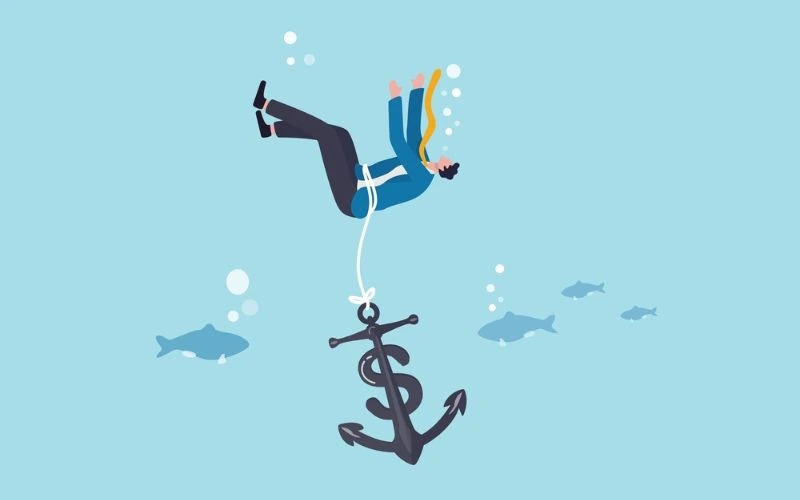
Or say you buy stock in Acme Answering Machines, and for the first year or two, the company’s value shoots up as people worldwide are buying Acme’s awesome answering machines. Then, just as quickly, the company’s stock plummets as answering machines lose massive market share to voice mail and call-forwarding. Do you sell your stock at a loss, accepting the harsh reality that this company is no longer a good investment? Or do you stubbornly hang on, determined not to sell any shares until you can sell at a profit, or at least what you originally paid, somehow convincing yourself that answering machines are on the brink of a major comeback?
The Ubiquity of the Sunk Cost Effect
Of course, these are both hypotheticals, but in situations like this every day, all over the world, it’s amazing how many people will go for Option B, tenaciously sticking with something long after it’s not working out for them. The sunk cost effect is to blame. So great is our aversion to losing money that we’ll do almost anything – eat food that makes us sick, hang onto an investment that’s an obvious dud, keep pouring more cash into a project that should be abandoned – rather than admit the money we spent was wasted.
Making Rational Decisions
But no matter what decision you make at this point, the money you spent before is gone. It’s sunk. Nothing you can do now will ever bring that money back, so the only decision that makes sense is based on what is best for you and your future.
The Sunk Cost Effect in Poker
The sunk cost effect can influence us at the poker table in many ways, but the first and most obvious is the money we put into the pot. On any betting round, you should always consider the size of the pool. And it would be best if you felt what it would cost to stay in hand on this and future betting rounds. It would be best if you didn’t think about how much of the current pot came from your stack. Whatever money you put into the pool during previous games is a sunk cost.
Poker Example: Pocket Jacks Decision
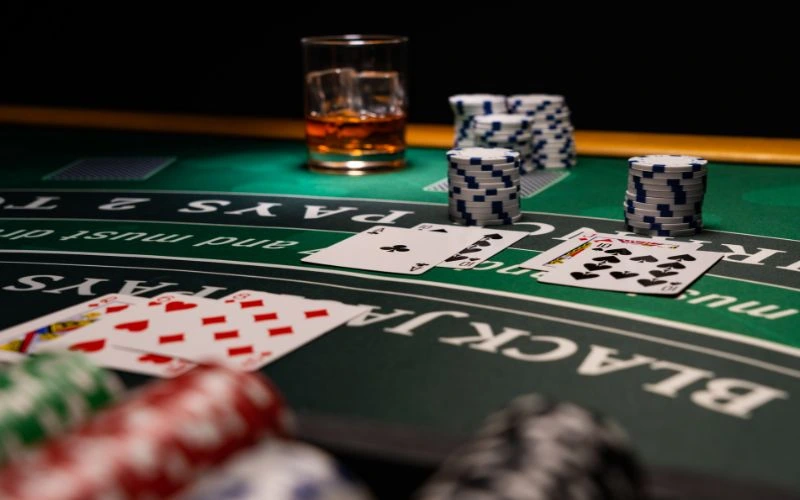
For example, you’re playing $10/$20 limit hold’em and raise from UTG with pocket jacks. Your only caller is a loose-passive player in the big blind. You put him on a big ace. The flop falls 2-5-8 rainbow, and he check-calls your bet. The turn brings authority, and your opponent bets out. In deciding what to do, you need to think about the $85 currently in the pot and the $20 it will cost you to call. You need to think about the likelihood of another bet from your opponent on the river, how confident you are in your read that he has an ace, and, of course, you need to think about your outs – both of them. But the one factor you shouldn’t consider in this scenario is how you put $40 into that $85 pot. When those chips hit the middle of the table, they ceased to be yours. You might be able to win that money, but you cannot lose it.
Beyond the Poker Pot: Time and Effort
The harmful ramifications of the sunk cost effect go beyond the simple economics of the pot. Money isn’t the only thing we invest in poker. We also support a lot of time and effort, and naturally, we’d like to see a positive return on these investments.
The Session’s Investment
The time and work you put into a poker session is a prime example. While you’re sitting at the table, you’re busting your tuchus trying to read opponents, interpret betting patterns, calculate odds, figure outs, and evaluate all the many other variables going on around you – all in a noble effort to make the correct decision when it’s your turn to act.
Understanding the Limits
But as we all know from bitter experience, sometimes you can play your heart out, make all the right decisions, and still lose. And all the blood, sweat, and tears – not to mention lost money – that has gone into the poker session is a cluster of sunk cost. The only real return you might have gained comes from whatever you’ve learned during the session. If you’ve acquired any new insight about the game or an opponent, that’s your compensation. But don’t expect more. If you stay and keep playing when you would otherwise quit – because you’re tired, tilting, or game conditions have deteriorated – purely because you expect to get something positive in return for everything you’ve poured into this particular session, then you’ve fallen victim to the sunk cost effect.
Making the Right Poker Decision

The decision to leave the game or keep playing should be based solely on what’s in your best interest right now. Are you still playing well? Are the game conditions still favorable? If the honest answer to both questions is yes, keep playing. If the answer to either question is no, you should quit. This is simple and self-evident, yet even the most intelligent poker player can get lost in the sunk cost effect. It’s a potent effect because we have such a powerful emotional attachment to believing that our money, time, and effort have been well spent.
Breaking Free from the Sunk Cost Trap
Particularly in the case of money, whatever we pay becomes a threshold – the price of a stock, the amount of a buy-in. We don’t want to move on until we’ve crossed the point, but if you’re not careful, the sunk cost effect can turn that threshold into a barrier, holding you back.


