

Decoding Blackjack Insurance – When to Bet and When to Pass
When you enter the thrilling blackjack world, you may have encountered the term “insurance.” It’s a concept often mentioned at the blackjack table, but do you understand what insurance means in this context? In this in-depth guide, we’ll explore everything you need to know about insurance in blackjack, how it works, when to take it, and whether it’s a smart move.
Understanding Blackjack Insurance
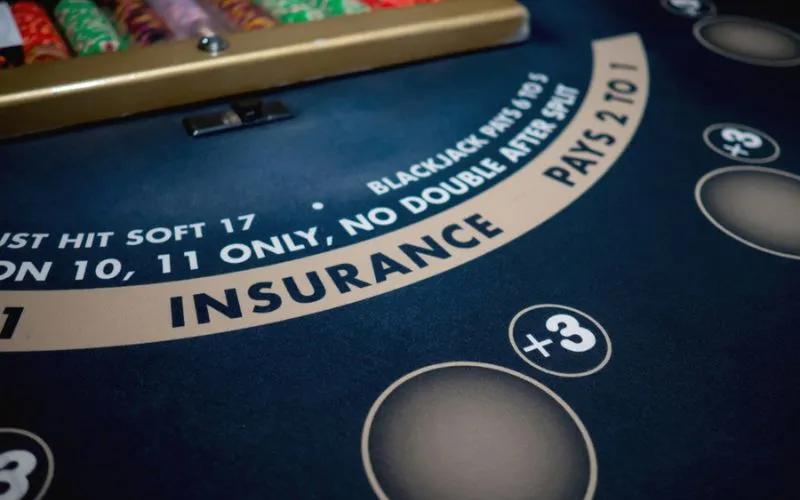
What is Insurance in Blackjack?
Blackjack insurance is a side bet offered to players when the dealer’s face-up card is an Ace. Essentially, it’s a wager on whether the dealer’s hole card (the face-down card) is a 10-value card (10, Jack, Queen, or King). If the dealer has a blackjack (a two-card hand with a total of 21), you win the insurance bet and receive a payout at 2:1 odds, effectively covering your initial bet.
How Does Blackjack Insurance Work?
To take insurance in blackjack, you must place an additional bet, usually half the amount of your original wager. If the dealer reveals a 10-value card as their hole card, you lose your initial bet, but your insurance bet pays out at 2:1, mitigating your losses. If the dealer doesn’t have a blackjack, you lose your insurance bet but continue playing with your original wager.
When to Consider Taking Insurance
Deciding whether to take insurance in blackjack is a crucial strategic choice. Here are some scenarios where taking insurance might be considered:
- Card Counting Advantage: If you are an experienced card counter with a strong sense that the remaining deck is rich in 10-value cards, taking insurance can be a calculated risk.
- High-Stakes Play: If you’ve placed a substantial bet and fear losing it all, insurance can provide a safety net, but it’s still a gamble.
- Basic Strategy: Some basic strategy charts recommend taking insurance in specific situations, but these are generally rare and highly dependent on the specific rule variations of the game.
However, it’s essential to understand that taking insurance is often considered risky, and many seasoned blackjack players usually advise against it.
Evaluating the Odds for Insurance Bets
To make an informed decision about insurance in blackjack, you should consider the odds. The odds of the dealer having a 10-value card as their hole card when an Ace is showing are approximately 9:4. For every nine times the dealer doesn’t have a blackjack, they will have it four times.
If you take insurance and win, you’ll receive a 2:1 payout, compensating for your original bet. However, insurance bets are not considered profitable over the long run, as the odds are not in your favor.
The Controversy Surrounding Blackjack Insurance
Experienced blackjack players and experts typically advise against taking insurance for several reasons:
- Unfavorable Odds: As mentioned earlier, the odds are not in your favor when taking insurance, making it a losing proposition over the long term.
- Reduced Winnings: If you’re confident in your hand and decline insurance when the dealer has a blackjack, you stand to win more if you beat the dealer without insurance.
- House Edge: Blackjack has one of the lowest house edges in the casino. Insurance increases the house’s edge and decreases your chances of long-term success.
Expert Tips for Blackjack Insurance

When considering insurance in blackjack, keep these expert tips in mind:
- Stick to Basic Strategy: Trust the basic blackjack strategy that guides your decisions based on the cards you and the dealer have. It minimizes your losses over time.
- Avoid Insurance Bets: In most situations, passing on insurance is the wisest choice. It keeps your overall blackjack strategy consistent and maximizes your chances of winning.
- Manage Your Bankroll: Whether you take insurance or not, managing your bankroll is crucial in blackjack. Set limits and stick to them to ensure a positive gaming experience.
Pros of Taking Blackjack Insurance
While the consensus among experienced players and experts is to avoid blackjack insurance, there are specific situations where it may have some merits. Let’s explore the potential advantages:
Risk Mitigation in High-Stakes Scenarios
If you find yourself in a high-stakes blackjack game where you’ve wagered a significant amount, taking insurance can help mitigate potential losses. This is especially relevant if you have a strong hand and don’t want to risk losing a large bet.
Card Counting Advantage
Advanced players proficient in card counting techniques may occasionally use insurance as part of their strategy. When they have a heightened certainty that the deck is rich in 10-value cards, they might consider taking insurance to capitalize on the favorable odds.
Cons of Taking Blackjack Insurance

Now, let’s delve into the drawbacks and reasons to be cautious when contemplating blackjack insurance:
Unfavorable Long-Term Odds
The primary reason to avoid insurance is that, over the long term, it is not a profitable bet for players. The dealer’s odds of having a 10-value card as their hole card are approximately 9:4. While the 2:1 payout may seem enticing, it doesn’t compensate for the times you lose your insurance bet.
Reduced Potential Winnings
Taking insurance limits your potential winnings when you have a strong hand. If you decline insurance and win the hand by outscoring the dealer, you’ll receive a 1:1 payout on your initial bet. This is more lucrative than the 2:1 insurance payout.
Increased House Edge
Blackjack is renowned for its low house edge, making it one of the most favorable games for players in the casino. However, taking insurance increases the house’s edge, which is something to avoid if you aim to maximize your chances of long-term success.
Conclusion
FAQs
Can I take insurance in blackjack after seeing my initial hand?
No, you can only take insurance when the dealer’s face-up card is an Ace and before you make any other decisions.
Is insurance a profitable strategy in blackjack?
Generally, insurance is not considered profitable in the long run, as the odds are not in your favor. It’s typically best to avoid it unless you have a compelling reason to take the risk.
Do professional blackjack players use insurance?
Professional blackjack players rarely use insurance. They rely on card counting and basic strategy to gain an edge over the casino rather than the insurance side bet.


