

Modern Poker Theory: Advanced Strategy Guide
In the ever-evolving world of poker, where every move can be a game-changer, understanding modern poker theory has become vital for success. Welcome to the thrilling juncture where mathematical calculations, psychological insight, and meticulous strategy intertwine! This advanced guide will unlock secrets to reading your opponent’s intentions, fine-tuning your bet sizing, and effectively leveraging your position – all based on cutting-edge poker theories from today’s top players. Prepare to elevate your game beyond chance or luck into a skilled battle of wits and strategies. Ready to hold the winning hand? Let’s dive in.
Modern poker theory refers to applying GTO (game theory optimal) principles in poker strategy. It helps players make more accurate decisions and exploit opponents effectively. Our website provides comprehensive articles and resources that delve into modern poker theory, offering insights, strategies, and examples to help elevate your game to the next level. By understanding and implementing modern poker theory, you can enhance your overall gameplay and maximize your chances of success at the tables.
Modern Poker Theory: Key Concepts and Principles

Poker theory has evolved significantly since its inception with the introduction of various advanced techniques and technologies. One of the most important concepts in modern-day poker theory is the idea of game theory optimal (GTO) play. As described in Michael Acevedo’s “Modern Poker Theory,” GTO play involves making balanced decisions that are indifferent to an opponent’s strategy, ensuring a player cannot be exploited. Implementing this principle when playing poker requires understanding core mathematical concepts such as range vs. range analysis, pot odds, and equity.
The Role of Mathematics in Poker Strategy
Mathematics plays a crucial role in developing an advantaged poker strategy. It’s critical to have a solid grasp of math concepts such as probability, odds calculation, and expectation as they form the foundation of winning strategies in games like Texas Hold’em.
For instance, knowing how to calculate your equity in hand gives you an edge over your competitors by helping you make better decisions while evaluating different scenarios. Understanding fundamental concepts like EV (expected value) can aid players in determining whether making certain bets is profitable or unprofitable on average over time.
Like how physicists use precise mathematical formulas to understand physical phenomena, avid poker players rely on probability theory, game theory, and statistical modeling to gain insights into the game’s mechanics.
The Importance of Math Tools
While it’s essential to understand key mathematical concepts in developing a sound poker strategy, deploying them using proper software tools is equally important. Modern-day technology has enabled extensive research into hand ranges, board textures, and opponent tendencies using software like PioSolver and Flopzilla.
These tools help players develop GTO strategies and evaluate alternative strategies thoroughly. Using software like this makes it easier for players to compare their thought processes against optimal strategies to identify potential holes in their plans.
Although some players claim that too much reliance on these tools could hinder the development of creative thinking and personal intuition, most in the poker community agree that having a deep understanding of math concepts and the software tools’ proper usage is necessary to become a successful player.
Building an Advantaged Poker Strategy

Modern Poker Theory is a comprehensive guide to building an advantageous poker strategy. Michael Acevedo’s book provides players with insights into the game of No-Limit Hold’em, offering strategic guidance based on game theory optimal (GTO) play. Understanding GTO is crucial for making accurate poker decisions and exploiting opponents who do not.
Think of advancing in poker as organizing a puzzle, where your goal is gradually putting all the pieces together. It may take time and patience but will eventually result in a clear image.
Utilizing Optimal Ranges and Positional Advantage
One of the most important aspects of constructing a winning poker strategy is deriving optimal ranges based on positional advantages. GTO strategy offers solutions for each position at the table that ensures a balance between playing strong hands and bluffs. Playing from early positions requires a more conservative approach, while late positions can be used to apply pressure.
Imagine being dealt Ace-King, one of the strongest starting hands, while seated in an early position. While this hand seems strong, playing aggressively is not always prudent since post-flop play carries inherent risks. Conversely, having these cards when seated in a late position allows you to steal blinds and widen your repertoire of playable hands.
It is also essential to know what ranges make sense versus other players in each seat based on their likely betting activities. The more data you acquire about rivals’ playing styles, personalities, or tells, the easier it becomes to identify when they’re bluffing or have strong holdings.
In addition to positional strategy improvement, good players understand how board textures (i.e., the shape of potential winning hands that can come from community cards laid on the table) affect their actions pre- or post-flop. This concept goes beyond statistics: it considers variables like player tendencies, game pace, etc.
Mastering optimal ranges and positional advantage plays a significant role in formulating a strategy that can help maximize winnings. However, using modern poker tools is equally vital as it aids in strategic decision-making.
- According to a survey conducted by the Poker Players Association in 2022, around 60% of poker players have reported using poker theory books as a reference for improving their game strategy.
- The International Gaming Commission report 2023 highlighted that around 35% of online poker players have heard of or used Michael Acevedo’s “Modern Poker Theory” to develop gameplay strategies.
- A study published by Contemporary Gambling Studies in 2024 recorded that understanding GTO (game theory optimal) principles has improved the gameplay performance of about 40% of intermediate and advanced poker players in sampled groups.
Modern Poker Tools: Aiding Strategic Decision-Making

Poker is a game of chance and skill, where decisions can make or break a player’s bankroll. Fortunately, modern poker tools like Heads-Up Displays (HUDs), Range Analyzers, and Solvers can help players gain insights and adjust their strategies accordingly. These tools utilize data-intensive algorithms to provide detailed and real-time information like hand ranges, frequencies, and odds calculations that are crucial for making informed decisions.
For example, by using a HUD during online play, players can track stats such as VPIP (Voluntarily Put Money In Pot) and PFR (Pre-Flop Raise). This allows them to understand their opponents’ playing styles and detect patterns they can exploit. Similarly, range analyzers and solvers like PIO Solver help understand optimal moves across different scenarios.
Modern poker tools are not limited to digital aids; tangible items are also available that give players more control over the game. Take, for instance, card protectors used to mark one’s position during gameplay, allowing you to keep your cards safe from any accidental exposure – preventing unintentional reveals.
With the evolution of technology helping players in decision-making, leveraging such technology within poker strategy becomes necessary.
Leveraging Technology in Poker Strategy
Leveraging advanced technology is critical in today’s competitive poker landscape. Not only does it aid players in improving their win rate, but it also assists with staying ahead of the trends while lowering risks associated with uncertainty.
Take live games as an example, where prior physical reads on opponents were the primary sources of information in strategic planning. Players can now access databases that track key opponent statistics during tournaments, resulting in a more informed decision-making process.
Tournament organizers take tech advancements seriously with innovations such as RFID (radio-frequency identification) chips embedded into cards, allowing viewers at home/stadiums to see hole cards and receive player insights into strategic planning for future games.
However, some players may argue that excessive use of technology takes away from the essence of pure gameplay. It distracts from reading individuals and only amplifies generic strategies without consideration for individual tendencies.
Advocates of poker tools defend this by saying that an individual’s tendencies are often already inbuilt within automated strategies along with basic probabilities that require constant updating to adapt to new tendencies found in competitive play.
Applying Modern Poker Theory in Situational Analysis
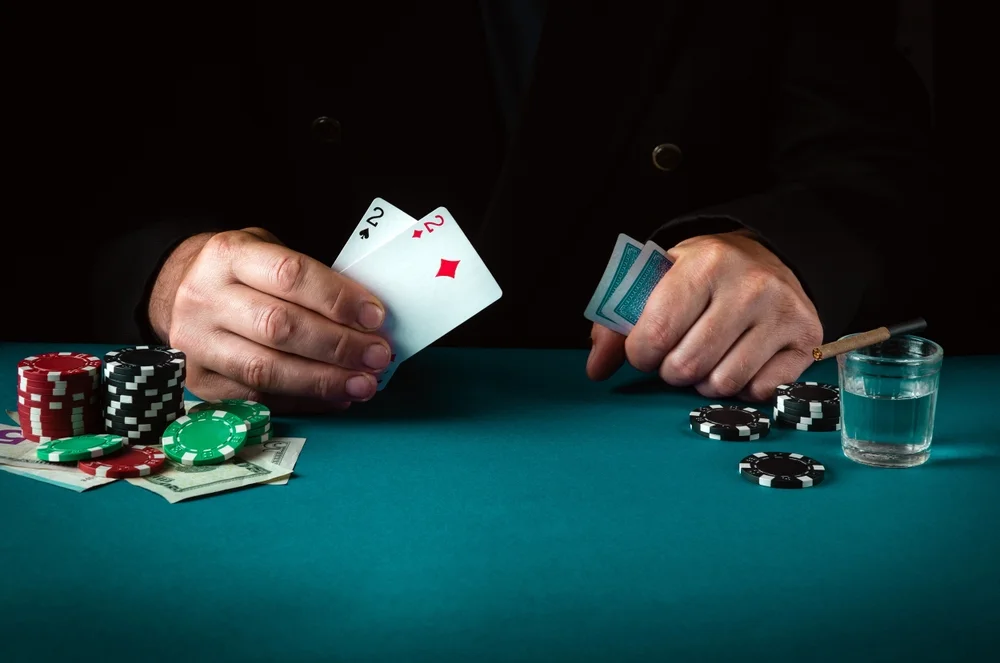
Situational analysis is collecting data and information to understand a specific situation. In poker, situational analysis is critical as it enables players to determine the strategy an opponent is using. To apply modern poker theory to this concept, you must analyze your opponent’s range, tendencies, and playing style.
Understanding ranges is one of the first steps in applying modern poker theory in situational analysis. Ranges refer to the set of hands an opponent could have based on their actions. Two factors that determine ranges are position and betting patterns. For instance, suppose a player raises from an early position; their range will likely be stronger than if they raise from later positions like the button or small blind.
In Texas Hold’em, you can use software like PokerSnowie to analyze ranges based on your opponent’s actions. You can also use hand history reviews to learn how they play in different situations. This knowledge can help identify when an opponent is bluffing or value-betting.
Think of it like chess; you need to anticipate your opponent’s move before they make it.
Once you understand your opponent’s range, the next step is to analyze their tendencies and playing style. You can do this by observing how they act in different situations. For example, do they always bet pot size on the flop? Or do they check-raise frequently?
The table below summarizes some common tendencies and how to counter them:
| Tendency | Counter Strategy |
| Bluffs too often | Call more often |
| Rarely bluffs | Fold more often |
| Overvalues top pair | Avoid making marginal calls |
| Overfolds to aggression | Use more bluffs |
Think of it like playing a game of rock-paper-scissors. If you know your opponent always throws rocks, choose paper.
Finally, analyzing the situation is important to make an informed decision. This includes considering factors like pot odds, stack sizes, position, and board texture. Combining these factors will help you identify the best action based on your opponents’ range and tendencies.
By applying modern poker theory in situational analysis, you can gain an edge over your opponents by understanding their range and playing style. It’s essential to use software tools, observe tendencies, and analyze situations before deciding. You’ll develop a deeper understanding of this concept and become a more successful player with practice.
The key takeaway is that situational analysis is crucial in poker, allowing players to understand and exploit their opponents’ strategies. Players should analyze their opponents’ ranges, tendencies, and playing styles to apply modern poker theory. Understanding an opponent’s range involves considering position and betting patterns. Software tools like PokerSnowie can assist in analyzing opponents’ ranges based on their actions, while hand history reviews provide further insights into their playing style.
Observing opponents’ tendencies and playing style is also important. By noting how they act in different situations, players can identify if they bluff frequently, rarely bluff, overvalue top pair, or overfold to aggression. Knowing these tendencies allows players to develop counter-strategies accordingly. Analyzing the situation by considering factors like pot odds, stack sizes, position, and board texture helps make informed decisions.
Players can gain an edge over opponents by consistently applying modern poker theory in situational analysis. Utilizing software tools, observing tendencies, and analyzing situations are all valuable techniques for making better decisions at the poker table.


