

Buying the Perfect Playing Cards: Selecting Your Ideal Deck
Playing cards are believed to have originated in China, where paper was first invented. The cards we are familiar with today were designed in France. Many new decks have since been created worldwide, yet the standard 52 deck with four suits remains the most popular. Buying quality playing cards that will withstand frequent use is important when hosting your poker game. Several factors should be considered before placing your first order for new playing cards.
Multiple Decks for Poker Games
You want to have more than one deck of cards available during a poker game in case a card is damaged during play. Professional cards usually come in sets of two decks. You should always have at least three sets of cards in the room. Superstitious poker players will ask for a patio and complete set-up changes.

Three sets will provide six decks of cards throughout the night. This is per table, so if you have more than one table, adjust accordingly. You must have approximately three decks per table to host a poker tournament. This is less than the recommended average for a live-action game since the odds of multiple tables having card deck issues is minimal.
Choosing the Right Playing Cards
There are two basic playing cards today – paper cards coated in plastic and 100% plastic cards.
- Plastic coated or vinyl – These mass-produced cards can be purchased at almost any check-out line in any chain store and are the cards you played with while growing up. These cards are less expensive than real plastic cards but also crease, bend, and tear easier. They are easy to mark by indenting the corner with a fingernail. Plastic-coated cards are fine for occasional use, even suited for a night of ‘kitchen poker’; however, they will not withstand the frequent use from a regular poker game.
- 100% plastic – These professional quality cards, used in casinos, are an ideal choice for any home game. 100% plastic cards are more expensive than others, but they are extra durable, effortless to clean, and difficult to mark. These cards are the easiest to deal with and slide across the poker table. They are comfortable shuffling manually and are the only cards working properly in an automatic shuffling machine.
Size
2 ½ x 3 ½ is the industry standard for poker cards, though there are other sizes available, including the narrow poker deck, which runs approximately two ¼ x 3 7/16, or a bridge deck sized at three ¼ x 3 ½. Most players and dealers are more comfortable using the standard-size deck, so it is best to stick with the norm.
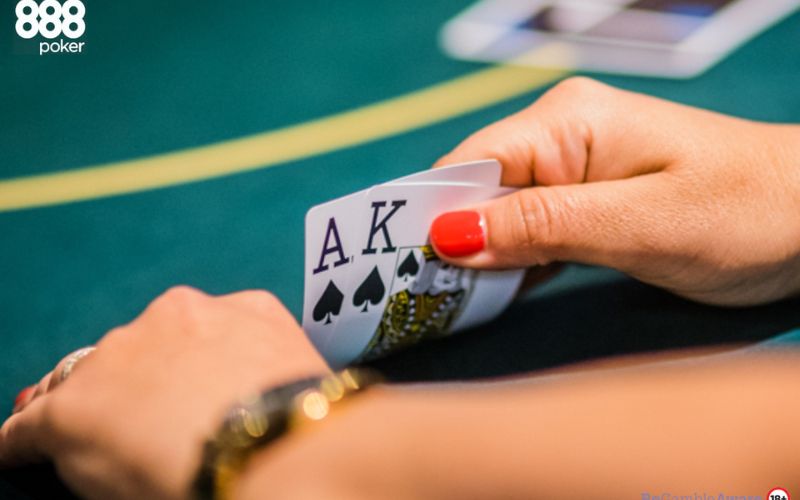
The only exception to this rule would be in home games that play multiple variants of poker, where games require players to hold several hole cards. Narrower cards would be a more suitable option in this situation.
Leading Playing Card Brands
There are numerous brands of playing cards available on the market. US Playing Card Company is a leading manufacturer of various playing cards. The most popular line of their cards is Bicycle (see above), followed by Bee, Hoyle, and World Poker Tour cards. This company also manufactures most of the novelty and character cards in stores. All these cards can be found for a low price ($1.99 – $4.99 per deck) in any chain store.
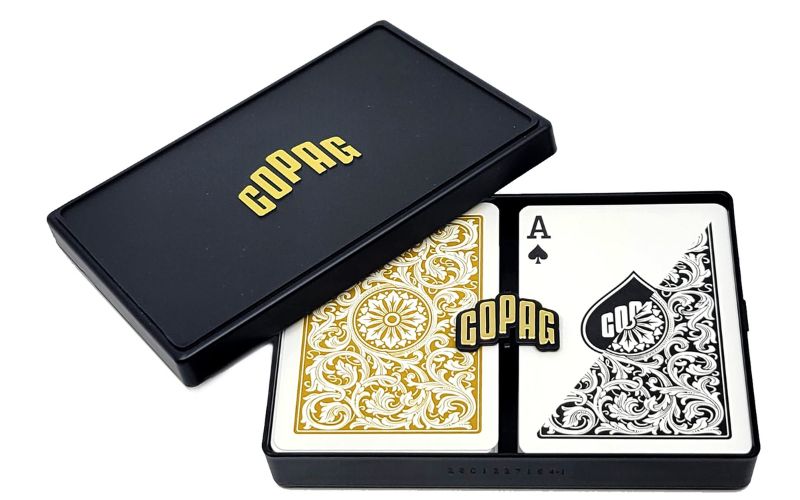
The following brands are popular high-quality plastic playing poker cards that can be ordered in two sets and usually include a protective plastic case. They are all more expensive than plastic-coated cards but last much longer. There are many other playing cards on the market that also work well for home games, but these are amongst the most recommended for frequent use:
- Copag– Copag is a good quality card made of 100% PVC plastic and comes at a lower price than its biggest competitor (Kem), averaging $15 per set. Some skeptics complain that the graphics are a little faded on this brand, but it doesn’t make them any harder to identify.
- Gemaco – These cards are thinner than the other plastic cards listed here. They are nice cards that can be ordered with a high-quality acrylic box. The average cost is $15 per set.
- Kem–Kem, manufactured by the US Playing Card Company, are arguably the most popular plastic cards. They are made of cellulose acetate plastic and are a bit more expensive, averaging $22 per set. The Kem Arrow cards are said to be what most plastic poker cards are measured against. Kem cards are used on the World Poker Tour and the World Series of Poker.
- Modiano – These cards are plastic but have more of a paper feel and are a bit thicker than the other cards on the market. Modiano has a large variety of cards, averaging $18 per set. DaVinci is a brand of Modiano cards that are very similar in quality and appearance but slightly lower in price.
Evolving Poker Card Designs
The face of poker cards has not changed much throughout recent years. They still contain the standard denomination, suit, and court cards. The only real change is the graphic size and where the pips appear on the cards. Some companies have toyed with color changes, but the white background is the easiest to see and the most popular. Another color change on the face of the cards is with the suits. In addition to the standard black and red suited cards, many manufacturers now offer four color suits comprised of; black, blue, green, and red.
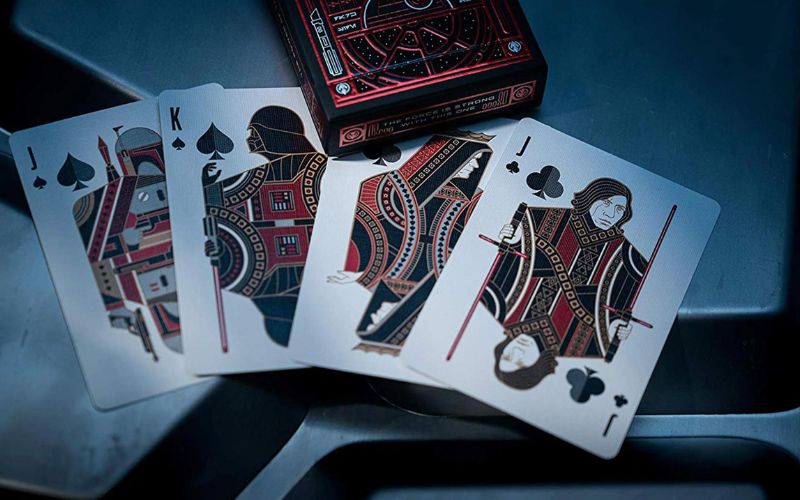
There are five common designs on the face of poker cards: standard, super/jumbo, magnum, and peek/dual index cards.
- Standard index size is the most common size found on all types of cards and the size most players would prefer to see.
 Super or Jumbo index size – This larger print makes it easier for players with difficulty seeing the smaller, standard-size pattern on cards.
- Magnum index size – This is an extremely large print that takes up most of the face of the card. While this size would be nice for easily seeing board cards, it would not suit a professional poker game where players try to conceal their hole cards’ value. Four pip index – These cards can be found in standard or jumbo size and include the pips on all four corners of the cards instead of just the top left and bottom right-hand corners.
- Peek or dual index cards – The peek cards have standard-size print on the face with additional fine print pips on the corners of each card. This is convenient for players who prefer to keep their hole cards on the table and peel up just the corners of the card to “peek” at its value.
 Super or Jumbo index size – This larger print makes it easier for players with difficulty seeing the smaller, standard-size pattern on cards.
Card Back Design
The backside design on a card can range from pre-printed simplistic patterns to custom graphics or photographs. What you choose for the back design is unimportant if you select an opposing method when using multiple decks in a game. It is common for dealers to have a set-up containing one blue patio and one red deck or one green deck and one red deck. This way, decks will not get mixed up, and players can request deck changes based on color.
There are a lot of factors to consider when ordering cards for your regular poker game. Decks can range in price from $1.99 per deck to $30 per set, so if you plan to run a regular poker game, weigh your options carefully. You may consider purchasing a few decks until you find the perfect match.
Once you settle on a card type, keep the cards stored away from heat in a dry area. Do not expose them to direct sunlight. When a card is damaged, save the remainder of the deck to use as replacement cards for other decks.


