

Uncovering the Tricks of Card Cheating
It is generally known that much deception is practiced at cards. Since childhood, I’ve had a keen interest in magic – sleight of hand. You’ve undoubtedly heard the saying, “The hand is quicker than the eye,” yet this is false. The writing is not quicker than the eye, it’s cleverer, and the key to any decent card trick is keeping complete control of the cards. Therefore the methods of cheating that I’ll be discussing in this article are mainly related to card manipulation, also known as ‘mechanics.’
I won’t discuss the card manipulation methods because this would break the age-old magician’s code. I write this article because it’s important to understand the potential card cheating methods to reduce the chances of being cheated. Anyone reading this thinking of using this information to cheat – don’t even think about it! It’s important to have morals and good ethics, and if this is beyond you, then consider that the huge risks of cheating would far outweigh any rewards.
Marked Cards
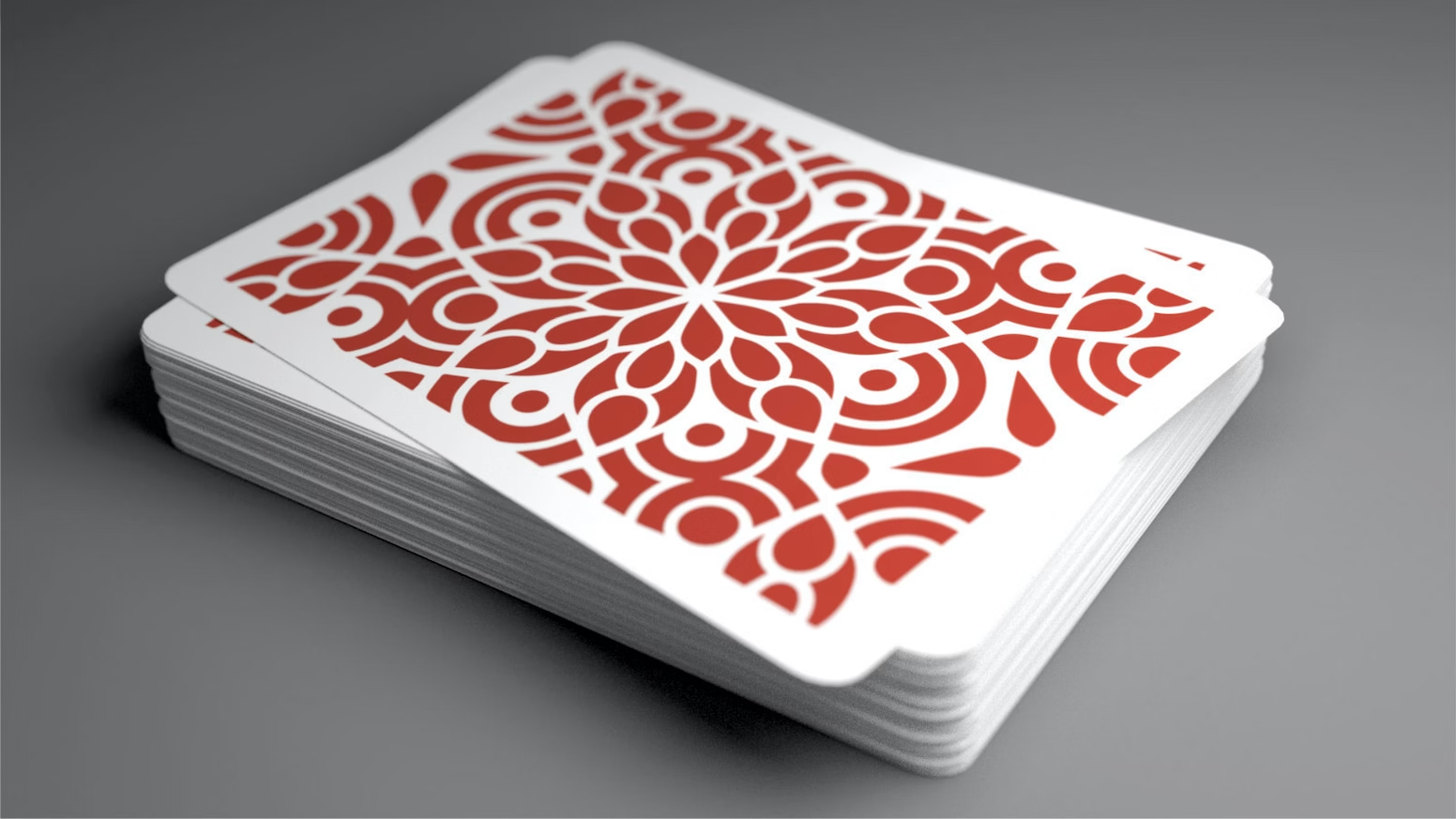
Marked cards are also known as ‘readers.’ Such cards can easily be identified by looking at the back of the card. While it is possible to buy specially manufactured marked cards, the usual method would be for the card cheat to mark them during a game. A whole deck of cards can easily be ‘doctored’ fairly quickly. However, most cheats would probably keep the higher-value cards. Since there is virtually no skill (except for avoiding attention) to keeping cards, it is an appealing cheating method for many cheats.
The cheat can mark cards in a variety of ways. The most common form of drawing cards is putting a nail mark into the card by squeezing the card between the thumb and forefinger. Other methods include crimping the corners, grease marks, dirt marks, etc. If you play a lot of live poker, you will probably have been involved in a game where cards have been marked. It doesn’t always mean that someone has attempted to cheat, as even the best playing cards can get marked naturally. But keep a close eye on the cards, and immediately request a new deck if you spot a marked card; if you’re not completely happy, leave the game.
To diminish the influence of marked cards, you should always use ‘burn cards’ when you play poker. The great advantage is that the cheat would not know the next card from the deck. I would also suggest that the deck be kept square on the table and not spread out as some prefer. If the deck is spread even slightly, then the corners of the cards are exposed, allowing the card cheat to see where the marked cards are. Some players also habitually discard the burn card before the betting round has finished. If you see people doing this, politely tell them not to do it. It’s bad form!
The Cold Deck
This is a prearranged deck that the cheat would bring into the game at an opportune moment. The deck would have two or more hands already set up or ‘stacked’ and be ready for dealing. The cheat might also give the deck a false shuffle and then deal his winning hand. With a prepared deck, the card cheat would ensure his victim has a very good hand, just not as good as his. Little skill is required in this method of cheating, as the deck could have been prearranged hours before the game.
False Shuffling
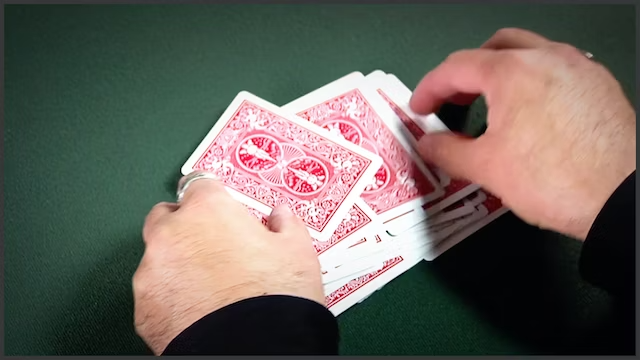
As you can imagine, the ‘cold deck’ has limitations for the cheat. Therefore another cheating method is to ‘stack’ the deck during a seemingly legitimate shuffle. During this ‘shuffle,’ the desired cards are shuffled into the correct location in the deck. Suppose it is a five-handed game of poker; the shuffler/dealer has secured the two Aces at the top of the deck and then performs a simple overhand shuffle. In this shuffle, the card cheat has separated the Aces by ‘running’ four cards between them. Now there is just one Ace on the top. Another quick overhand shuffle and the Aces are now laying 5th and 10th in the deck. The cards are dealt, and the cheat has pocket Aces!
Contrary to what people would imagine, the card cheat can easily stack a deck using the overhand shuffle. This is because cards can be pulled off one at a time, breaks can be formed between packets, and the sequence can easily be repeated. Such manipulation is far more difficult with the riffle shuffle technique.
Of course, you should also be aware that the deck may already be prearranged when it comes to card shuffling. The whole deck doesn’t need just the top 10 or 15 cards. The card cheat will ensure he doesn’t interrupt this part of the deck. This is called ‘top stock control.’ This sort of stock control is also done with the riffle shuffle. It is pretty easy to spot as the shuffler will attempt to avoid disturbing the top cards.
Cheating using the riffle shuffle is far more difficult. Using this method, it’s still possible to do false shuffles, but stacking a deck requires considerable skill and years of practice. So the warning is to be very wary when someone you have seen using the riffle shuffle changes and starts using the overhand shuffle. People who shuffle with the riffle shuffle rarely need an overhand shuffle. It should also be noted that the professional card cheat will never show off his skill at manipulation. This would be very stupid. The clever fraud would look clumsy so as not to arouse suspicion.
False Dealing
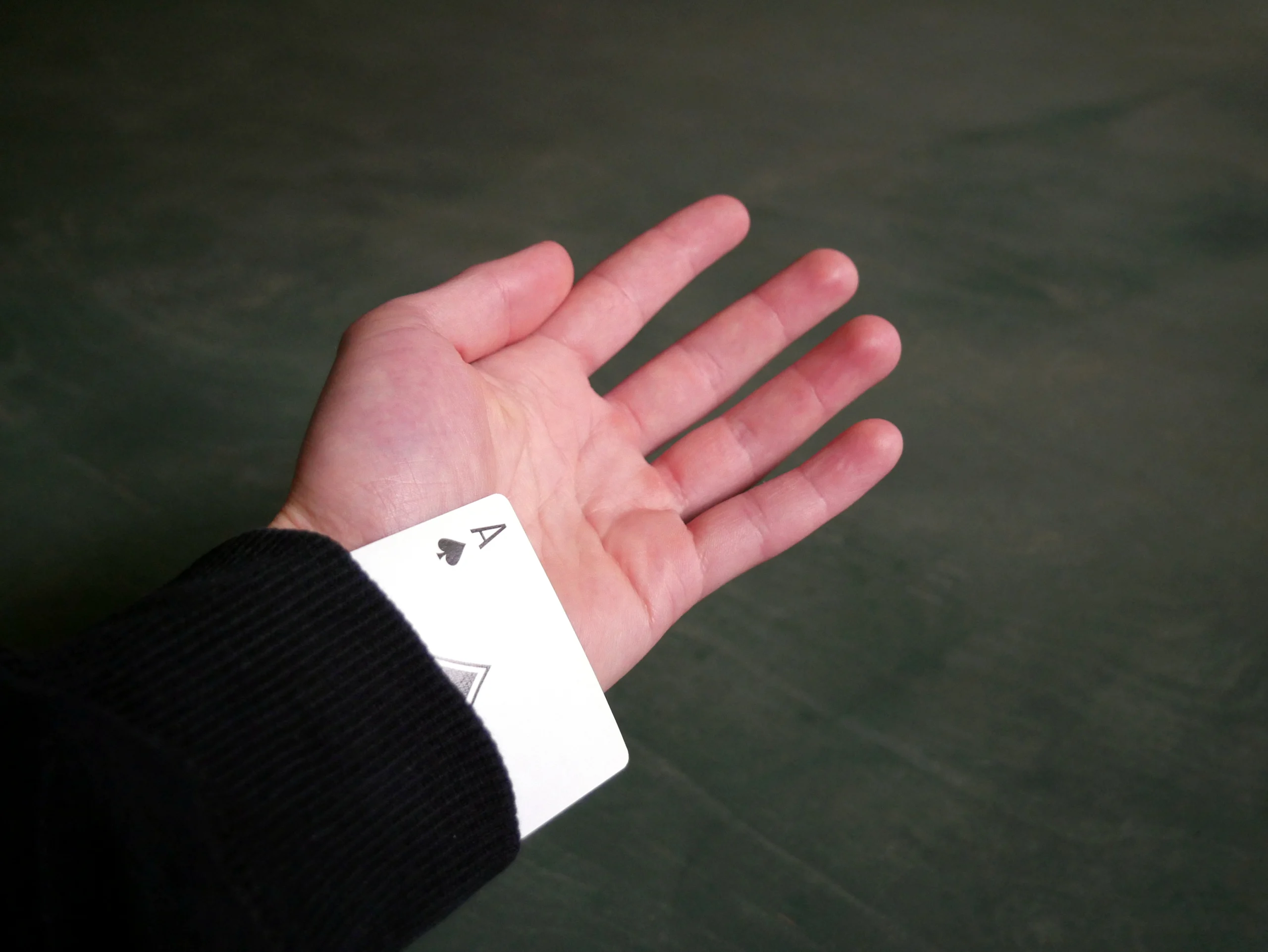
There are two main ways of dodgy dealing. The first is what is called ‘dealing seconds.’ This is where the card cheat would have his desired card at the top of the deck. This card will remain on the top throughout the deal until it gets to his turn, at which point the top card is dealt. If done properly, this is a difficult card sleight and even more difficult to detect. The card cheat will usually push the top card over very slightly, at which point the right thumb (if right-handed) clips the second card out while the full card is simultaneously pulled back into position by the left thumb.
The Second Deal
Of course, the card cheat only has the advantage of dealing himself one desired card using this method. The far more effective crooked deal is the bottom deal. As you’ve probably guessed, the bottom value means dealing from the bottom of the deck. This is extremely hard to master, and you shouldn’t worry too much, as very few people can perform the bottom deal without giving away telltale signs.
The card cheat will, in all probability, hold the deck in what is known as ‘the mechanic’s grip.’ The middle finger then takes the bottom card from the deck. This is all done in a very fluid manner, assuming, of course, that the card cheat is a good manipulator. The biggest giveaway sign to the bottom deal is that ‘mechanics grip.’ It is not a natural way to hold a deck of cards. Another giveaway is the noise the bottom card makes when it is dealt. If performed badly, the bottom of the deck will also wedge out slightly. Watch out for these!
The Bottom Deal
The “Mechanics Grip”
The “Wedge” occurs when badly executed.
Of course, you should always have a postilion (the plastic card) at the bottom of the deck when dealing. This makes it very difficult to perform a bottom deal. If you don’t have a postilion, use a Joker card as a substitute. Please remember that it takes years of practice to achieve an effective bottom deal, and when you add the postilion to the equation, it would require a true expert. So don’t worry too much about it.
Confederacy
When two or more card cheats work together, the difficulty of their task is dramatically reduced. The chosen cards would be gathered before the shuffle (i.e., scooped from the last hand), secured, shuffled into the desired location, and then cut. If the game rules dictate that someone other than the shuffler is obliged to cut the cards, then the cheater’s accomplice will duly cut the deck at the desired location.
You may ask how the cheat knows where to cut the cards. One common method is for the 1st cheat to bend the deck and then cut the deck themselves, but in doing this, the top half of the deck is tilted backward. The cut is completed, and as the deck is on the table, there is a clear arch between the top and bottom halves, where the 2nd cheat will cut. This brings the deck back to its original position. This method is fairly simple, but the giveaway signs are easy to spot. If this method were employed, the cut would be done quickly to avoid being caught.
Another method is for the 1st cheat to cut the deck but to out-jog slightly. The 2nd cheat then cuts at the point where the deck slightly overlaps. The deck is set up for the deal with the cards in place. As you can imagine, it doesn’t have to be about card manipulation when two or more people cheat. There are many ways to cheat when collaboration is involved, and far too many to list here.
Good Practise to Follow

The following procedures should be commonplace in your poker game to help prevent cheating;
Seating
Players should draw cards to determine who sits where. You should never be able to sit where you like, as it increases the odds of card cheats in collusion.
Shuffling/Cutting/Dealing
The same player shouldn’t shuffle and deal the cards. The player to the dealer’s left should shuffle, the player to the dealer’s right then cut, and the dealer then deals. This eliminates lots of possible opportunities to cheat.
Use a Postilion
Always have a Postilion or Joker on the bottom of the deck. Not only does it stop the bottom card from being glimpsed, but it helps prevent bottom dealing.
Count the Cards
The cards should be counted regularly to ensure they are all present. If two Aces are missing, start worrying!
Check for Markings
Regularly check the cards for marks, crimps, etc. Of course, some effects will be accidental, but if this affects the game, get a new deck of cards.
Cards on the Table
Ensure playing cards are always on the table. There is no reason a player should remove the cards from the table.
Of course, poker has many cheating methods, and I don’t claim to know all of them. I also don’t want you to think that card cheating always happens. It doesn’t. Playing poker live is great fun; you shouldn’t let what I’ve shared put you off. If you play poker in an environment that you’re comfortable with and are having fun, then don’t worry. However, knowing the methods that could be used to cheat you is always wise, so you should follow the procedures explained above. Anyway, I hope that you’ve enjoyed reading this!


