

Mastering How to Play Aces in Card Games
Pocket aces are undoubtedly the best-starting hand one can be dealt in the game of hold’em. Unfortunately, the odds of being dealt pocket Aces is 220-to-1, so it doesn’t occur nearly as often as we wish. When you are fortunate enough to get them, you must know what to do with them. That’s the goal of this lesson.
How they are played to their optimum largely depends on the setting in which they appear. You might be dealt them in a cash game, a tournament, heads-up, in an early or late position, playing limit or no-limit, to name several factors. Don’t let all these variables make you nervous. Generally, the strategy you should embrace is to raise aggressively pre-flop and continue to bet and raise unless you meet resistance supported by the board’s texture.
Aces as Favourite Hand
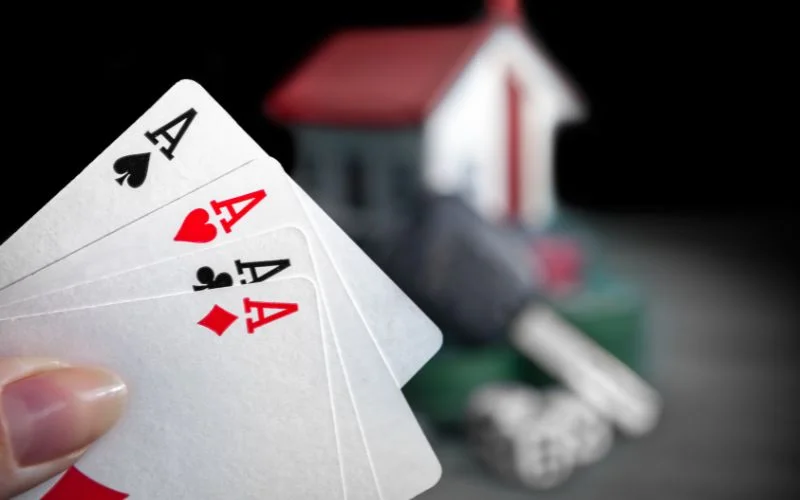
Before we delve into the nuances of playing Aces to your best advantage, let me explain why it should be everyone’s favorite hand. I’ve often heard some players freeze up when dealt pocket aces and almost dread playing them. They go on to tell bad-beat stories of how they always seem to get cracked and cost the player so much money. This is utter nonsense, so if you hear these tales of woe, ignore them. We will show you how to play them profitably and make them your favorite hand.
Aces Don’t Play Well in Large Fields
The whole purpose of playing Aces aggressively is that even though a pair of Aces is the best possible starting hand in hold ’em poker, they don’t play well in large fields. You’re a favorite against two or three other players, but when you’re up against four random hands, your Aces become an underdog to the field.
Although Aces are the strongest hand in this example, they are an underdog on the field. However, if we eliminate just one of the hands, they become a favorite. This demonstrates why you should raise pre-flop to thin the area whenever you get dealt pocket Aces.
Avoid the Temptation to Slow Play
Many poker players choose to slow-play pocket Aces, particularly from the early position, by just limping in. We all know how annoying it is to raise with Aces only to pick up the blinds and get no further action – which is why it’s so tempting to slow play. However, you avoid this temptation unless you know that someone to your right will raise for you, and the worst possible scenario is to limp in and then witness everyone else doing the same.
Your Bets Tell a Story
You should also avoid raising the minimum, as this stinks of a big hand such as Ace or King. Remember that your bets tell a story, and by increasing the minimum, you’re effectively telling the table that you want action. You also want to avoid allowing other players to see a flop cheaply with pre-flop junk, which may later turn into an undetectable monster. The ideal scenario is to thin the field to only one or two opponents. There are no money-back guarantees in poker, but you’re hoping to get a heads-up with a lone opponent who, in all likelihood, will be holding AK, AQ, KK, or QQ.
Playing Aces Post-Flop

One of the big decisions when holding Aces is when the board has an obvious flush or straight draw, and your opponent gets very aggressive with a big bet. You can always take the safe route and fold or come over the top of your opponent’s raise, ensuring he does not have correct odds for his draw. Don’t forget to factor in the other potential reason he has become frisky. He could have flopped a set or two pair, and he might be trying to push you off your hand. He may envision you to be on a draw.
As pointed out, there are no money-back guarantees in poker. You must understand your opponent’s capabilities even with the best starting hand in hold ’em. Would he put that many chips at risk on a draw? Does he have two pairs or a set, meaning you would draw thin?
You’ll know you’ve arrived at a new level of poker expertise when you finally muck pocket Aces on a non-scary board. A beginner to poker would never even entertain such an act, which is the best course of action on occasion.
Playing Aces in Different Card Games
Aces can be used differently in various card games. Here, we’ll cover how to play Aces in some popular card games:
1. Poker
In poker, Aces are the highest-ranking cards and can be used in various ways:
High Card
A single Ace can be the highest-ranking card, especially in high-card games. Having an Ace can secure your victory if no other player has a better hand.
- Pair: Having a team of Aces is a powerful hand, often called “pocket rockets” or “bullets.” It’s a strong starting hand and should be played aggressively.
- Ace-High Straight: Aces can be used as both high and low cards, allowing you to form a straight with the cards A-2-3-4-5 or 10-J-Q-K-A.
Blackjack
In blackjack, Aces have unique rules:
- Soft and Hard Hands: Aces can be counted as 1 or 11 points in blackjack, depending on which value benefits the player’s hand more. An Ace with a 10-value card (10, Jack, Queen, or King) forms a blackjack, the best possible hand.
Bridge
In bridge, Aces are valuable for winning tricks:
- Taking Tricks: Aces are often used to win tricks and establish control over the game. Leading with an Ace in the opening track can set the tone for your team’s strategy.
Hearts
In the card game Hearts, Aces have a specific role:
- Penalty Cards: Aces and the Queen of Spades are penalty cards in Hearts. Players aim to avoid taking tricks with these cards to minimize their point count.
General Strategies for Playing Aces

Regardless of the card game, some general strategies can help you play Aces effectively:
Timing is Key
Don’t play your Aces too early unless it’s necessary. Holding onto them can give you an advantage in later rounds.
Bluffing
In games like poker, consider using Aces as part of your bluffing strategy to mislead your opponents.
Counting Cards
Card counting can help you keep track of the remaining Aces in the deck in games like blackjack and adjust your strategy accordingly.
Conclusion
Many times, much to the chagrin of their holders, Aces win small pots and lose big ones. The players that keep that vulnerability in mind as they devise their strategy based upon multiple critical factors that will impact the play of the hand are the ones that win big pots and lose small pots with Aces. Next time you’re fortunate enough to be dealt a pair of Aces, take a moment to decide the best way to proceed based on the variables at your disposal, as opposed to your less erudite, one-dimensional opponents.
Related Lessons


