

Art of Playing Marginal Poker Hands: A Strategic Guide
Back in the day, when new poker players were trying to grasp the game’s intricacies, ‘marginal hands’ was a bad phrase. They were to be avoided at all costs. The first rule players learned about poker was not to play too many hands. The number two critical rule was to study poker starting hand charts to understand how hand values worked based on position. Coupling these two rules produced the day’s mantra – Play only quality holdings and play them aggressively. While rather simplistic, it was (and still is) good advice to keep new poker players out of trouble.
However, mixing it up so that opponents don’t become too familiar with your playing style is a fairly rudimentary part of playing poker. To become predictable is not the poker strategy of winning players. In poker, you have to play different hands the same way. If you fail to do so, opponents will glom onto your hands simply by how much you bet or raise with your holdings. Therefore, you have to play some non-premium hands the same way you play your best hands to give those good hands some cover and disguise.
Marginal Hands Have Potential
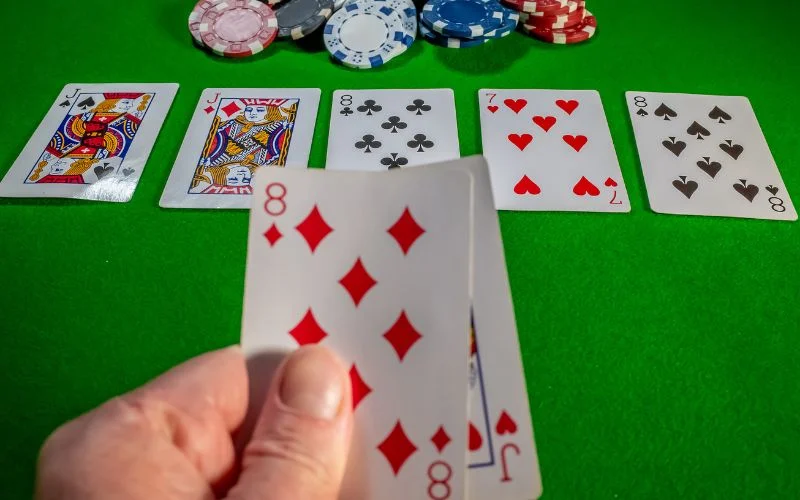
Marginal poker hands come in all sizes and shapes but are mostly good drawing hands such as connectors, suited cards, smaller pairs, and even two-gapped cards like J9, T8, 53, etc. These hands don’t figure to win without improvement, but with progress, they have lots of potential. This is because no-limit hold ’em is a game of implied odds, and a marginal hand can become a monster and take all of an opponent’s chips in one fell swoop if played correctly.
There is a big difference between playing marginal hands and playing junk hands. Generally speaking, marginal hands have the potential to become strong hands, while with junk hands, you need your opponent to abandon their holding to take down the pot uncontested. Most junk is normally played out of the big blind for free. You’ve probably wandered too far if you play trash from other positions.
The Management of Deception

Playing solid hand values from the appropriate position remains the cornerstone of winning hold’em play. The key part of that mandate is proper position. It would be best to give the table the illusion of action to maximize your winnings on good holdings. As the old western sage said, “Ya gotta give action to get action.”In no-limit hold ’em, we amend that slightly and say, “Ya gotta appear to give action to get action.”
Much of poker is the management of deception. Playing marginal hands cheaply from a late position and, when appropriate, from an earlier post gives you the inexpensive illusion you desire – while giving you the potential to connect to a big hand and make a lot of money.
If you show down a marginal starting hand occasionally, it will do wonders for your ability to gain action on top-quality hands. Notice I said “once in a while” because it won’t serve you well if you do it too often. If you start playing too many marginal hands, it will deplete your poker bankroll instead of enhancing it.
Outplaying Your Opponents
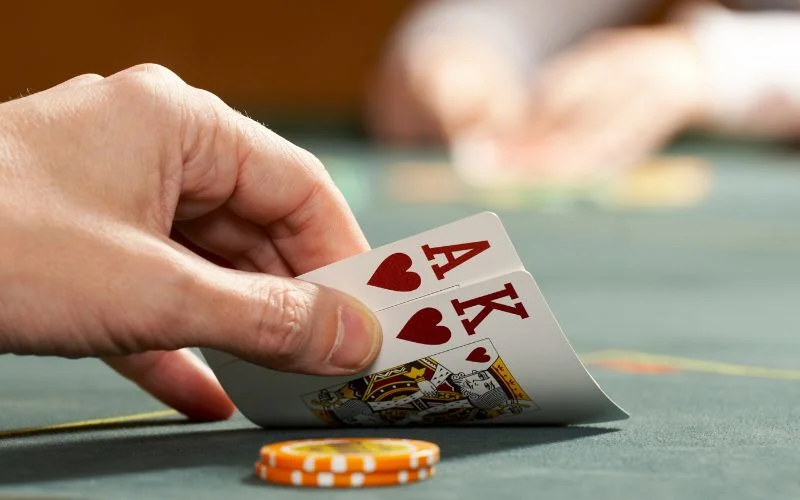
If all you play are good cards, then you’re just playing ABC poker and hoping you’ll get more good hands than your opponents. You know that isn’t happening in the long run, so at best, unless you resign yourself to playing break-even poker, you must think about how to outplay your opponents to win pots without good cards. How would one do that? One way would be to seek out good situations to play marginal holdings. The critical elements to consider are your opponents’ playing styles and your position.
There is another element that I believe deserves a note of caution. Winning pots by your wiles alone can become quite intoxicating – so much so that many on that slippery slope succumb to the urge to overuse this tactic of playing poker without solid hand values. I don’t need to tell you what happens when everyone around the table realizes you have been winning so many pots. Pick your spots combining adversary knowledge and position, and you’ll do just fine.
There is a caveat to the above advice: if you regularly play against losing players, you seldom pay attention to your playing style. In such cases, you do not need to mix up your play to confuse them. After all, they are not thinking about what hands you might be playing – so you’d be far better off sticking to “ABC poker” and exploiting their weaknesses rather than deviating into the realms of fancy play syndrome. Remember that most of the money you’ll win at poker comes not from your play’s brilliance but from your opponents’ ineptitude.
From Marginal to Junk
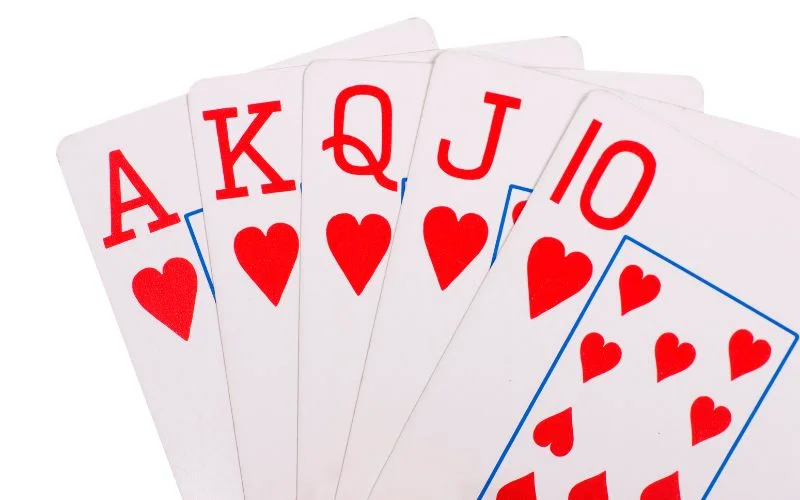
Don’t fall in love with your starting hands. Starting hands change their value as they progress. Let’s examine a poker hand that would qualify as marginal and worth playing but may lose some of its luster as the writing goes.
Imagine holding in a middle position. Two players limp, and the next player min raises. Since it was only a min-raise and you’re feeling frisky, you call, as do the first two limpers. Now, the flop nails you are holding make you a straight with. Your flush draw just became history, but a made straight-on-the-flop is nothing to sneeze at. Now the first limper bets out half the pot, the second limper calls, and the original raiser re-raises:
Wow – what just happened, and what should you do now? This is when you come to grips with the fact that you’re holding the proverbial idiot end of a straight, also known as the sucker straight, and could be in real trouble. Your suited connectors were a good, marginal hand that just turned into junk. Try not to go to war with the bottom end of a straight. Many a stack has been sacrificed in that manner.
Domination
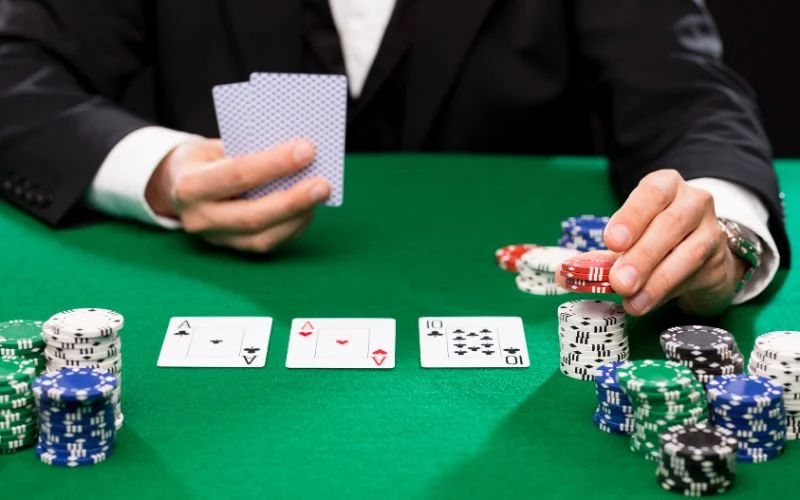
Marginal poker hands that are easily dominated will be your biggest long-term money losers if you lack the discipline to escape them. If you decide to enter the fray with a suited Ace-rag, then remember the reasons for playing the hand in the first place. Your objective with such a hand should be to try and see a cheap flop in hopes of making a flush. Don’t get too enthusiastic if an Ace falls on the loss – someone could easily have a better Ace.
A hand like Ace-Jack is also marginal because it can be easily dominated. The same holds for hands like K-Q, K-J, K-T, etc. When viewing an early raise while holding a marginal hand, I have found the old poker axiom of “When in doubt, get out” to be very wise advice. That wisdom can save you a whole bunch of chips. Instead of viewing these marginal hands as playable, consider how much you enjoy others playing those hands against your Ace-King.
You might flop something spectacular with a marginal hand, but the sad truth is that the best hand going in is usually the best hand coming out. So when you start second best, it’s too easy to seduce yourself into sticking around with something that’s second best and figures to stay that way. Avoiding domination is one of the best bankroll preservers, in my view. Try and be the Dominator, not the Dominatee – it’s much more profitable.
Conclusion
The evolution of how to play no-limit hold ’em, fuelled by the expanded literature, televised poker, and the internet, now includes the value of playing marginal hands. With the changing poker landscape, the play of marginal hands evolved from perceived weak, undisciplined play to a brilliant, profitable strategy. Playing marginal hands is a critical part of playing poker well. If you aren’t playing marginal hands, you are playing too tight, which is not the most profitable way.
The main keys to successfully playing marginal hands are the same for all elements of winning poker play. They include knowledge of your opponent’s tendencies and position, an awareness of the image you have been projecting, and possessing a certain degree of discipline. Maintaining discipline is critical to bankroll preservation, so when you catch a little piece of the flop, you don’t wind up married to the hand, which often will lead to a divorce from your chips. There are no prenuptial agreements in poker.


