

Is Online Poker Rigged?
Poker is a game of skill, with a small dollop of luck tossed in. Because of this (or perhaps despite it), many online poker players have postulated several conspiracy theories about the game. A brief scan of a few poker forums will reveal plenty of cries of “The game was rigged!” and “I can’t win after I cash out.” As with most conspiracy theories, a reasonable explanation usually exists.
There are a variety of poker conspiracy theories that should be ignored. Let’s take a look at a few of these:
The Cash-out Curse
One of the most popular and ridiculous poker conspiracy theories you’ll find on message boards and poker forums is the cash-out curse. This conspiracy theory presumes that a player who cashes out some money from an online poker site will experience a horrible losing streak when he returns to play. The idea figures that a “curse flag” will be placed on the poker player’s account, singling them out to be dealt bad beats.
What would be the motive for such a policy? Poker conspiracy theorists say a poker room’s motivation for the cash-out curse is twofold. Firstly, they’re trying to punish you for cashing out and discouraging you from cashing out in the future. Secondly, the card room hates it when players cash out, and redistributing the money to other players allows the house to receive the money through the rake eventually. Although it may be possible to see the twisted logic in this reasoning, the simple fact is that the online poker cash-out curse is not real.

Poker is a game of constant, volatile fluctuations – variance. Typically, a player will cash out after experiencing a nice winning streak. The average casual player will have a few wins, look at their bankroll, and think, “Hey! That’s enough cash for that new set of golf clubs I had my eye on.” When he returns to play poker online, he returns with an inflated sense of his poker skills. He doesn’t feel like he can lose; when he inevitably does, he cries about the cash-out curse.
The situation is worsened when an online poker player who has cashed out is over-confident and decides to move up in stakes, where more advanced poker players are waiting to take their money.
Bad Beats
A “bad beat” typically occurs when playing poker and receiving a strong hand after the flop. Despite your seemingly monstrous hand, another player calls with a weak draw and beats you by getting a lucky card on the turn and river. Although this is a rather common occurrence due to the luck component of the game, it has led several naive poker players to cry conspiracy theories.
The theory is that poker sites are rigged to ensure that weak players don’t lose all of their money to better poker players too quickly. This is because a bad poker player who lasts longer will lose more of his money to the rake instead of to another player. The conspiracy theory postulates that bad poker players intentionally have their playing sessions extended by the online card room at the cost of bad beats for stronger players.
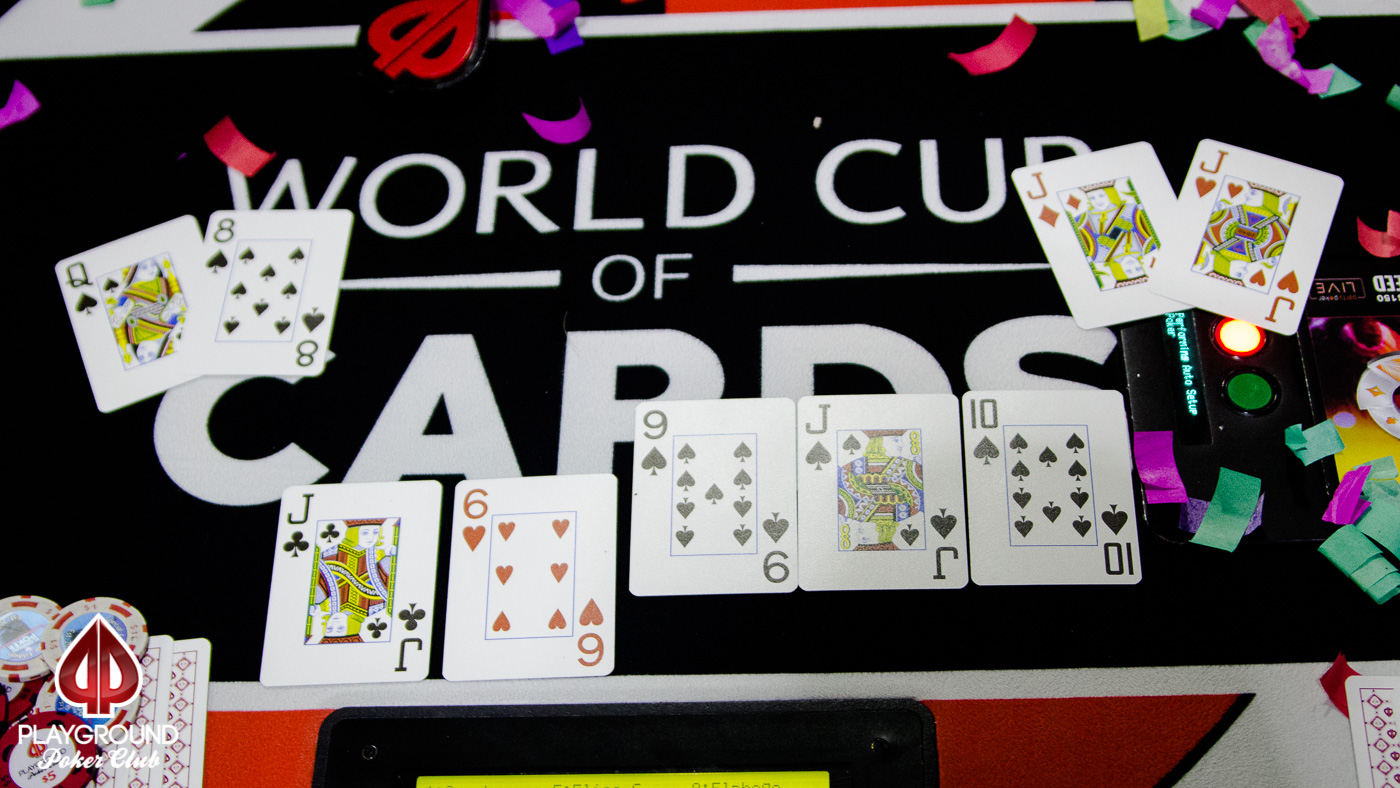
The reality of the situation, of course, is that bad beats occur naturally. Firstly, online poker players, especially those at the micro limits, tend to be weak, passive, and loose with their chips. When the game’s overall quality is very flexible, with players playing far more hands than they should, there are bound to be situations where a bad player sees lucky cards and beats a better player. Bad beats even occur deep in the main event of the World Series of Poker. In addition, online poker is played at a much faster pace than live poker. It would stand to reason that you’ll see many more bad beats.
Action Flops
This is another theory based on the online card room trying to make more money from the rake. The theory states that the online poker site intentionally deals flops that help multiple hands build up the pots, increasing the rake the card room receives.
This conspiracy theory is also explained by the loose nature of online poker, particularly at the lower limits. With so many players seeing the flop, there are bound to be instances where the defeat helps multiple poker hands. Comparing live poker to online poker, pots will often be larger, and more players will be eager to pursue weaker hands.
Again, it’s important to remember the random nature of how cards are dealt.
Random Number Generator (RNG) Dealing Systems
The random number generator (RNG) is the backbone of any online poker room. Understanding how they work will help dispel any conspiracy theories you’ve read in this article. A random number generator aims to ensure that there are no biases and that cards are distributed unpredictably.
You might be surprised, but a computer can’t produce a random shuffle alone. An unpredictable external stimulus is required for a pseudo-random shuffle. Online poker sites have various ways of creating a pseudo-random number generator (PRNG), which relies on inconsistent real-world physical processes. Examples include:
- We combined mouse movements from players connected to the online poker room.
- Thermal movements around the computer’s thermal entropy chip.
Fairness and Randomness in Online Poker Rooms
In many respects, online poker rooms go beyond what is necessary to create an unpredictable and random shuffle to provide a fair and unbiased playing environment. Such methods also ensure a potential hacker cannot break or crack the random number generator.
Many conspiracy theories suggest that online poker rooms somehow fix their random number generators to produce specific results. The fact is that any attempt to create some set of rules or decision engine into a random system would immediately invalidate the randomness – and a dysfunctional random number generator would be extremely easy to spot.

Also, let’s not forget that online poker players have hundreds of thousands of hand histories saved in poker-tracking software programs. The poker-playing community regularly scrutinizes these poker hand histories. If there ever were some “fix” by an online poker room (that produced results that deviated beyond expected variance), it would be pounced upon immediately.
So, is Online Poker Rigged?
No, online poker is not rigged. The conspiracy theory presuming that online poker is in some way fit is a misconception that has been increased through poker forums and internet message boards. It’s human nature for a person who loses or has an unfortunate streak of poor luck to claim that the system was rigged simply because it’s more difficult and uncomfortable to accept that they were responsible for their losses.
Players who continue to spout line poker being rigged (known as “right cards”) are usually the same people who have difficulty accepting that they might be losing poker players. Instead of learning more about the poker game and trying to improve their poker skills, they assume that the system is working against them. It’s not!
Related Articles
- Losing at Poker
- An Introduction to Poker Tracking Software
- Cheating & Collusion at Online Poker Rooms
- The Risks of Losing at Poker


