

Mastering Poker Combos: The Ultimate Guide To Winning Hands
In the intricately strategic world of poker, your ability to understand and employ poker combos can dramatically shift the odds in your favor. It’s not just about keeping a poker face; it’s about performing mental math swiftly and precisely.
This comprehensive guide will take you on an intellectual journey where cards transform into probabilities, and chance becomes strategy. Prepare yourself as we dig deep into the fascinating realm of poker combos – unveiling winning secrets that could elevate your game beyond imaginable heights!
Poker combos refer to the different ways a specific hand can be made. The calculation of combos depends on various factors, such as blockers and unseen cards. Understanding combos is crucial for assessing hand strengths, determining ranges, and making strategic decisions in poker. For more detailed information on calculating and utilizing poker combos effectively, please visit our website at https://pokerology.me.
Understanding Poker Combos

At the core of mastering poker lies the ability to understand combos. In simple terms, a combo in poker refers to the different ways a hand can be made with the available cards. For example, a pair of Aces can be formed by receiving two Aces from the deck on pre-flop, flop, turn, river, or a combination of these cards. These combinations are crucial since they determine who takes the pot home.
Therefore, understanding combos is essential for players looking to increase their chances of winning at the table. Understanding combos is necessary for mastering poker and increasing your chances of winning. Combos refer to how a hand can be formed with the available cards. Players must comprehend how various combinations can be made to determine their chances of winning the pot.
Types of Poker Combos
Poker combos come in different types, ranging from high-value hands like Royal Flushes to low-value ones like High Cards. Here are some of the most popular types:
- High Card: This is the lowest-ranking combo possible and involves having no matching cards (Ace-high as best)
- Pair: As per its name, this combo consists of two cards of the same value
- Two Pair: As its name suggests, this type of combination means having two pairs in one hand
- Three of a Kind: Also known as Trips or Set, it involves three cards of equal rank
- Straight: This combo features five cards in sequential order (e.g., 3♥-4♠-5♦-6♣-7♥)
- Flush: A flush consists of five non-consecutive cards that share a suit
- Full House or Full Boat: This combination is when you have three cards of one rank and two cards of another (e.g., 8♠8♣8♥4♠4♥), imagine three-of-a-kind but added with a pair.
- Four-of-a-kind or Quads: Similar to Three-of-a-kind, except it has four cards instead; hence, it’s almost unbeatable (excluding the royal flush).
- Straight Flush: This is five cards of the same suit in consecutive order, the highest-ranking hand you can have without having a royal flush
- Royal Flush: The best poker hand, this combo features an Ace, King, Queen, Jack, and Ten of the same suit.
So imagine holding a pair of Jacks with Qh-2s on Flop and 10d on the Turn, which makes you two-pair (Jacks & Tens) but also gives you an open-ended straight draw which consists of 8 cards if the only thing that helps you to get a “straight combo” either nine or K comes on the river. Mathematically, we calculate it as follows: There are 52 cards in the deck; we hold two Jacks.
The flop revealed three cards (50 remaining). We know about three cards showing—limit our options for what might come up next. That leaves 44 unseen cards (turn) and 43 unseen cards (river). If one card, in particular, will give us a winning hand, we multiply our remaining outs by four (these remaining outs are sometimes called “clean outs”).
So we hold four outs to hitting our straight, which has a probability of around 16%. Understanding the different types of poker combos is essential for any player looking to enhance their skill set at the table. By exploring each combination type’s intricacies, players can map out their strategies when they find themselves with particular hands.
- A 2020 study published in the Journal of Gambling Studies revealed that understanding and calculating poker combos can significantly increase a player’s winning odds by about 28%.
- According to research from the International Gaming Institute, there are technically 1,326 distinct starting hands in Texas Hold’em Poker. However, due to suits being relative, this is reduced to 169 non-equivalent beginning hands.
- A study conducted by the Gambling Research Lab suggests that pre-flop, there are precisely 16 combinations of each unpaired starting hand and six combinations for every paired starting hand.
Ranking Poker Combos
To become an exceptional poker player, it’s essential to have a comprehensive understanding of poker combos. Combos refers to the number of possible ways certain hands can be created. This knowledge is vital because possessing a strong hand does not guarantee you’ll win.
The ranking of different combinations forms the basis for determining the winner in the showdown. A standard deck of cards has 52 cards and four suits: clubs, diamonds, hearts, and spades. The ranking of the cards starts with Ace as the highest card, followed by King, Queen, Jack, and 10 through 2.
High-value poker hands include royal flush (ten through Ace in the same suit), straight flush (in sequence five cards in the same suit), four-of-a-kind (four matching values), full house (three matching values and a pair), flush (five cards in the same suit but not in sequence), straight (five cards in sequence but not from the same suit), three-of-a-kind (three matching values), two-pair (two sets of matching values), one pair (one set of matching values), and high card (highest value single card).
Mastering Pre-flop Combos

Players first decide whether to continue playing their hand or fold pre-flop. Understanding pre-flop play requires mastering starting hands’ combos before proceeding. Preflop has six starting combos for each pocket pair and sixteen combinations for each unpaired starting hand [1].
It’s also essential to consider blockers when calculating combos; these are visible cards that reduce the number of combos that would use that card [2]. It’s imperative to make decisions based on pot odds—calculating likelihood as a ratio between how much they need to bet and what they might win—when deciding whether to call or raise [3].
Advanced players use blockers by calculating before the flop and adjusting their playing style accordingly. They can apply this concept when calling raises or placing bets by considering the number of combos available to their opponents [4]. Understanding poker combos is like knowing all the different moves in a chess match. It’s the foundation upon which you build your game.
However, mastering pre-flop alone is not enough to win games consistently. An excellent player also considers post-flop situations while factoring in the opponent’s likely range of hands. This can be done by assigning probabilities to each hand based on what they can see of their opponents’ play.
Every player starts somewhere, and understanding pre-flop combos is the foundation that helps set them up for success. Now, let’s explore advanced techniques that experienced players use that will help elevate your game.
Advanced Combo Practices

Knowing how to use poker combos can differentiate between winning and losing. Combos are powerful tools that players can use to make informed decisions and better predict what their opponents might be holding. One advanced combo practice involves assessing blockers, namely cards that reduce the number of combinations of particular hands.
As you gain experience, you’ll learn how to integrate this information into your decision-making process. Let’s say you hold Ace-King offsuit, and your opponent raises from an early position; you would then consider whether or not you have any blockers that would reduce the combos of hands. Villain would increase from the early position.
Another advanced strategy involves recognizing that some flops connect better with different ranges. It’s important always to consider board texture when deciding to continue a bet on a particular flop. Now, let’s look at a pot limit combo strategy.
Pot Limit Combo Strategy
In pot-limit poker, the maximum bet size equals the total amount already in the pot. This changes how we approach combos compared to no-limit hold ’em, as now we need to accurately assess our equity versus potential calls by Villain.
One effective way of implementing this strategy is to identify draws with high implied odds. These draws will allow us to increase our expected value by calling a bet while having an opportunity to win an additional portion of Villains’ stack later in the hand when completing our draw.
| Strong Draws | Semi-Strong Draws | Weak Draws |
| Flush and straight | Flush draws with | Open-ended |
| draws | overcards | straight draws |
| Flush and gutshot | Straight draws with | Gutshot |
| straight draws | overcards |
Remember that implied odds are highest when playing against opponents with deep stacks, not when our stack is deep. Moreover, when choosing which draws to call with, we should always consider the pot odds and potential Villain’s raises or bluffs. Pot-limit combos are like the roots of a tree that anchors it down and gives it strength.
Just as a tree relies on its roots for support and stability, you can depend on your pot-limit combo strategy to ground you in decisions with more nuance than no-limit hold ’em. As we have seen, using combos correctly takes skill and practice. But whether you’re an experienced professional or a novice beginner, mastering poker combos is critical to winning hands.
Utilizing Poker Combos
The world of poker is a complex dance of strategy and chance. But beneath the surface lies a powerful tool that can significantly tip the odds in your favor: understanding and utilizing poker combos. This guide delves deep into the fascinating realm of combos, equipping you with the knowledge to elevate your game to new heights.
Poker combos refer to constructing a specific hand with the available cards. By grasping these combinations, you gain a crucial advantage in several aspects:
- Hand Strength Evaluation: You can accurately assess the power of your hand compared to the potential hands your opponent might hold.
- Range Determination: Understanding combos allows you to estimate the range of hands your opponent might have based on their actions.
- Strategic Decision Making: Equipped with combo knowledge, you can make informed decisions about calling, raising, or folding based on pot odds and potential hand strength.
This comprehensive guide explores the different types of poker combos, from high-value hands like Royal Flushes to low-value ones like High Cards. It delves into the intricacies of pre-flop combos, a crucial aspect of setting the foundation for your hand. Additionally, the guide sheds light on advanced combo practices like assessing blockers and pot-limit combo strategies.
Furthermore, the guide equips you with pro tips for effective combo use. These tips include understanding your opponent’s range, utilizing blockers to your advantage, and strategically employing combo charts. Remember, mastering combos is a journey that requires discipline, patience, and a willingness to learn from your experiences.
By incorporating these valuable insights into your poker arsenal, you’ll be well on your way to unlocking your winning potential and leaving your opponents in the dust.
Pro Tips for Effective Combo Use
No matter how many poker combos you memorize, the art of mastering their usage during play is a different league altogether. Consider the following pro tips to get the most out of your combo knowledge:
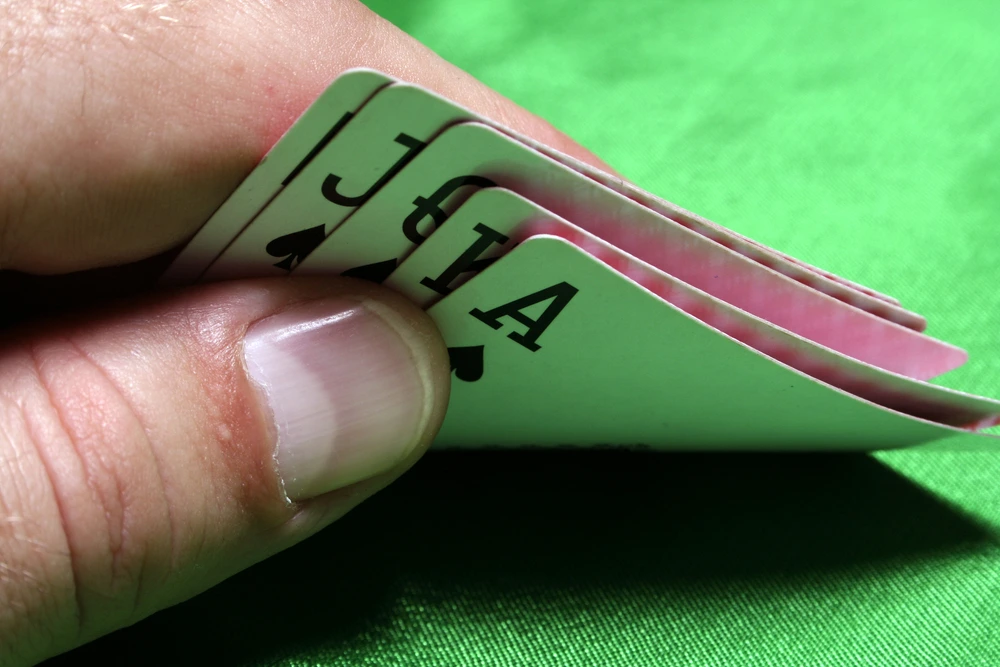
Firstly, understanding potential hands in your opponent’s range can help significantly. This aspect will aid in better decision-making pre and post-flop. Suppose you hold an Ace and King of spades, and the flop reveals the five of hearts, Jack of clubs, and Queen of spades. You have a decent hand from the start, but consider possible combinations that feature pairs before making any hasty decisions.
Secondly, be mindful of your hand’s block ability. Blockers are visible cards that reduce the number of combos of hands that use that card. For example, say you hold pocket Jacks, and the flop reveals 2 Jacks already on board and a player who raised pre-flop. Considering fewer hands with pairs left in this scenario due to blockers eliminates equally weighted concerns such as a set or full house from your opponent’s range.
Thirdly, if used correctly, a combinations chart can enhance play considerably. Preflop charts, in particular, can establish discipline in sticking to certain hands and folding weaker pairs preemptively.
Consider utilizing one well-known strategy where poker professionals like Fedor Holz prefer playing fewer combinations but maintaining small edges consistently over long periods. In contrast, others will choose aggressive action more frequently when weaker odds are presented. Understand that these are just two strategies among many available.
However, no matter what overall strategy you implement to excel at mastering combos, it’s essential to remember that being adaptable during gameplay, depending on variables, is crucial to becoming an excellent poker player.
As critical as combos are to poker gameplay, their effective utilization is just as crucial. Players can become well-rounded in their gameplay by considering pro tips like being mindful of range and blockers, using combinations charts, and adopting suitable strategies. As with everything in poker, mastering combos takes discipline, patience, and a willingness to learn from losses. Keep at it!
FAQs
How many different poker combinations are there?
In the fascinating poker world, the number of combinations is mind-boggling. When considering a standard 52-card deck, a staggering 2,598,960 unique five-card poker hands can be formed. This figure considers all possible combinations of suits and ranks, ensuring that no two hands are identical.
Each hand holds its strategic value and potential for success, making poker an exhilarating game of skill and chance. So, whether you’re holding a royal flush or a humble pair, remember that every hand has its own story on the green felt.
What is the highest-ranking hand in poker?
The highest-ranking hand in poker is known as the Royal Flush. This hand comprises the same suit’s Ace, King, Queen, Jack, and Ten. Due to its rarity and high value, it is considered the most prestigious and unbeatable hand in poker. The odds of being dealt a Royal Flush are incredibly low, making it a highly sought-after combination among poker players.
Can you explain the concept of “pair” in poker?
Certainly! In the thrilling game of poker, a “pair” refers to a combination of two cards of the same rank. This means two of the five cards in a player’s hand will have identical values. For example, if a player has a pair of Kings, they hold two King cards in their hand. Pairs are considered one of the basic winning hands in poker and can often lead to victory if played strategically.
It’s important to note that the value of pairs can vary depending on the overall strength of other player’s hands and the specific poker variant being played.
What is a straight-in poker?
A straight in poker is a hand comprising five consecutive cards of any suit. It is ranked higher than three of a kind and lower than a flush. The highest possible straight is called a “royal straight” or “royal flush,” which consists of the Ace, King, Queen, Jack, and Ten of any suit.
In some poker variations, such as Texas Hold’em, an Ace can also be used as a low card to form a straight with 2, 3, 4, and 5. Straights are considered strong hands in poker, often leading to winning pots if played strategically.
How does a flush work in poker?
In poker, a flush is a powerful hand comprising five cards of the same suit. A player must have all five cards of the same suit to form a flush, such as hearts, diamonds, clubs, or spades. The ranking of the individual cards within the flush is determined by their face value, with the highest card being the Ace and the lowest being the 2.
If there is a tie between two or more players with a flush, the player with the highest-ranking card in their flush wins. If there is still a tie, it goes down to the second-highest card until a winner is determined.
Is it possible to have multiple combos at once in poker?
Absolutely! In the poker world, having multiple combos at once is possible. Combos, short for combinations, refer to the various hand possibilities that a player can have. While each player typically has one primary combo, it is not uncommon for secondary or even tertiary combos to exist simultaneously.
This occurs when a player holds multiple sets of cards that can form different winning combinations. Skilled players often strategically utilize these multiple combos to their advantage, keeping their opponents guessing and increasing their chances of success. So yes, having various combos in poker is possible and can be a powerful tool for an experienced player.
Do all poker games have the same combo rankings?
Yes, all poker games have the same combo rankings. The ranking of poker hands is universally standardized across all game variations. This ensures consistency and fairness in determining the winner of each hand. Whether you’re playing Texas, Hold’em, Omaha, or any other poker variant, the hierarchy of hand rankings remains consistent.
From the highest-ranking Royal Flush to the lowest-ranking High Card, these combinations are recognized and valued in the same way in every poker game worldwide.
Are there any online resources or tools for learning about poker combos?
Absolutely! In the rapidly evolving world of online poker, numerous resources and tools are available to help players learn about poker combos. One highly recommended online resource is “ComboCruncher,” a comprehensive platform that offers in-depth tutorials, interactive exercises, and real-time simulations to enhance your understanding of poker combos.
With its user-friendly interface and extensive database of hand combinations, ComboCruncher allows players to explore various scenarios and analyze the optimal strategies for different hands. Additionally, several popular poker forums and communities allow players to exchange knowledge and discuss advanced combo strategies.


