

Navigating Belief in Luck and the Texas Sharpshooter Fallacy
Understanding the Texas Sharpshooter Fallacy in Poker
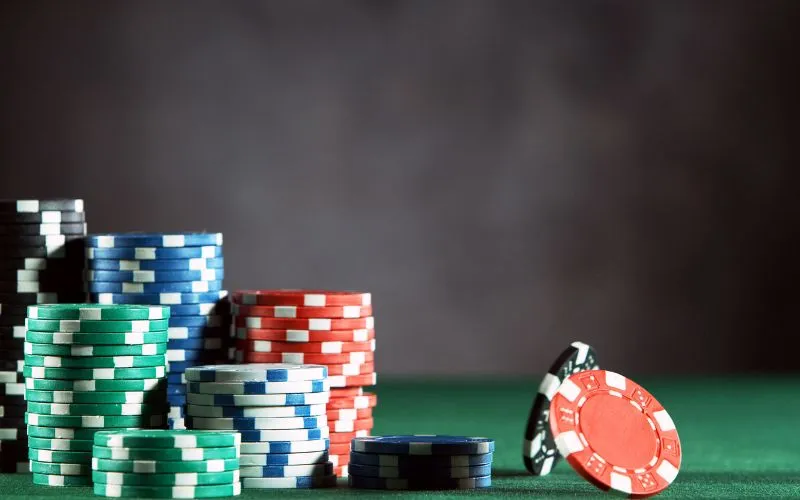
The Texas Sharpshooter Fallacy is a cognitive trap in poker, where players tend to focus on isolated outcomes and create meaning out of randomness. It leads them to personalize losses and see patterns in the chaos of the game, often at the expense of rational decision-making.
The Barn and the Bullet Holes
Picture a man sitting on a hillside. He has a gun, and he’s firing random shots at the side of a barn some yards away. Before long, the barn wall will be riddled with bullet holes. Despite the randomness of the shooter’s aim, the holes will be unevenly distributed. Inevitably, there will be gaps and clusters. If he wants, the shooter can walk up to the barn and paint a circle around the biggest cluster of bullet holes. To the casual observer, the man will now appear to be a terrific sharpshooter. This is known as the Texas Sharpshooter Fallacy.
Poker and the One-Outer Dilemma
Imagine you’re sitting in the cutoff seat at the poker table. The action is folded to you as you look down at the. You open with a standard raise, and the button – an aggressive, trash-talking, chip-shoving blockhead re-raises. Folded back around to you, and after a few raises back and forth, the two of you finally see a flop, which arrives. Faster than you can say, “pot-committed,” all the chips are in the middle, and the cards are on their backs. Your opponent shows a pair of red kings. He has you covered.
The Personalization of Poker Losses
But you still have many outs and a good shot at taking down this huge pot. Your blockhead opponent knows this too, yet he cannot hide his disappointment when one of your outs spikes on the turn. You almost feel sorry for him; all the swaggering bluster has left him now. He’s just another poor player about to lose most of his stack; ironically, on one of the few occasions, he had a real hand that he played well. Of course, there is still one more card to come, but now your opponent’s chances are reduced to just one solitary out – the king of clubs.
Any other card on the river and victory will be yours. You make a nervous joke about dodging a one-outer as the dealer peels off the final card, and there it is. The king of clubs. As he rakes in the massive pot, the blockhead pumps his fist and erupts with more colorful trash talk.
The Fallacy of Personalization
Many, if not most, poker players in this scenario would feel that something personal had been at work in this particular loss. Only one out in the entire deck could snatch away victory and give it to your enemy. One! A 44-to-1 shot! Maybe you jinxed it and tempted fate with that joking comment about dodging one-outers. Perhaps, in a situation like that, it’s hard not to believe that the poker gods were exercising some personal vendetta to make you lose against an obnoxious, much inferior opponent.
Seeing the Bigger Picture
But if you think like this, you only look at a small part of the picture. You’re painting a circle around one bullet hole on the side of a barn. Yes, that king of clubs was a 44-to-1 shot to spike on the river. But the same can be said for any other final card. If the river card had been the, that would have been a 44-to-1 shot to get there. Every time the river is dealt – every out that rescues you, every card that crushes you, every meaningless brick – that card must overcome long odds to arrive when and where it does. They’re all bullet holes on the side of the barn. You draw a circle around the king of clubs because that bullet went to your heart. But it’s still just one random hole among a multitude. Nothing personal about it.
The Poker Paradox: Belief in Luck

In the poker world, belief in luck is a double-edged sword. While confidence rooted in skill can be an asset, unwarranted faith in always being on the winning side of chance can lead to costly decisions. This paradox highlights the fine line between self-assuredness and overconfidence in poker.
The Danger of Personal Beliefs in Poker
Poker players forever draw a circle around some random cluster and then declare it a bullseye. Every time we complain, “I never win coinflips,” or “I can never win with this dealer,” or “Idiot opponents always suck out on me,” – we are just as guilty as the would-be sharpshooter of trying to make a meaningful pattern out of randomness. Objectively and rationally, most of us know these things aren’t true. We don’t always lose coinflips; the morons don’t always suck out. It just feels that way sometimes. But no matter how many coinflips you’ve lost recently or how important they were, it’s still just a nasty little cluster of arbitrary holes.
The Impact of Beliefs on Poker Play
Fixate on that little bit of data, stand too close to the barn, and you only get a partial, myopic view of what’s going on. But the cluster loses its significance if you step away and view the building from a distance. It loses its power to make you feel like fate has singled you out to be a victim.
The Self-Fulfilling Prophecy
The real danger happens when we allow these I’m-so-unlucky beliefs to influence our play. If a poker player is convinced he can never (or rarely) win a race – and then is faced with a borderline decision to shove his chips on a likely coinflip, can he make the correct choice without the wussifying influence of fear? Can the poker player who feels that it’s his special curse to get unlucky against morons continue to play his best game when he finds himself in hand against one of those overly-fortunate idiots? When the answer is no, losing becomes a self-fulfilling prophecy.
The Cost of Fear in Poker
Weak tightness creeps in as we don’t get enough value out of our winners, fold hands that would have been winners, and perhaps fail to protect hands that should have been winners. What poker player hasn’t ever been guilty of failing to bet or raise enough with a made hand because we were half-convinced the idiot opponent was going to suck out anyway? Fearing a loss, we end up guaranteeing it.
The Danger of Believing in Good Luck

The Flip Side of Belief
But the Texas Sharpshooter Fallacy isn’t just about how we view bad luck. We’re often just as guilty of painting a circle around a few chosen bullet holes when the cards are falling in our favor. Belief in good luck is dangerous, too. “I always win coinflips” is as fallacious as “I never win coinflips” and just as expensive, if not more so, if even once that belief coaxes you to put your money in bad. Yes, it’s good to have confidence as long as it is rooted in genuine skill. But the poker player who comes to the battle believing he will prevail because “I always win with <insert favorite junk hand here>” is asking for trouble.
The Trap of Selective Perception
It’s a matter of perspective. We can convince ourselves of almost anything by drawing a virtual circle around a few chosen bits of information – a handful of bad beats here, a lucky break there. And like the ersatz sharpshooter, it’s all about making ourselves look better than we are. Looking back on a tough losing streak, we paint a circle around the bad luck and disregard the bad plays. Or after a big winning session, we paint a process around the great spaces and ignore the hands where we got lucky. It’s soothing, it’s reassuring, and it’s a trap. Every time we do this, we’re shooting ourselves in the foot.
Related Articles


