

Mastering Bluffing in Poker Tournaments: Techniques for Winning
In the high-stakes poker world, your ace in the hole isn’t always a royal flush — sometimes, it’s your ability to bluff magnificently. Bluffing is undoubtedly an essential weapon in any poker player’s arsenal, and when executed correctly, it can lead to highly gratifying victories. In this blog post, we pull back the curtain on the art of bluffing in poker tournaments, decoding its complexities and spinning them into winning techniques. So prepare your poker face – we’re about to delve into a strategic realm that could turn even the smallest stakes into a mountainous pot of gold.
Some effective bluffing techniques to use in poker tournaments include studying opponents’ tendencies, understanding the psychology of bluffing, choosing the right timing and situation, maintaining a consistent betting pattern, and adjusting your bluffing strategy based on table dynamics. Successful bluffs require deception, careful consideration of board texture, bet sizing based on opponent tendencies rather than specific hands, and understanding our perceived image at the table. Developing these skills takes time and practice but can lead to significant success in tournament play.
Mastering Poker Bluffing Techniques
Bluffing is an art form in poker that can greatly enhance your chances of winning big tournaments. However, it requires a deep understanding of the game, careful observation of opponents’ tendencies, and the ability to execute well-timed bluffs. So, how can you master poker bluffing techniques?
First and foremost, studying your opponents is crucial. Pay close attention to their betting patterns, reactions to certain cards on the table, and any behavioral cues they may inadvertently display. By gathering this information over time, you can build a profile for each player at the table, allowing you to assess better if they are susceptible to a bluff.
For instance, if you notice that a particular opponent often folds when faced with aggressive bets on the turn or river, you can exploit this tendency by strategically bluffing.
Another important aspect of mastering poker bluffing techniques is understanding the psychology behind bluffing. Recognize that bluffing is not just about the strength of your hand but also about convincing your opponents that your writing is stronger than theirs. This requires confidence, composure, and maintaining a consistent betting pattern throughout the hand.
| Poker Bluffing Techniques |
| Study opponents’ tendencies |
| Understand the psychology of bluffing |
| Choose the right timing and situation |
| Maintain a consistent betting pattern |
| Adjust strategy based on table dynamics |
Timing and situation selection are critical when it comes to successful bluffing. Look for moments when the board texture aligns with your story and range of hands. Scary boards that are also unfavorable for your writing can provide opportunities for effective bluffs. Furthermore, consider factors such as stack sizes, position at the table, and previous actions to determine the optimal timing for executing a cliff.
Remember that deception is key in bluffing. Your bets should appear anything but a bluff. This can be achieved by betting big to represent strength or small to look like a potential trap. By making your cliffs seem legitimate plays, you increase their effectiveness and decrease the likelihood of your opponents catching on.
Now that we have mastered poker bluffing techniques let’s explore balancing risk and reward to maximize your success in poker tournaments.
Balancing Risk and Reward in Bluffing
Bluffing in poker tournaments is about taking calculated risks for potentially significant rewards. However, finding the right balance between pushing your opponents to fold and avoiding excessive risk that could lead to substantial losses is important. So, how can you effectively balance risk and reward in bluffing?
One key consideration is understanding your opponent’s playing style and tendencies. Different players react differently to bluffs based on their personalities and experience levels. Some may be more prone to calling down with marginal hands, while others may quickly fold at the first sign of aggression. By adjusting your bluffing strategy based on these dynamics, you can better assess the risk involved in each specific situation.
Bet sizing also plays a crucial role in balancing risk and reward. It is important to size your bets based on the strength of your hand rather than trying to target certain indicators for folds specifically. Half-pot bets on both the flop and turn are often effective at folding out hands that have missed the board while maintaining a reasonable amount of risk.
Furthermore, understanding how your opponents perceive you is vital in managing risk. If you are known as a player who bluffs frequently, your bluffs may be more likely to get called. On the other hand, if you have established a solid image as someone who only plays strong hands, your opponents may be more cautious when facing your bluffs.
To effectively balance risk and reward, it is crucial to pay attention to the overall dynamics of the table. The number of players involved in a hand can significantly impact the likelihood of a successful bluff. Bluffing is generally easier with fewer players in the hand, as there are fewer opportunities for someone to have a truly strong hand that they won’t fold.
Think of balancing risk and reward in bluffing like walking on a tightrope. It would be best to find that delicate equilibrium between being obvious enough to convince your opponents to fold but not so obvious that they see through your bluff and trap you.
By carefully considering these factors and constantly honing your skills, you can master bluffing in poker tournaments and greatly enhance your chances of winning big.
Tournament-Specific Bluffing Strategies

Bluffing is undoubtedly a crucial skill to master in poker tournaments. However, the dynamics of tournament play necessitate specific strategies to maximize your chances of success. Let’s explore some tournament-specific bluffing strategies that can help you thrive in these high-pressure environments.
In a tournament setting, survival and accumulating chips are paramount. Therefore, strategic bluffing becomes even more critical, as it can help you gain an edge over your opponents and build your chip stack. One effective tournament bluffing strategy is the steal raise or isolation play. This involves significantly raising preflop to isolate weak players and potentially win the pot without seeing the flop. By selecting this strategy against tight players or those who appear wary of confrontation, you can quickly exploit their passivity and accumulate chips.
Another tournament-specific bluffing strategy is known as the squeeze play. This maneuver typically occurs after multiple players have entered the pot with raises and calls. You can execute the squeeze play by making a substantial reraise, applying pressure on both the original raiser and the callers. This move puts them in a difficult spot as they must now decide whether to continue with their hands or fold under the threat of an aggressive opponent. The squeeze play works effectively when used properly, often in the later stages of a tournament when players are more conscious of preserving their chip stacks.
Imagine finding yourself in a late stage of a poker tournament with a relatively short stack compared to others at your table. You receive pocket Jacks (J-J) as your hole cards and are the first to act. Recognizing that players tend to fold under pressure at this stage since they don’t want to risk elimination, you decide to execute a squeeze play. You make a sizable reraise, putting maximum pressure on the players following you, forcing them to fold mediocre hands like A-10 or K-Q, and allowing you to pick up the pot uncontested.
To summarize, here are a few tournament-specific bluffing strategies:
| Strategy | Description |
| Steal Raise or Isolation Play | I am significantly raising preflop to isolate weak players and win the pot without the flop. |
| Squeeze Play | After multiple players have entered the pot, apply pressure. To make a substantial reraise |
Now that we’ve explored some tournament-specific bluffing strategies, let’s delve into the role of aggressive and tight-aggressive plays in enhancing your bluffing game.
- According to a 2015 study published in the Journal of Gambling Studies, successful bluffing was connected with winning approximately 21% of poker games.
- A survey from PokerPlayer magazine in 2020 found that around 45% of players admitted they didn’t feel confident enough to pull off a successful bluff.
- A research paper published by the Harvard Business School in 2016 revealed that experienced poker professionals are efficient bluffers and employ bluffing strategies about 14% of the time while playing Texas Hold’em, one of the most popular forms of poker.
Role of Aggressive and Tight-Aggressive Plays
In the realm of poker tournaments, aggressive play is often rewarded. Being assertive in your betting and raising can exert significant pressure on your opponents, potentially leading them to make costly mistakes. Taking an aggressive approach to bluffing involves making bold bets. It raises, often with weaker hands, to force opponents to fold better hands due to fear or uncertainty.
When employing aggressive bluffing techniques, it’s crucial to consider table dynamics and your opponents’ tendencies. Please pay close attention to their reactions and bet sizing patterns, as this can provide valuable information about the strength of their hands. A well-timed aggressive bluff can exploit weak or indecisive opponents who are more likely to fold under pressure.
Some may argue that playing aggressively can be risky, exposing you to potential losses if your bluffs are called. While this is true, what sets successful players apart is their ability to balance aggression with selectiveness. Being overly aggressive without considering key factors such as table image, opponent styles, and board texture can lead to disastrous outcomes. It’s important to balance aggression and caution when executing bluffs.
One effective variation of aggressive play is known as tight-aggressive or TAG play. This style involves playing a relatively small range of strong hands but with aggressive betting and raising when in the pot. Adopting this approach establishes a solid table image as a player who only enters banks with strong holdings, making it more credible when you bluff. The tight-aggressive style allows you to exploit your opponents’ fear of your perceived strong range, making them more likely to fold in the face of aggression.
Let’s say you’ve been playing tightly throughout the tournament, only entering pots with premium hands like Aces or Kings. Your opponents have taken notice and now associate your raises with strong holdings. Conversely, you receive 7-8 suited, which is not a particularly strong pre-flop. However, due to your tight-aggressive image, you decide to make a sizable raise from an early position. Because of your reputation for playing solid hands, the other players at the table are more inclined to fold their marginal holdings, allowing you to win the pot uncontested.
Understanding the role of aggressive and tight-aggressive plays sets a solid foundation for enhancing your bluffing prowess in poker tournaments. The next section will explore how to adapt bluffing strategies as the game progresses.
Adapting Bluff Strategies to Game Progression
Bluffing in poker tournaments is not a one-size-fits-all approach; it requires adaptability and reading the game’s flow. As a match progresses, certain dynamics change, and players become more cautious or aggressive. To maximize your chances of success, you must adapt your bluffing strategies accordingly.
In the early stages of a tournament, where blinds are low and chip stacks are deep, players tend to have more room to maneuver and take risks. Bluffing in this phase can be effective as opponents may be more willing to fold weaker hands, fearing potential losses early on. It is important to establish an image as a solid player before establishing your opponents more likely to believe you have an important strong hand.
Imagine you are in the early stages of a Texas Hold’em tournament with deep stacks. You have been playing tight and conservative thus far, only entering pots with premium hands. This has allowed you to amass a sizable chip stack and establish credibility as a strong player. Now, during a hand, you find yourself in a late position with a mediocre hand like 8-9 offsuit, but the opportunity presents itself for a well-timed bluff. Your opponents may be more inclined to fold their weaker holdings since they perceive you as someone who only plays strong hands. This can create opportunities for successful bluffs.
Blinds increase as the tournament progresses into the middle stages, and chip stacks become shallower relative to the pot sizes. Here, tighter play prevails as players become more risk-averse to preserve their dwindling chips. Bluffing becomes more challenging during this phase since players are less likely to fold without stronger holdings.
However, selective bluffing under specific circumstances can still be effective during the middle stages of the tournament. One such situation is when you have established a tight and solid image throughout the game, and your opponents perceive you as a player who only enters pots with premium hands. Capitalizing on this image, you can strategically bluff when the board texture favors your range of indicators, allowing you to tell a compelling story that aligns with the cards you may be representing.
Let’s say you are in the middle stage of the tournament, and the blinds are increasing. You have been playing tight and selectively entering pots with strong hands. You receive a suited connector in mid-position, like 7-8 of hearts. The flop comes with three low cards, all of different suits. Given your tight image established throughout the game, opponents might assume this flop did not connect well with your range. Utilizing this perception, a well-timed continuation bet can represent strength, potentially forcing your opponents to fold weaker holdings.
Aggressive play becomes more prevalent as the tournament reaches its later stages, and players become more desperate due to increasing blinds and diminishing chip stacks. Bluffing during this stage can be effective when executed strategically.
Bluffing in poker tournaments requires adaptability and the ability to read the game’s flow. Bluffing can be effective early when blinds are low, and chip stacks are deep. Sniffing can be effective as opponents may be more willing to fold as the tournament progresses and blinds increase; bluffing becomes more challenging since players are less likely to fold without stronger holdings. Selective bluffing under specific circumstances can still be effective during this phase. In the tournament’s later stages, when players become more desperate due to increasing blinds and diminishing chip stacks, aggressive play becomes more prevalent, making bluffing potentially effective when executed strategically. Successful bluffing requires establishing a solid image and telling a compelling story that aligns with the cards you may be representing.
Considering Chip Stack and Expected Value

Considering your chip stack size and expected value becomes crucial when determining whether to execute a bluff in a poker tournament. These factors provide insights into a bluffing opportunity’s potential risk-reward ratio and profitability.
It is essential to evaluate both your chip stack size and those of your opponents before attempting a bluff. A larger chip stack generally provides more ammunition for cliffs since it allows you to pressure opponents with smaller stacks and are vulnerable to potential losses. When your opponents’ stacks are relatively short compared to the pot size, they tend to be more cautious since losing a hand could eliminate them from the tournament.
Suppose you are nearing the final table in a poker tournament and have a healthy chip stack significantly larger than most of your opponents. In this scenario, you can apply pressure with well-timed bluffs since your opponents will be wary of risking their smaller stacks in confrontations against you. This allows you to seize opportunities to accumulate more chips without having premium hands.
In addition to chip stack considerations, calculating a potential bluff’s expected value (EV) is essential. Expected value considers the probability of success and the potential payoff if the cliff is successful. Evaluating EVs can prevent you from making reckless bluffs that may result in unnecessary losses.
Let’s say you’re in a tournament where the blinds are high, and your chip stack is average compared to your opponents. You decide whether to execute a bluff with a mediocre hand. To calculate the EV, you must assess the likelihood of your cliff succeeding based on factors such as table dynamics, opponents’ tendencies, and board texture. Executing the bluff may be justified if the probability of success outweighs the potential loss.
For instance, after observing your opponents’ playstyles and considering the current table dynamics, you determine that attempting a bluff on the river has a 70% chance of success and a potential payoff that would significantly boost your chip stack. On the other hand, if the bluff fails, it would cost you a small portion of your chips but would not jeopardize your tournament life. In this scenario, the favorable risk-reward ratio indicates that executing the bluff could be advantageous.
By carefully considering both chip stack size and expected value, you can make more informed decisions regarding when to attempt bluffs during different stages of a poker tournament.
Situations Where Bluffing Might Fail
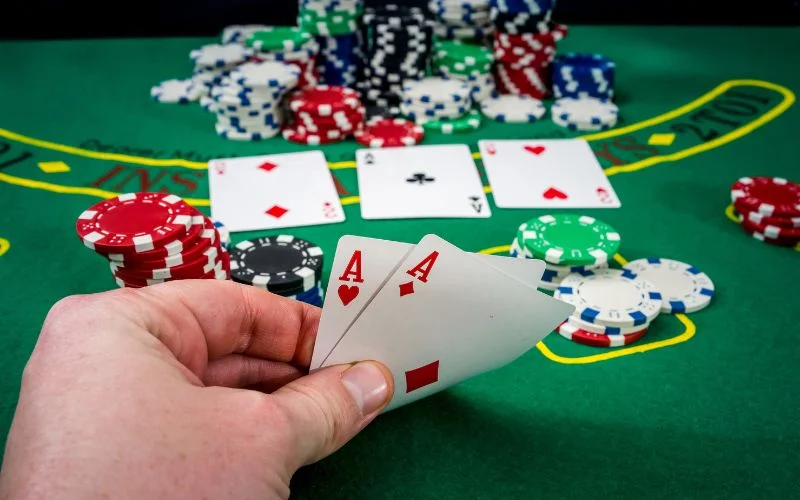
Bluffing in poker tournaments can be an exhilarating and effective strategy when executed correctly. However, in certain situations, bluffing might fail and cost you valuable chips. It’s important to recognize these scenarios and adjust your strategy accordingly.
One situation where bluffing might fail is when you are facing multiple opponents. Bluffing becomes more difficult with more players in the hand because the likelihood of someone having a strong indicator that they won’t fold increases. The more opponents you have, the higher the chance that one of them has a legitimate hand and is not easily swayed by your bluff.
For instance, imagine you’re playing in a Texas Hold’em tournament and decide to make a big bluff on the river. However, there are four other players still in the hand. In this scenario, it becomes less likely that all four players will fold to your bluff since at least one might have a decent hand or be willing to call with a weaker hand due to pot odds.
Another situation where bluffing might fail is when you are up against observant and experienced players. These players pay close attention to the table dynamics, betting patterns, and opponents’ tendencies. They can pick up on subtle cues or patterns indicating whether you’re bluffing. If your opponents suggest you are an aggressive bluffer, they may not be easily fooled by your bluffs.
Imagine sitting at a poker table with skilled and seasoned players observing your play for several hours. They’ve noticed you tend to bluff frequently and quickly call or raise your bets. Attempting multiple bluffs against these opponents might lead to failure, as they’ll likely catch on to your strategy and adjust their play accordingly.
Board texture also plays a crucial role in the success or failure of bluffing. If the community cards on the board create a scary or coordinated texture that could potentially complete strong hands, your bluff is more likely to be challenged. Players tend to be more cautious and suspicious when facing boards that offer potential flushes, straights, or three-of-a-kind.
Let’s say the flop comes with three diamonds, giving flush possibilities to anyone holding two diamonds. If you make a big bluff on this type of multiple opponents, they might be more inclined to call or raise since they could have a flush draw and hope to hit their card on the turn or river.
Finally, it’s essential to consider your table image and how your opponents perceive you. Attempting a bold bluff might be less effective if you’ve been consistently tight and conservative throughout the tournament since your opponents are more likely to give you credit for having a strong hand. On the other hand, if you’ve been bluffing frequently and seen as an aggressive player, your bluffs might not be taken seriously when you do have a strong hand.
Suppose you’ve been playing conservatively and rarely bluffing throughout the tournament. Suddenly, you decide to make a massive overbet as a bluff. Your opponents, who have observed your tight play style thus far, might become skeptical and suspect you finally have a monster hand. As a result, they may be more inclined to call or even reraise with confidence.
In conclusion, while bluffing can be a powerful weapon in your poker arsenal, it’s more likely to fail in some situations. Recognizing these scenarios and adapting your strategy is key to maintaining a balanced and successful approach in poker tournaments.


